
A stump cut flush is not a stump removed. The roots are still alive, and on this coast plenty of species will keep pushing shoots up through your lawn for years.
Rough diameter is fine — measure across the top of the cut.
Left is true of any stump. Right is what this coast and these sections do to the job.
The root system is untouched, so anything that re-shoots from roots will keep coming back through your lawn. It is also a trip hazard and a mower-blade hazard that never goes away.
Both are common Pāpāmoa hedging and both re-shoot hard from cut stumps. If you have taken a hedge out at ground level, expect it back unless the stumps come out.
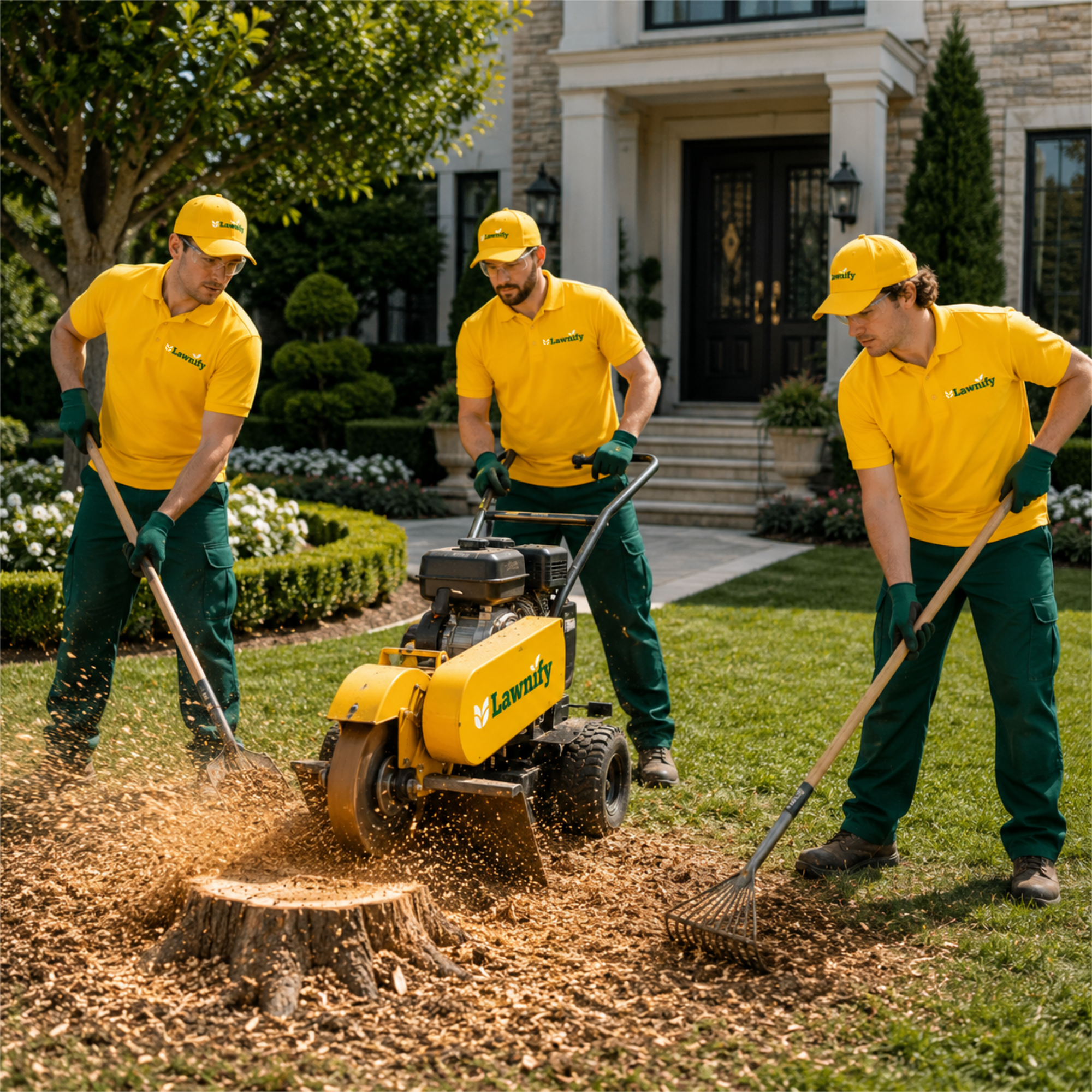
The wheel chews the stump and the main root flare down to roughly 200–300mm, well under the surface, so there is nothing left to grow or trip over.
Free-draining ground is kind to the machine. It is also easy to bury cable and irrigation in, so we locate services before starting rather than finding them the expensive way.
The cavity is backfilled, usually with the chip itself plus soil. It settles over a few months, so a top-up later is normal.
Which is worth knowing if you are laying turf straight over. We backfill firm and tell you to expect a dip in a few months rather than pretending it will not happen.
Bigger grinders are faster but need width to get in. Narrow-access machines exist and take longer, which shows in the price.
Older Pāpāmoa blocks sit close to the boundary with narrow side gates. Tell us the gate width when you enquire and we bring the right machine the first time.
If you want the area turfed or planted straight after, say so when we quote and we’ll grind deeper and backfill with soil rather than chip.
Most of the ways this goes wrong are expensive, and all of them are avoidable.
Most single stumps are an hour or two. A hedge line takes longer than people expect.
Cable, irrigation and anything else buried. On sandy sections these sit shallower than you would think.
Boards over paths and driveways, screens up where chip could fly at glass or a car.
Down through the stump and the root flare to 200–300mm below the surface.
Chip and soil back into the cavity, compacted rather than just tipped in.
Everything raked back, then chip left for your beds or loaded onto the trailer.
If you have taken a hedge or tree out and it keeps coming back, this is why.
Diameter and access set the price. Doing several at once brings each one down.
Larger stumps and anything awkward to reach are quoted after a look. Several at once is far cheaper per stump — the machine is already on site and set up, which is most of the cost on a small job.
Get your actual numberIf you are having a hedge removed, get the stumps done at the same time. It costs a fraction of bringing a machine back later, and it is the difference between the hedge being gone and the hedge growing back through your new lawn. Griselinia and privet in particular will not give up on their own.
One of the few jobs on this list that genuinely works any time of year.
No real bad window for this one. Autumn and winter edge it slightly, because that is when hedge and tree removals happen and doing the stumps in the same visit saves a second call-out. If you are planning to turf over the top, aim for autumn or spring so the new lawn goes in at the right time.
Took an old griselinia hedge out ourselves and thought that was that. Twelve months later there were shoots coming up through the middle of the lawn. They ground the whole line out in an afternoon and that was genuinely the end of it.
The ones that come up on nearly every stump we quote.
You can, but it is not the same job. A flush cut leaves the entire root system alive, and plenty of species common in Pāpāmoa — griselinia and privet especially — will keep pushing new shoots up for years afterwards. It is also a permanent trip hazard and a very effective way to destroy a mower blade. Grinding takes it below grade so there is nothing left to grow or catch.
Roughly 200 to 300mm below the surface, including the root flare rather than just the visible stump. If you are planning to lay turf or plant over the top, tell us at the quoting stage and we will go deeper and backfill with soil instead of chip, because turf laid onto raw chip sinks and struggles.
We backfill it with the chip and soil and firm it down rather than just tipping it in. Expect it to settle over the following few months — that is normal, and on sandy Pāpāmoa ground it happens a bit faster. A top-up of soil later is often worth doing before you seed or turf.
Your call, and either way costs the same. Plenty of people keep it for garden beds, which is genuinely useful mulch and saves buying some. If you would rather not look at a pile of it, we load it onto the trailer and it goes with us.
Not if it is set up properly. We board over paths and driveways and screen anything that chip could fly at — windows, a parked car, the neighbour’s place. There is usually some mess in the immediate area which we rake back before leaving.
We locate and mark services before starting rather than finding them with the wheel. It matters more on sandy sections than people expect, because irrigation and cable get laid shallower here and the ground shifts over time. If you know where something runs, tell us — it saves everyone.
Considerably. Most of the cost on a small job is getting the machine there and set up, so a second and third stump on the same visit cost far less than the first. If you are having a hedge line removed, doing the whole run of stumps in one go is the cheapest way by a distance.
Stump work usually follows one of these.

