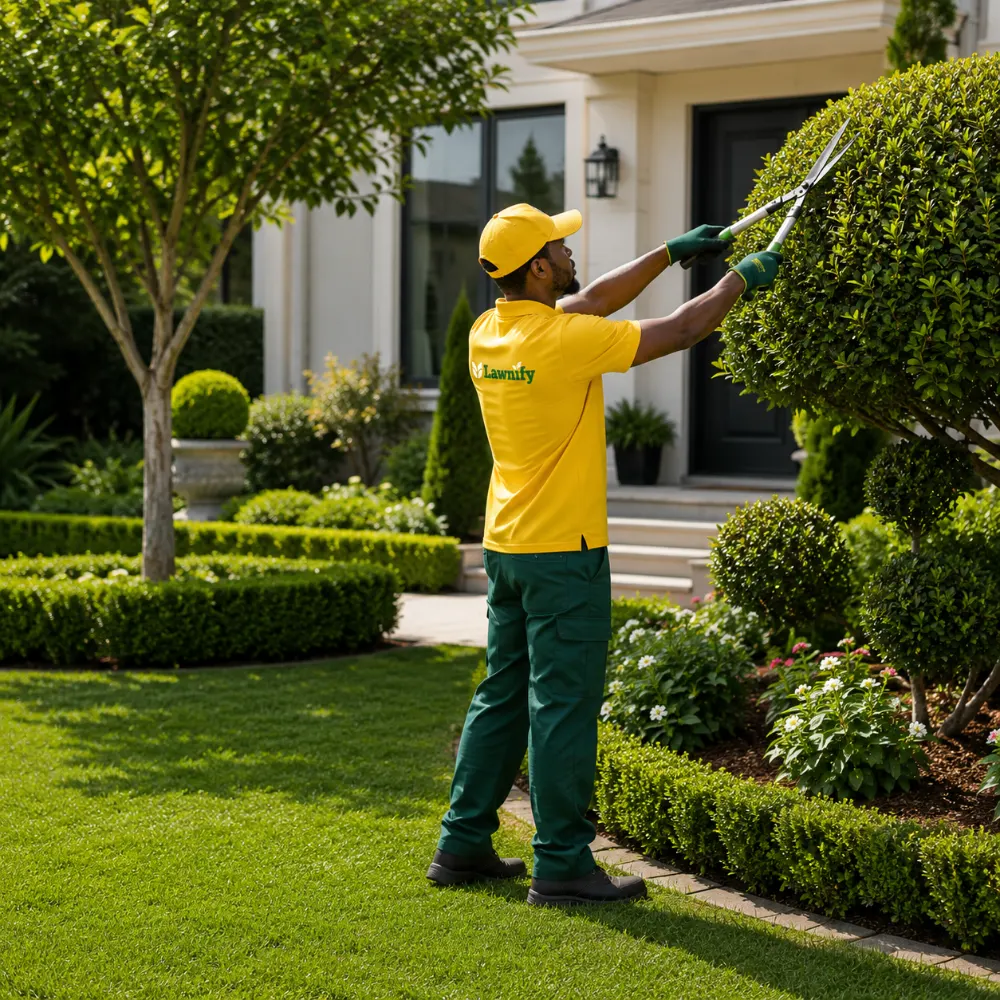
Five services, one category

Garden & Trees

Everything above the grass — hedges, trees, beds, mulch and the stuff that has to go. Get the species and the timing right and a garden stays easy. Get them wrong and it takes years to undo.

  • Species identified before we cut
  • Hedges, trees & shelter belts
  • Beds, mulch & clearances
  • Everything leaves on the trailer

Get your free quote

Hedge or tree work? Tell us roughly what it is.

Free quote, GST added on top, no obligation.

Fully insured We identify before we cut Green waste included in every quote Nesting season respected
The question that decides everything

Will it grow back?

Before anyone touches an overgrown hedge, this is the only thing that matters. Some plants shrug off a hard cut. Some take two years to forgive it. Some never do.

Recovers wellReduce it hard, it comes back dense
PittosporumPhotiniaCamelliaCorokiaPrivetLaurel

These re-shoot readily from bare wood. An overgrown hedge can be taken well back into old growth and be a dense screen again within a season or two. Pittosporum in particular is about as forgiving as hedging gets, which is why it is the safe choice on an exposed coastal boundary.

Recovers, but slowlyStage it, don’t rush it
GriseliniaBuxus

Both will come back from old wood, but they are slow about it and a hard cut can leave a hedge looking rough for a full season. Better to reduce over two or three trims than in one hit. Griselinia responds well to having its sides cut more often than its top — that is what thickens it low down.

Never recoversPast the green, it stays brown
LeylandiiMacrocarpaThujaCryptomeriaMost conifers

Conifers carry a thin shell of green over dead brown wood. Cut past that shell and nothing regrows — you are left with a permanent brown hole. An overgrown conifer can only be brought in gradually, trimming to just inside the green each time, or accepted for what it is and replaced.

This is why we identify before we quote. A contractor who cuts everything the same way will eventually take a leylandii back to brown, and no amount of feeding fixes it after that. If your hedge is a shelter belt on an orchard boundary at Te Puke or Ōmokoroa, the stakes are higher again — cutting past the green does not just look bad, it removes the shelter the grower depends on.

The shape problem

Why hedges go bare at the bottom

It is the most common fault in older hedges and it has nothing to do with feeding, watering or soil. It is geometry.

Correct narrower at the top Goes bare below wider at the top

Cut it slightly narrower at the top than the base

A subtle “A” profile. It looks like a small detail and it is the whole difference between a hedge that stays green to the ground and one that turns into a green lid on bare sticks.

The reason is light. Foliage only survives where light reaches it. A hedge trimmed wider at the top puts its own base in permanent shade, the lower leaves drop, and within a few years you can see straight through the bottom half. Feeding it does nothing, because the problem is not nutrition.

Once it has gone, getting it back depends entirely on the species — which is exactly why the section above matters. Pittosporum will refill from bare wood. A conifer never will.

Sides before topOn a thin griselinia, trimming the sides more often than the top is what forces density low down.
Little and oftenTwo light trims a year holds a shape that one hard annual cut never quite recovers.
Get the month right

When to cut what

Timing matters more in this category than anywhere else on the site. The same cut in the wrong month can cost you a season of growth, or a year of flowers.

Apr – Jun Autumn to early winter

The main window for almost everything. Growth has eased so cuts hold their shape, wounds heal before hard weather, and disease spreads far less than in warm wet conditions. Deciduous trees drop their leaves so you can finally see the structure you are working on. If you book one job a year, book it here.

Hedge reductions · shelter belts · tree work · mulching
Jul – Aug Late winter

Best time for a major reduction on a formal hedge — right before the spring flush, so the new growth immediately starts filling the shape you have just cut. Also the quietest part of our year, which means bigger jobs get proper time rather than being squeezed between mows.

Major reductions · dormant pruning · stump grinding
Sep – Nov Spring — check first

Light shaping is fine, and griselinia trimmed in October gives a thick flush right before summer. But this is nesting season, and under the Wildlife Act it is an offence to disturb native birds’ nests. We check canopies and dense hedges before starting, and schedule heavy work either side of the peak.

Light trims · bed prep · feeding
Dec – Feb Summer — light only

Avoid hard cutting in real heat; a stressed plant recovers slowly and cut edges scorch. Fast growers like leylandii and privet still need a tidy-up trim. Summer is also the only time you can properly see which limbs are dead and which are shading the deck — both invisible once the leaves are off.

Tidy trims · assessing tree work · buxus watch
Flowering hedges are the exception

Camellia and photinia get cut straight after flowering, not before. Trim them early and you remove next season’s buds along with the growth — the hedge looks fine and simply refuses to flower the following year.

How often, by species

Fast growers — leylandii, conifer, griselinia — generally want two to three cuts a year. Slower, denser plants like buxus and pittosporum are usually happy with one or two. Flowering hedges: once, after flowering.

On the coast, watch the wind

Fresh growth after a trim is soft and burns easily in salt wind. On exposed boundaries at the Mount or Pāpāmoa we avoid trimming right before a forecast blow, and trim the windward face lightly so there is always foliage protecting what sits behind it.

Buxus has its own rules

Trim on a dry, overcast day so the cut leaf edges do not scorch in the sun. And keep an eye out for buxus blight through the humid months — it moves fast in exactly the conditions a Bay of Plenty summer provides.

Rough numbers

What garden and tree work costs

Mowing can be priced from a photo. This category mostly cannot, and it is worth explaining why rather than quoting a number we would have to change.

Garden maintenanceAdded to a mowing visit, beds and bordersFrom $45
Hedge trim, establishedBoundary hedge held at height, one or two a year$150–$400
Mature hedge reductionBringing an overgrown hedge back inQuoted
Tree work & canopy reductionRoof clearance, weight reduction, dead woodQuoted
Stump grindingBelow grade so the ground is usable againQuoted
Mulch & barkBeds weeded first, then laid at a depth that worksBy the cubic metre

Two things drive every number here. First, volume — a twenty-year-old griselinia boundary produces several cubic metres in an afternoon, far more than the same hedge at half the age, and all of it has to go somewhere. Second, carry-out — on a tight Ōtūmoetai or Mount section with no vehicle access past the house, every branch is barrowed to the street by hand. That labour is real, and we would rather have it in the quote than discover it on the day. GST is added at the standard rate on top of the quoted figure, and disposal is already included.

Two quotes said they would take the hedge down by a metre and a half. Lawnify came out, told me it was macrocarpa and that cutting that far would leave it brown for good, and staged it over two seasons instead. Nobody else even looked at what it was.

Wayne BarrettTe Puke
Coverage

Where we do it

All five services run across all twelve areas — though what we mostly get called for changes a lot from one to the next.

Mature gardens

Sixty-year-old trees and twenty-year hedges hitting full size at once. Reduction work rather than maintenance.

Shelter belts & orchards

Windbreaks doing real work on orchard boundaries. Species matters most here, because the shelter is the point.

Young & establishing

New builds where the screening hedge is only a few years in. Shaped early so it thickens at the base.

Coastal & exposed

Salt burn on the seaward face. Salt-tolerant species, trimmed lightly on the windward side.

FAQs

Garden & tree questions

The ones that come up on almost every quote.

My hedge is massively overgrown. Can it be cut right back?

It depends entirely on the species, which is why we identify it before quoting rather than after cutting. Pittosporum, photinia, camellia and corokia re-shoot readily from bare wood and can be taken well back. Griselinia and buxus will recover but slowly, so those are better staged over two or three trims. Conifers — leylandii, macrocarpa, thuja, cryptomeria — will not regrow from brown wood at all, and cutting past the green shell leaves a permanent hole.

Why has my hedge gone bare at the bottom?

Almost always because it has been trimmed wider at the top than at the base, so it shades its own lower foliage. Leaves only survive where light reaches them, so the bottom thins and eventually you can see straight through it. The fix is to re-cut it to a slight “A” profile — narrower at the top — and let light back in. Whether the bare part refills depends on the species; the ones that re-shoot from bare wood will, conifers will not.

When is the best time to have hedges and trees done?

April through June for most jobs. Growth has slowed so the shape holds, cuts heal before winter, disease spreads far less than in warm wet weather, and deciduous trees are bare enough to see the structure. Late winter suits a major reduction on a formal hedge, right before the spring flush. Flowering hedges like camellia and photinia are the exception — those get cut straight after flowering, or you remove next season’s buds.

Can I cut a hedge that is on the boundary?

Generally you can cut anything on your side of the boundary, including overhanging growth, back to the line. Cutting the far face, or reducing the overall height of a genuinely shared hedge, needs your neighbour’s agreement. In practice a conversation and a written scope sorts nearly all of these before anyone starts a saw, and we are happy to put that in writing so both households can see it. This is general information rather than legal advice.

Do you work during nesting season?

Carefully. Under the Wildlife Act it is an offence to disturb native birds’ nests, so through spring we check canopies and dense hedges before starting and will reschedule if we find an active nest. Light shaping is usually fine; heavy hedge and tree work is better booked either side of the peak. It is one of the reasons autumn and late winter are the seasons we push people toward anyway.

If I have a hedge removed, will it grow back?

Yes, if the roots stay in. Cutting a hedge off at ground level leaves live stumps that re-shoot, and griselinia and privet are particularly determined about it. A full removal means getting the stumps out, which is what stump grinding is for — ground below grade so you can turf or replant over the line without anything pushing back through.

What happens to all the cuttings?

They leave on our trailer, and disposal is already in your quoted price. It matters more here than in mowing, because a mature hedge reduction produces far more volume than people expect. Prefer to keep the chip on site as mulch? Tell us at the quoting stage and we will leave it wherever you want it.

Should we top a tree that has got too big?

No — topping is the one thing genuinely worth avoiding. A mature tree responds to it with a mass of weak, fast regrowth attached to a large wound, so within a few years the tree is back to the same size but structurally worse and more likely to fail. A proper reduction takes weight off selectively and keeps the tree balanced. It costs more once and far less across twenty years.

Let’s look at it first

Free quote, GST added on top, everything taken away. We’ll tell you what it is before we cut it.