Clearing what’s there now
Perennial weeds like kikuyu runners and couch will push straight back through a new lawn. They get sprayed out and left to die off properly, or the old turf is lifted off with a harvester where time is short.

Whether it’s a new build, a tired patch of weeds or a section that never took, we prepare the ground properly and put down a lawn that actually establishes. Ready lawn for instant results, or seed for bigger areas on a tighter budget. Fixed price agreed before we start.
Tell us about the area and we’ll price the job.
Almost every lawn that fails, fails because of what happened under it. Rolling turf onto unprepared ground looks great for a fortnight and then goes backwards. This is the groundwork that makes it last.
Perennial weeds like kikuyu runners and couch will push straight back through a new lawn. They get sprayed out and left to die off properly, or the old turf is lifted off with a harvester where time is short.
The ground is worked to 100–150mm, not just scratched over. That’s what lets roots get down and gives the lawn something to draw on in a dry February.
Screened topsoil brought in where the existing ground is clay-heavy or short. Then raked level and consolidated by heeling rather than rolling, finished about 12mm below paths and drives so the turf sits flush.
A starter feed raked into the soil before anything goes down, so the roots have something to move into from day one rather than sitting on bare dirt.
Strips butted tightly together with staggered joints so there are no gaps to dry out, edges cut in around beds and paths, then lightly rolled while still moist for full soil contact.
Watered through until the moisture is roughly 25mm into the soil beneath the turf, and you get a written schedule for the first three weeks — watering, foot traffic and when to make the first cut.
Often booked alongside
Two ways to get there, at quite different price points. The right one depends mostly on how big the area is and how soon you need to use it.
Mature turf grown on a farm, cut into rolls and laid straight over prepared soil. You have a green lawn the same day and light foot traffic within a fortnight. Fewer weeds to fight because the turf arrives already established, and it holds a slope where seed would wash away.
Best for front lawns, small to medium sections, slopes, and anyone who needs it usable soon.The traditional route. Far and away the lowest material cost, but the slowest and the most exposed — birds take seed, heavy rain moves it, and weeds get a run at the bare ground before the grass closes over. Prep matters even more here than with turf.
Best for large flat areas, autumn sowing, and budgets with patience to spare.What most ready lawn growers use. Deep-rooted so it handles dry spells well, dark green, takes wear, and is far more resistant to black beetle than ryegrass or fine fescue. The safe all-rounder for a family lawn.
A warm-season grass that thrives in exactly the hot, humid, coastal summers we get here. Extremely tough and drought-tolerant. The trade-off is that it spreads by runners and builds thatch, so it’ll want dethatching roughly once a year — we’ll tell you that up front rather than after.
A new lawn is quoted per property, because the turf is often less than half of it — the ground preparation is where most of the work sits. These are the things we look at.
Drag the slider to see a section before the ground was prepped and after the turf went down.
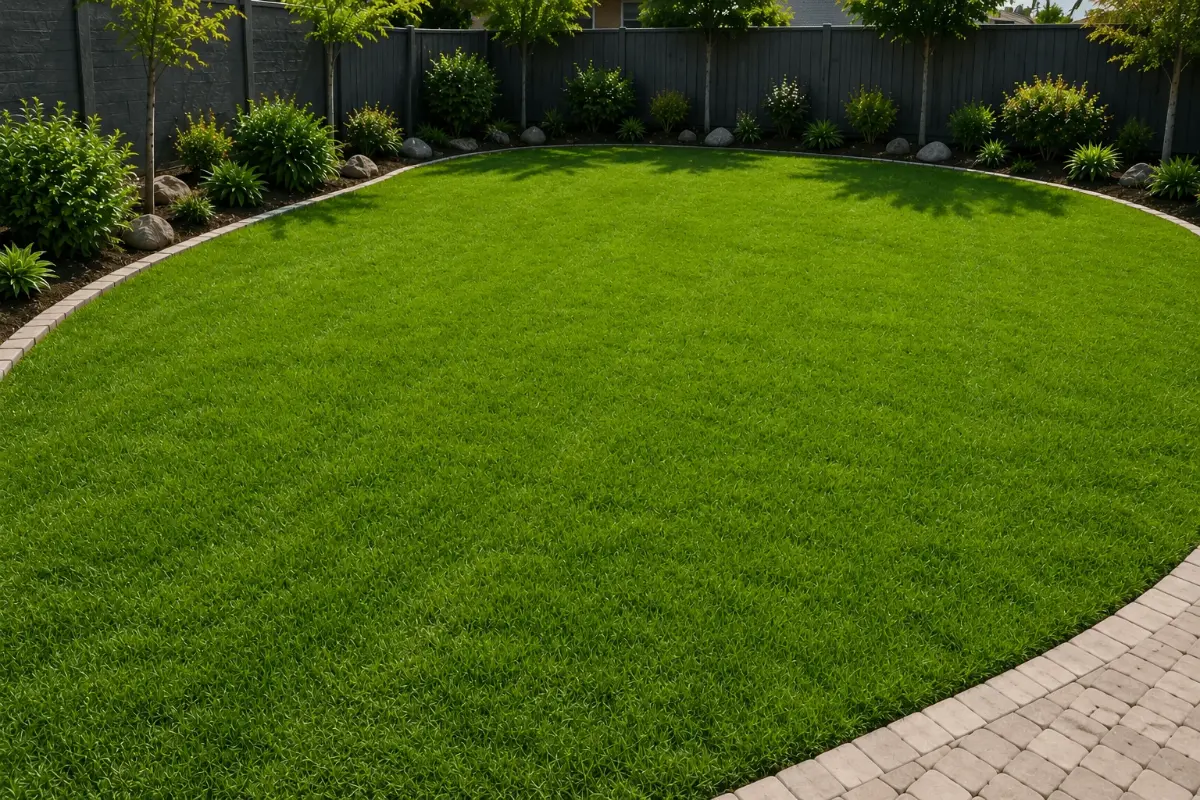
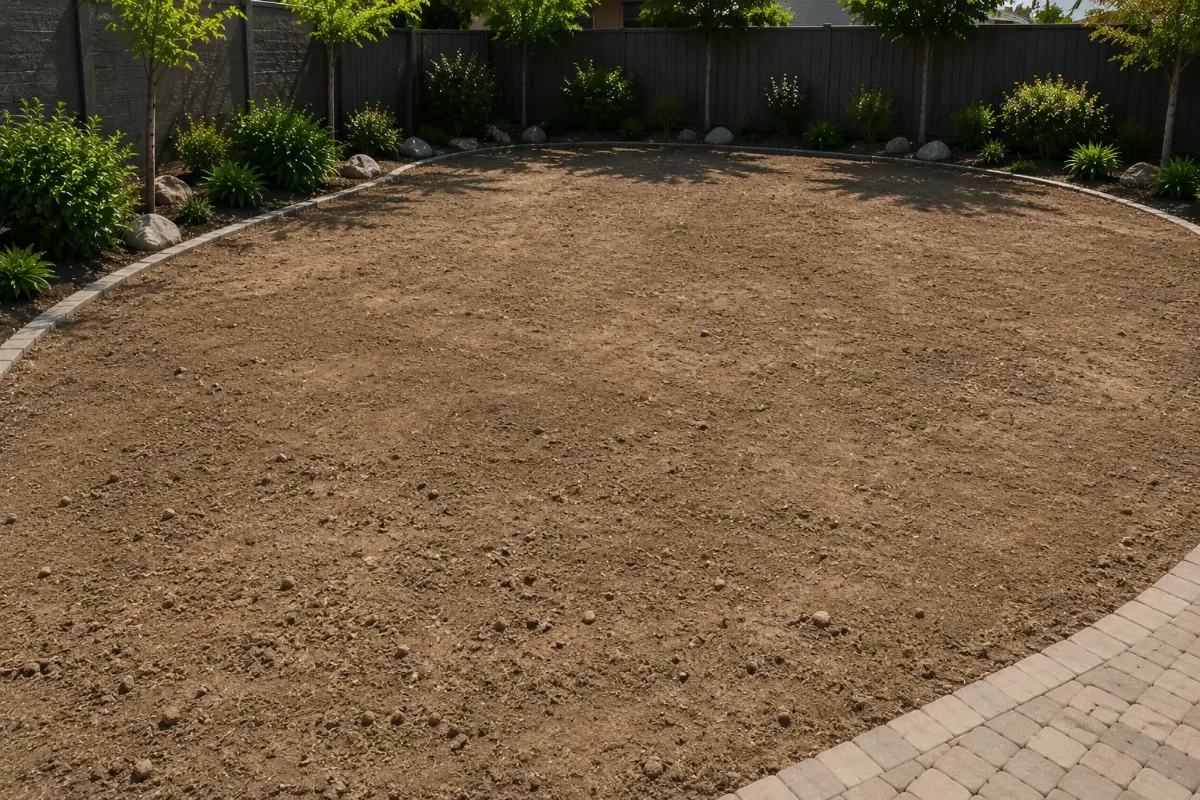 Before
After
Before
After
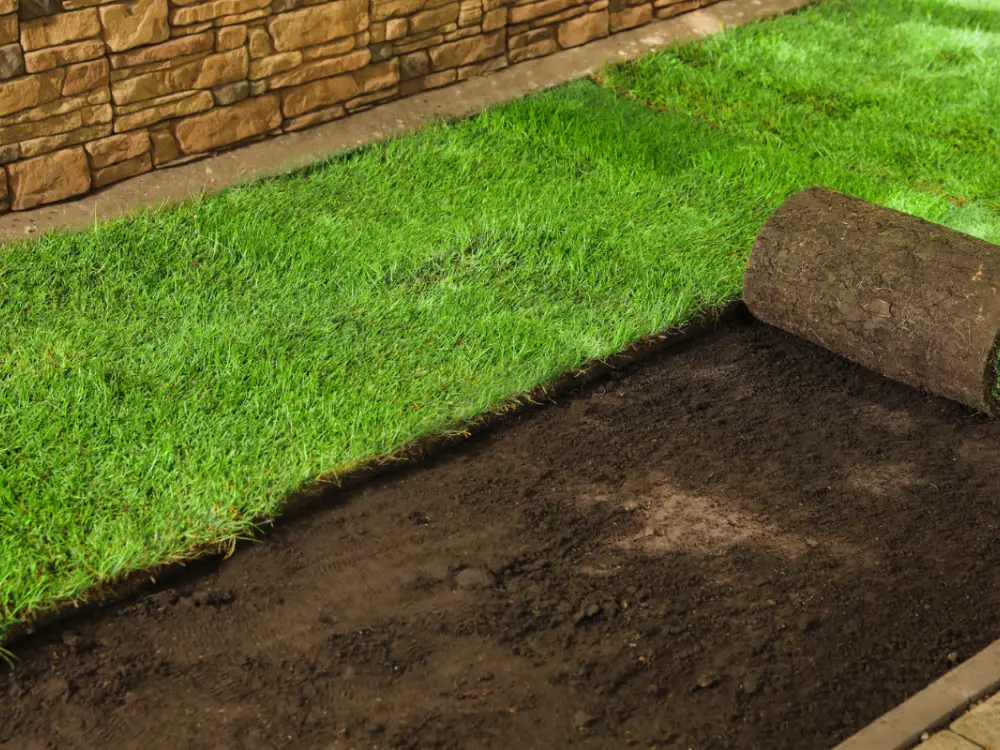
Turf is a commodity — anyone can buy the same rolls. What you’re actually paying for is what happens before they go down.
Cultivated to depth, levelled properly, starter fertiliser in first. It’s slower and it costs more than rolling turf over whatever’s there — and it’s the difference between a lawn that’s still good in three years and one that’s patchy by autumn.
Full sun and heavy kid traffic is a different brief to a shaded south-facing strip. We’ll tell you honestly what each variety will and won’t do here, including that kikuyu will need dethatching down the track.
A new lawn is most vulnerable in its first month. We hand over a written plan, and if you want us mowing it once it’s established, the same crew that laid it is the crew that looks after it.
This is the part that’s on you, and it genuinely decides whether the lawn takes. You get it in writing on the day.
We water it through on the day until the moisture reaches about 25mm into the soil underneath the turf.
Every evening, twice a day in hot or windy weather. Keep off it entirely this week — the roots have nothing to hold with yet.
Keep the moisture consistent through the 14–21 day establishment window. Light foot traffic is fine from about two weeks.
Mow once it’s twice the height it was laid at, then take it back to that height. In summer that can be 7–10 days. Catch the clippings.
Our crews work across Tauranga and the wider Bay of Plenty, from the foot of Mauao through to Te Puke and Ōmokoroa. Pick your area for local detail.
The things homeowners ask us most before committing to a new lawn.
Mostly it comes down to area and timing. Ready lawn costs more per square metre but you get a finished lawn the same day, fewer weeds, and it holds on a slope. Seed costs a fraction of that but needs patience and careful watering while the ground is bare. For a typical front or back lawn, most people go ready lawn. For a big rear section or a lifestyle block, seed usually makes more sense.
Mid-autumn is ideal — the soil is still warm from summer, the air is cooler and humidity is higher, so there’s much less risk of the turf scorching or drying out before it roots. That said, ready lawn can be laid year round here as long as you can water it. What we do avoid is the peak of summer and ground that’s waterlogged.
Stay off it completely for the first week — that’s when it’s most vulnerable, and footprints in soft turf become permanent dips. Light foot traffic is generally fine from about two weeks, once the roots have started knitting into the soil. Kids and dogs at full speed are better held off until the first mow.
Once the grass is about twice the height it was when it was laid, then mow it back to that original height. In good summer growing conditions that can be as soon as 7 to 10 days; in cooler months, two to three weeks. Don’t leave it too long, and catch the clippings for the first few cuts.
More than most people expect. After the settling soak on day one, it wants a good drenching daily for the first two to three weeks, and twice daily in hot or windy weather. A sprinkler on a timer makes this much easier. Underwatering in that window is the single most common reason a new lawn fails.
You can lay straight on top, and it’s cheaper, but we don’t recommend it and won’t pretend it’ll last. Turf on compacted or clay-heavy ground has nowhere for roots to go, so it stays shallow, dries out fast and thins within a season. If the budget is tight we’d rather do a smaller area properly than a big one badly.
Yes. The number you approve is the number you pay. Any extra preparation we find once we’re on site gets discussed and priced before we do it, never added at invoice time.
Poor ground is the biggest reason new lawns struggle. Fill or heavy clay usually needs soil added and worked in first, and your quote sets out the prep your section needs.
Free quote, fixed price. Ground prepped properly. Aftercare plan included.
