It feels spongy underfoot
The classic sign. Walking across the lawn feels soft and bouncy, like there’s a mattress between you and the soil. That mattress is thatch.

Kikuyu builds thatch faster than almost any grass in New Zealand. We cut that spongy layer out with a proper scarifier, clear the debris away and set the lawn up to recover thicker and greener than it was. No lock-in.
Tell us about the lawn and we’ll price the job.
A thin thatch layer, up to roughly 12mm, is actually good for a lawn — it holds moisture and insulates the roots. Past that it starts working against you. Here’s what that looks like.
The classic sign. Walking across the lawn feels soft and bouncy, like there’s a mattress between you and the soil. That mattress is thatch.
Thick thatch sheds water like a thatched roof. You water or it rains, and the moisture never reaches the root zone — so the lawn dries out fast in a February spell.
The mower drops onto the spongy layer and scalps it, exposing brown stem instead of green leaf. The patches look dry even when the lawn has had water.
Weed seed germinates happily in a warm thatch layer sitting above the soil. Clearing the thatch takes away the seedbed, which is why dethatching and weed control work well together.
You feed the lawn and nothing much happens. The nutrients are being held in the thatch layer rather than getting through to the roots where they’re needed.
The quick DIY test: try pushing a finger down to the soil. If it won’t go through, or a cut wedge shows more than 12–15mm of brown fibrous layer, it’s time.
Often booked alongside
Dethatching is a bigger job than a mow — it’s machine work plus a serious clean-up, and gardeners in New Zealand generally charge in the $35 to $75 an hour range for that kind of labour. Our dethatching starts from $189. These are the things that decide how long it takes.
Dethatching is deliberately hard on a lawn — that’s the point. Doing it properly is about controlling the damage and getting the recovery right.
We cut a small wedge and check the depth. If it’s under 12mm we’ll tell you the lawn doesn’t need it yet.
The lawn comes down to around 25–30mm so the scarifier blades reach the thatch layer rather than the leaf.
One pass across the lawn, then a second at 90 degrees. That lifts the matted layer out properly instead of just combing it.
All debris raked up and taken away, then a fertiliser application and a deep watering so the lawn recovers fast.
Drag the slider to see what comes out of a thatched kikuyu lawn — and what’s underneath once it’s gone.
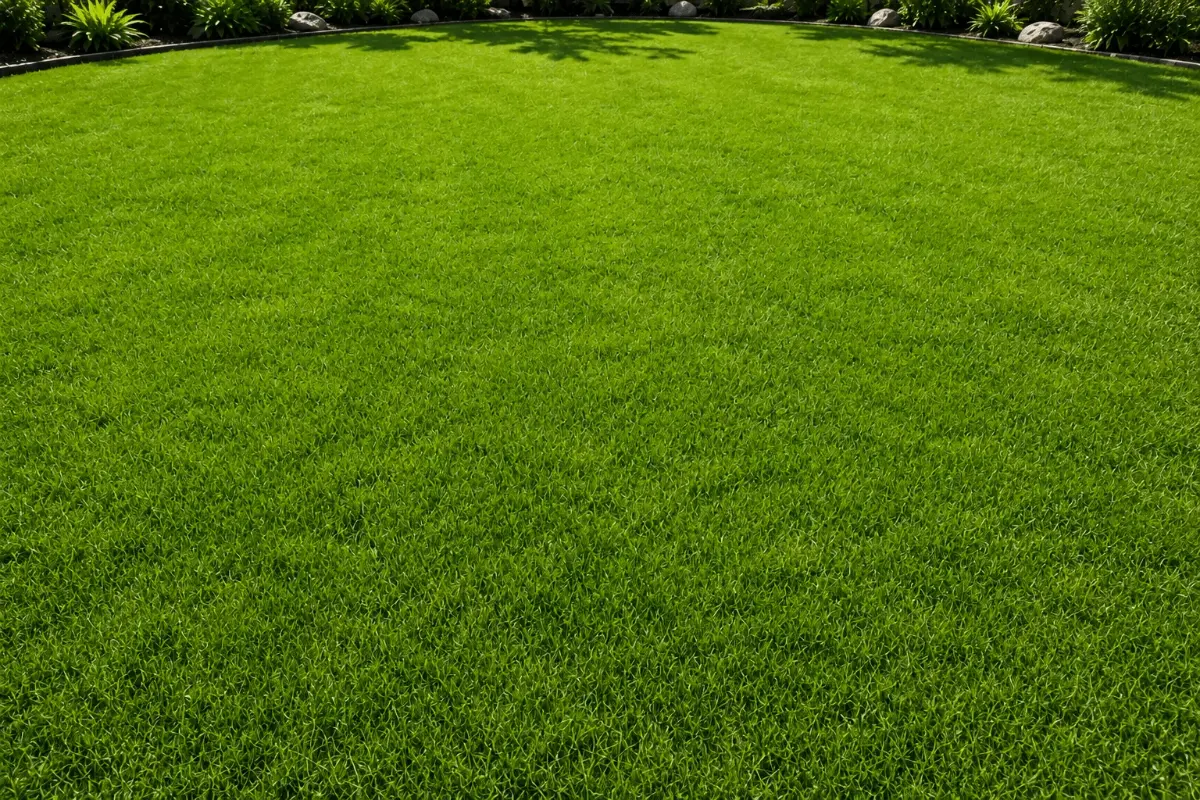
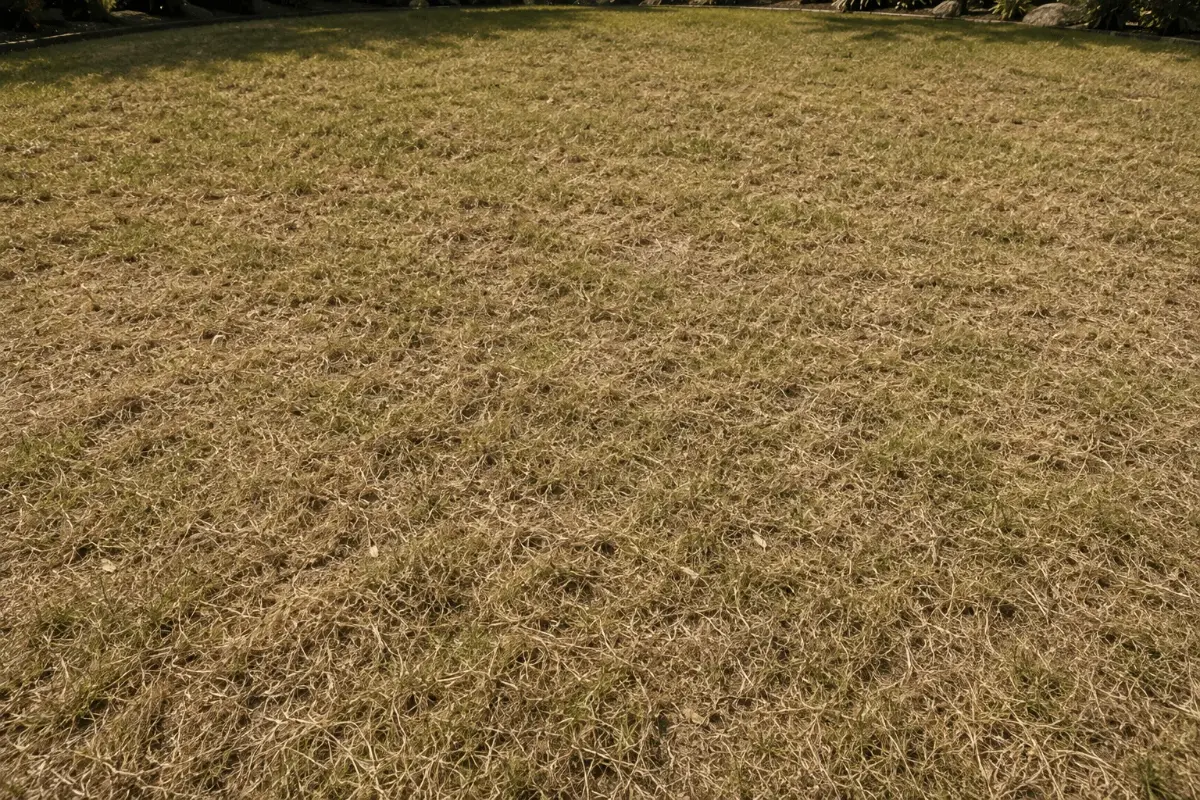 Before
After
Before
After
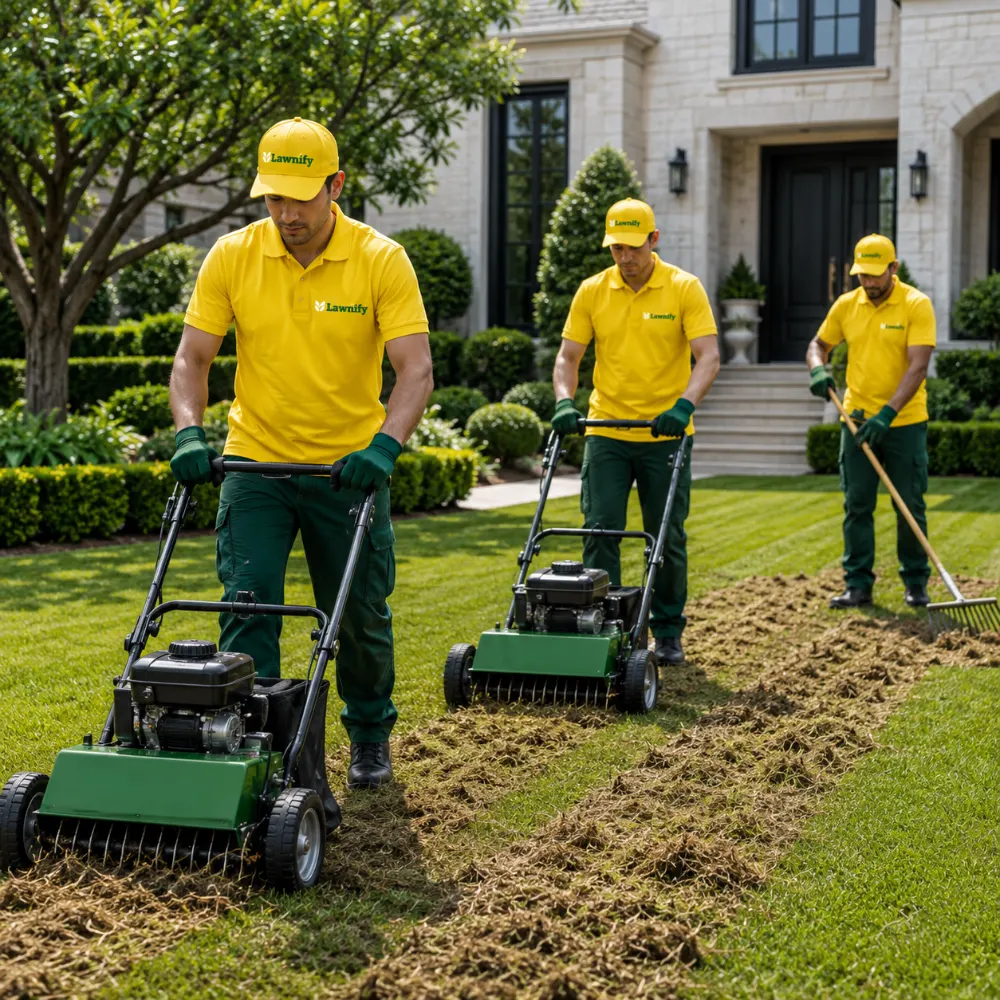
Dethatching at the wrong time of year does real damage. Get it right and the lawn comes back better than before.
Kikuyu and couch want late spring through early summer, when they’re growing hard enough to recover. Scarify a warm-season lawn in winter and you’re just leaving it bare until spring. If you ring us in June we’ll tell you to wait.
Plenty of lawns that look tired have a compaction or feeding problem, not a thatch problem. We measure before we quote, and if the layer is under 12mm we’ll point you at what’s actually wrong instead.
Ring the number and you get someone in Tauranga who can talk about your actual lawn and what the Bay’s growing season is doing right now, not a scripted booking line.
Our crews work across Tauranga and the wider Bay of Plenty, from the foot of Mauao through to Te Puke and Ōmokoroa. Pick your area for local detail.
The things homeowners ask us most before booking a scarify.
Thatch is the layer of dead and living stems, roots and runners that sits between the soil and the green blades. A thin layer, up to about 12mm, is genuinely good for a lawn — it insulates the roots and holds moisture. It only becomes a problem when it gets thicker than that and starts blocking water, air and nutrients from reaching the soil.
Late spring into early summer suits most lawns here, once the grass is growing hard and can close back over. Winter and dry spells are avoided. Some cool-season lawns are better done in early autumn or early spring.
The quickest test is to walk on it — a spongy, bouncy feel usually means thatch. To be certain, cut a small wedge of turf about 75mm deep and look at the brown fibrous layer sitting on the soil. Over 12 to 15mm and it needs doing. We measure this before quoting, and we’ll tell you if it doesn’t need it.
For a couple of weeks, yes — it will look thin and scruffy, and that’s normal. We’re deliberately tearing out a layer of the lawn. Done in the right season with a feed and water afterwards, the lawn typically closes back over within a few weeks and comes back noticeably thicker and greener.
Fast-growing lawns spread by surface runners, and those runners lay down material faster than it can break down. Overwatering, shallow watering, heavy nitrogen feeds, infrequent mowing and compacted soil all speed the build-up.
A vigorous, fast-spreading lawn usually wants it about once a year, which keeps it from ever becoming a big job. If the layer is only sitting around 12 to 15mm you can often stretch it to every second year. Regular mowing at the right height between times slows the build-up considerably.
Yes, and it’s included. A heavily thatched lawn produces a genuinely large volume of material — far more than a green bin holds. It all gets raked up and leaves on our trailer.
Yes. A feed and a good water afterwards help the grass fill in the thinned areas faster.
Free quote, starting from $189. Debris removed. Same local crew every visit.
