
A finger of thatch is a cushion. Much past that and it works as a lid: water sheets off it, feed sits in it, and the roots underneath get neither. You cannot see any of this from standing up, which is why a plug comes out of the lawn before anybody quotes a price.
Lawn Dethatching
Ōhauiti
Lawn Dethatching in Ōhauiti
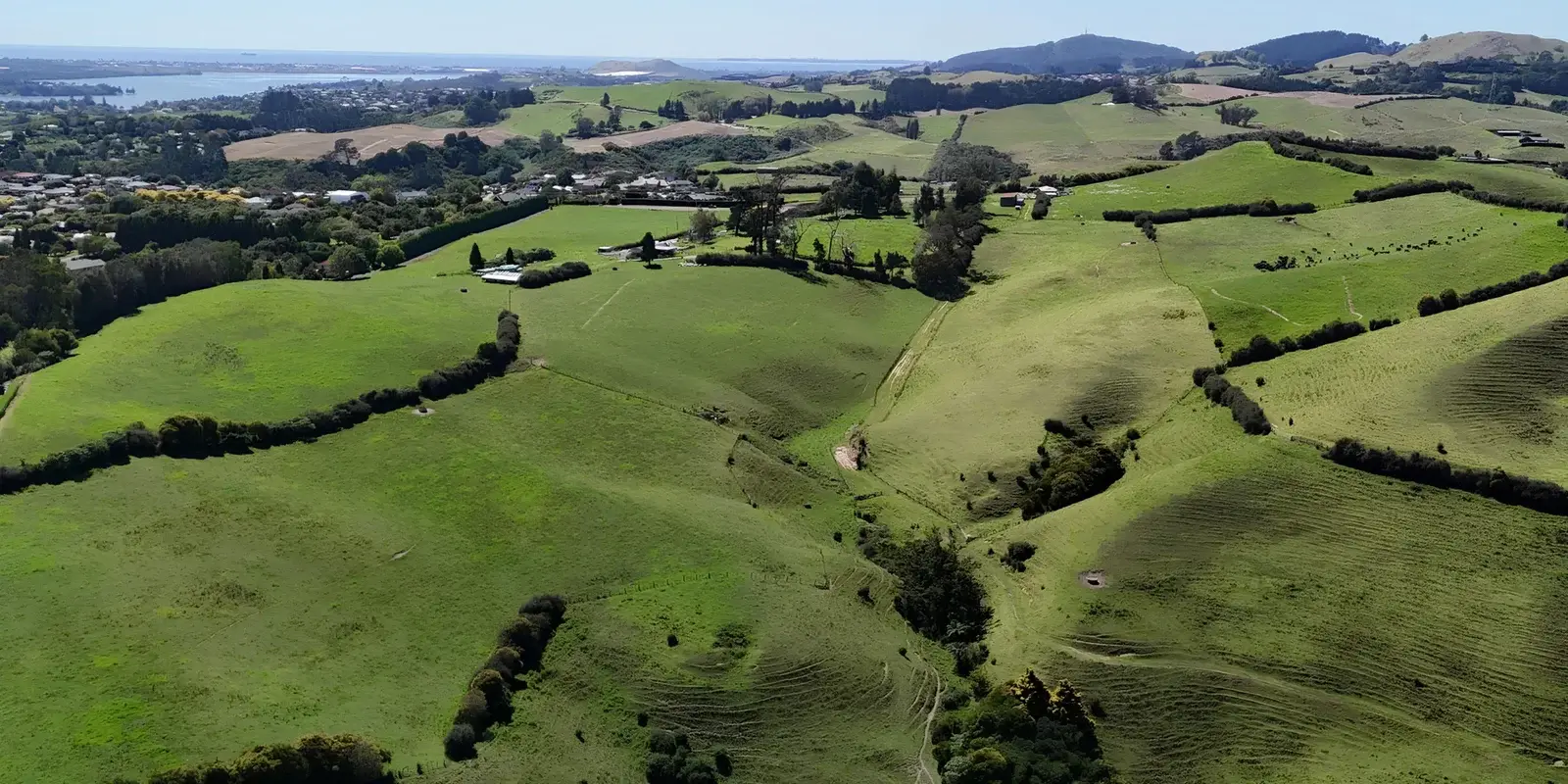
We scarify lawns across Ōhauiti — the long-established ones on the flat off Ōhauiti Road, where fifteen years of mowing has laid down a mat nobody has ever pulled out, and the hillside terraces where the turf is finally old enough to be worth checking. Thatch is the dead layer sitting between soil and green blade, and past a certain depth it stops being a cushion and starts being a lid.
- Depth checked with a plug, then set
- Booked for active growth, never dormancy
- Every bit of pulled thatch leaves with us
- Police-vetted crew on your section
Dethatching quote
Lawn size, and roughly when it was last opened up.
Police-vetted team
Owner-run, based in Tauranga
Pulled thatch hauled away
Depth checked before we quote
Three things decide how hard an Ōhauiti lawn gets scarified
Two lawns the same age can want blades set at completely different depths.
Lawns that spread by stem rather than by seed — the vigorous running sorts — are laying fresh growth down at soil level the whole time, and that material is what eventually becomes the mat. A lawn of that habit wants scarifying years before a finer, slower one does.
Open a lawn up while it is still pushing growth and it knits the gaps shut within weeks. Scarify one that has gone dormant and you have simply torn it open and left it that way until the season turns. We book on what the lawn is doing, not on the month you rang.
100+customersHappy customers across the Bay
30+jobsJobs completed around Tauranga
From $189Per visit, fixed price
1–2yrHow often most lawns here want it
Why a spongy Ōhauiti lawn is not a healthy one
Springy underfoot feels like a good lawn. It is usually the opposite.
Under 10mm thatchHealthy, no action needed
Over 15mm thatchRoots starved of water and feed
Every lawn carries some thatch and a thin layer of it does no harm at all — it cushions wear and holds a little moisture. The trouble begins at the point where that layer stops cushioning anything and starts sealing the soil off.
Once it does, the water you put on runs sideways and off, the feed you pay for is absorbed by dead material instead of living roots, and the lawn thins out no matter how carefully it is mown. People respond by feeding it more, which makes the mat deeper.
None of that can be judged by looking. A lawn can walk perfectly well and still be carrying a mat thick enough to be strangling it, so the only honest answer is to cut a plug out and look at the profile.
Scarifying tears that layer out mechanically. It is ugly for a fortnight, and it is the thing that makes every bag of fertiliser after it worth buying.
Expect it to look wrecked for a fortnight, because it will. What you are looking at is the mat lying on the surface instead of under the lawn. Anybody who tells you a scarify looks tidy on the day has not done one.
What an Ōhauiti dethatching visit includes
Five steps, and the first one decides every setting on the machine.
Cut a plug and look at itA core out of the lawn shows the profile, and that profile sets the blade depth. Nothing else on this list happens until it has been done.
Cut it short firstTaken well below the usual height, so the blades reach the mat rather than shredding the leaf above it.
Pull the blades throughOverlapping passes at the set depth, and a second run at an angle where the mat is heavy enough to need it.
Lift every bit of it offRaked up and loaded. Thatch left lying on a freshly opened lawn smothers exactly the grass that is trying to recover.
Hand over the aftercareWritten down, not explained at the gate: how much water, when to feed, and how long to keep off it.
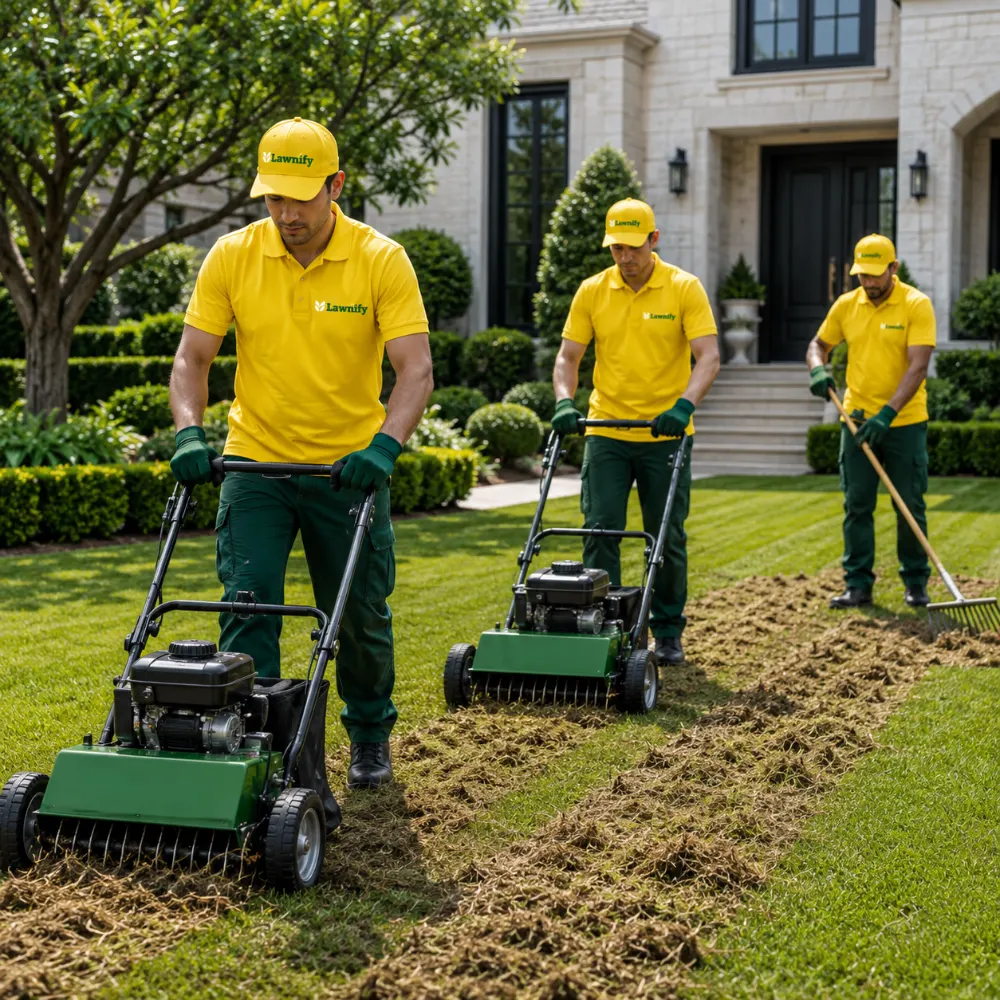
Depth is set to the lawn, not a fixed setting — too shallow does nothing, too deep stresses healthy turf.
On site30–60 min, size dependent
Recovery2–4 weeks to fill back in
A first scarify on a long-neglected lawn fills more bags than anyone expects. Several barrow loads off an ordinary back lawn is normal, all of it goes on the trailer, and the tip charge sat inside the quoted figure rather than arriving once the weight was known.
Established Ōhauiti lawn or new-build — different scarify entirely
The flat older streets and the half-finished hillside terraces are two different lawns entirely.
The deepest mats we find anywhere are on the long-settled lawns off Ōhauiti Road — cut faithfully every fortnight for fifteen years and never once opened up. A lawn on a hillside terrace is the other end of it: a season or two old, nothing much in there yet, and a decent chance somebody will try to sell you a scarify it does not need. Where the turf runs by stem rather than seed, though, that window closes sooner than owners expect.
Established property
- The deepest mats, and the longest history behind them
- Usually the heavier blade setting, sometimes a second pass
- Often better split across two consecutive seasons than forced into one
- Recovery watering slots into a routine that already exists
New-build section
- Usually too young to have built anything worth removing
- Worth a plug check once it has been down about eighteen months
- A lawn that spreads by stem gets there sooner than one that does not
- When it is finally due, a light first pass is normally enough
Plenty of people get told no on this service, and new-build owners most of all. If the plug comes out and there is nothing in it, you get told that, and you do not get a quote for a scarify your lawn has no use for. It is a one-off job rather than a subscription, and pretending otherwise would be the easiest money on this page.
What Ōhauiti lawn dethatching costs
Starting at $189 a visit, tip charges in, and settled once the plug has come out and been read.
-
From $189Lawn dethatching Plug read, scarified, every bit of thatch away
-
From $35Lawn mowing & edging The low cut before, and the round after
-
From $85Weed control & fertilisation Worth doing once the feed can reach the roots
-
QuotedMultiple lawn areas or slopes Split or awkward-access sections
What moves it
How much lawnSets the base coverage before anything else
What the plug showsA heavy mat means a deeper setting and a second pass
How much comes offA first-ever scarify fills the trailer fastest
Slope and split areasA hillside terrace lawn is slower than a flat one
The plug gets read before a full scarify is quoted, not after. Where the mat turns out to be thin you will be pointed at aeration or simply left alone, both of which cost you less than this service does. That is not generosity — a lawn opened up when it had no need of it looks like damage, and that complaint lands on us.
The Ōhauiti dethatching year
This is the one lawn job where the wrong month does real harm rather than simply less good.
JanFebMarAprMayJun
JulAugSepOctNovDec
Frequency key
Best windows — Apr to May, Sep to OctWorkable — Mar and NovNot recommended — Dec to Feb, Jun to Aug
Ring in January and you will be told to wait until April. A lawn opened up in the middle of a dry summer has no growth available to close the gaps, so it sits torn for months and every weed in the district gets first look at the bare soil. The two windows above are not a preference; they are the difference between a lawn that recovers in a fortnight and one that does not recover at all.
This service gets declined more often than it gets sold. A plug comes out before any price is quoted, and where there is nothing in it the honest answer is aeration, or nothing at all, and that is the answer you get. A lawn opened up for no reason looks exactly like a lawn somebody has wrecked, and no amount of explaining afterwards fixes what the owner thinks they are looking at.
Ōhauiti lawn dethatching questions
The eight that come up once somebody has felt the bounce underfoot and started reading.
01Will dethatching damage an Ōhauiti lawn?
Not if it is done in the right month at the right depth, though it will look as though it has for about a fortnight. For that fortnight the mat is sitting on top of the lawn instead of underneath it, which is the whole point of the exercise. Done in April or September the gaps close over quickly; done in January there is no growth available to close them, which is why we will not book it then.
02How do I know if my Ōhauiti lawn needs dethatching?
The giveaway is bounce. A lawn that feels springy or soft underfoot, or where water sits on the surface and sheets off rather than sinking in, is usually carrying a mat. But feel is only a hint — the actual test is a plug cut out of the turf so the profile can be read, and that happens before anybody quotes you. Plenty of lawns that feel suspicious turn out to be fine.
03How often does an Ōhauiti lawn need dethatching?
Every one to two years on most established lawns here, and considerably less often than that on finer or slower turf. What shortens the interval is habit: a lawn that spreads across the surface on stems lays down new material at soil level constantly and will come back round sooner. It is not an annual subscription, and anybody selling it as one is selling you something.
04What does lawn dethatching cost in Ōhauiti?
The figure begins at $189 for a visit, disposal included. Where you sit above it comes down to the area, what the plug showed, how much material comes off, and whether we are working a flat section or carrying gear up a terraced one. A first pass on a lawn nobody has ever opened up is the dearest version of this job, simply because of how much comes off it.
05Does a new-build Ōhauiti lawn need dethatching yet?
Almost certainly not, and this is where we most often say so. Turf laid a season or two ago has not had time to build anything worth pulling out. Worth a plug check at around eighteen months, sooner if it is one of the types that travels by stem, and until then your money is better spent on feeding and cutting height than on opening it up.
06Should an Ōhauiti lawn be aerated as well as dethatched?
They solve two different problems and are often both worth doing, but rarely in the same visit. Scarifying lifts a layer off the top of the soil. Aeration works on the compaction down inside it. On the heavier ground up the hill compaction is frequently the bigger issue of the two, and on a lawn with a thin mat aeration on its own may be the only thing it needs.
07What should I do with an Ōhauiti lawn after dethatching?
Water it properly and stay off it. Regular watering for the first two or three weeks while the gaps close, no heavy traffic in that window, and feeding held back until it has started to knit rather than done at once. All of it is handed over written down rather than talked through at the gate, because the aftercare decides as much of the result as the machine does.
08Can dethatching be scheduled with my Ōhauiti mowing round?
Yes, and it works better that way. The lawn wants cutting well below its usual height just ahead of the blades going through, and a careful first cut once it has recovered, so a crew already on your round handles both ends without a separate trip. If you are not on a round, we simply do the low cut as part of the visit.
Other Ōhauiti jobs worth the same trip
A scarify is a one-off visit, so anything else wanted on the section is cheaper bolted onto it than called in later.
05
New Lawn Install
Ready lawn or seed, prepped properly either way.
06
Garden Maintenance
Beds kept ahead of the season, and the waste leaves with us.
07
Tree & Hedge Trimming
Shape and species checked before a blade goes near it.
08
Stump Grinding
Ground below the surface so you can mow straight over it.
09
Shrubs & Rubbish Removal
Roots out properly, waste sorted into the right stream.
10
Mulching, Bark & Weed Mat
Cuts the weeding on every visit after it.
