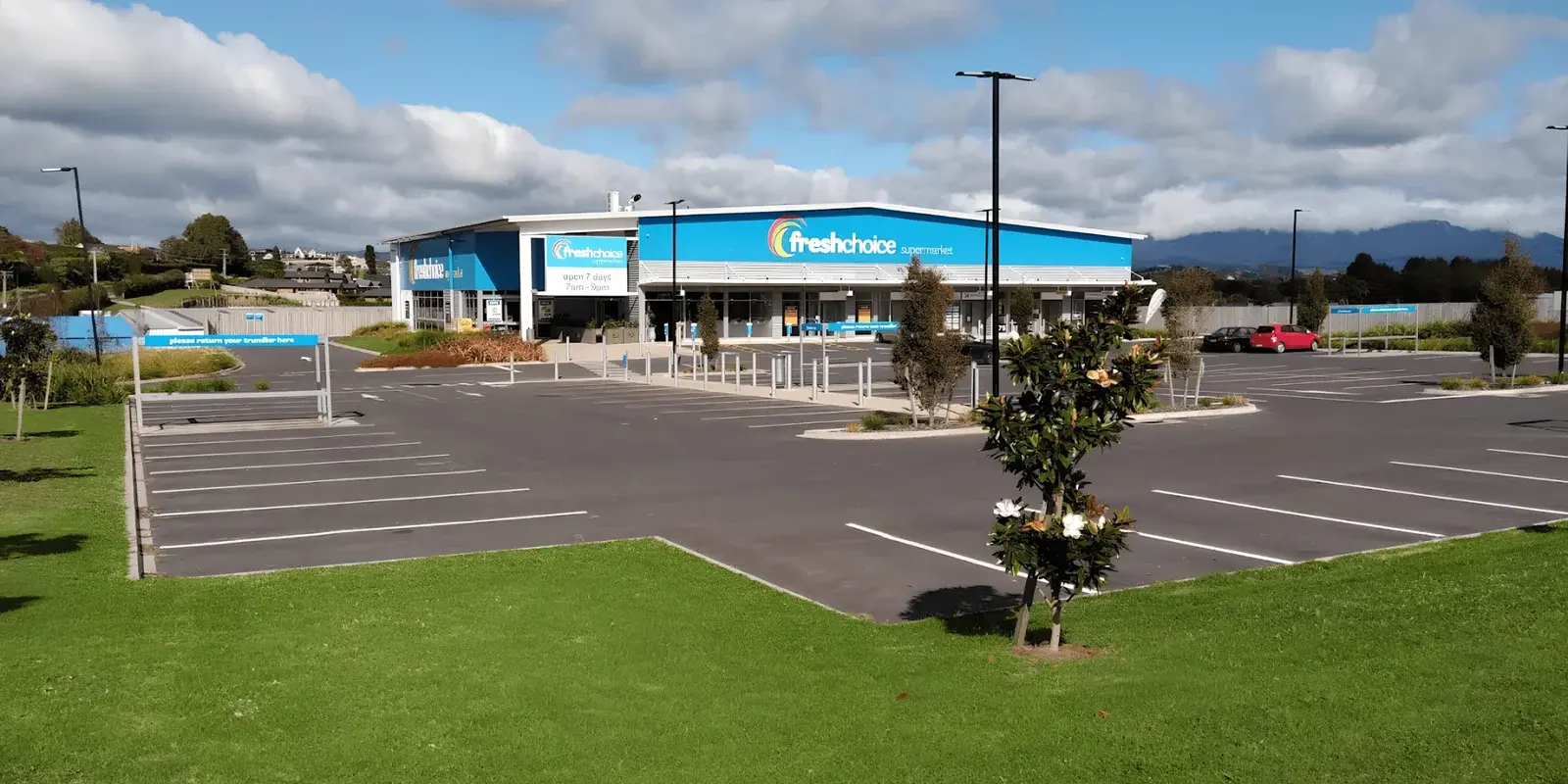
Half this peninsula is lifestyle blocks and orchard land that has been here since the sixties. The other half was bare paddock five years ago. We do both — and we bring the right machine for which one you are.
Section size does more work here than anywhere else we quote, simply because the range is so wide.
New subdivision sectionCompact lots in the newer stagesFrom $50 + GST
Standard township sectionEstablished Ōmokoroa Road and township propertiesFrom $60 + GST
Large section, ride-onQuarter to half acre — far cheaper per m² than push mowingFrom $90 + GST
Lifestyle blockHalf acre and up, paddock areas, long boundariesQuoted
Per visit, green waste included. Prices exclude GST, with GST added at the standard rate on the invoice. Because Ōmokoroa is a run rather than a single stop for us, booking alongside a neighbour brings both prices down — worth a mention if someone on your street already uses us.
03
Local conditions
What Ōmokoroa properties need
Two Ōmokoroas on one peninsula — established lifestyle blocks, and brand new subdivisions. They need almost opposite things.
The old Ōmokoroa is ride-on country. Baches from the 1940s, then horticulture and lifestyle blocks from about 1960. Half-acre and larger sections, mature shelter belts planted to break the wind off the harbour, and boundaries backing onto orchard land. From about a quarter acre up, a ride-on is dramatically cheaper per square metre than a walk-behind — it is the time that costs, not the area.
Shelter belts are the biggest job here, and species decides everything. Mature pittosporum, cryptomeria and photinia planted decades ago are doing real work, so they cannot just be cut flat. Pittosporum and photinia re-shoot from bare wood and can be reduced hard. Conifers will not — cut past the green shell and it stays brown permanently, which on a windbreak means losing the shelter itself. We identify before quoting, not after cutting.
The new stages sit on compacted paddock. That ground was pasture until recently, then carried machinery for a year. Turf laid straight onto compacted subsoil looks fine for a season and struggles by the next summer. Cultivating to depth first is what separates a lawn that lasts from one you pay for twice.
The ground itself is kinder than the coast. This is harbour-facing and sheltered, on free-draining volcanic ash rather than dune sand — better structure, better water holding, and noticeably less salt burn than anywhere on the open ocean. What it does have is wind off the harbour and long boundaries.
04
On the ground
Where in Ōmokoroa we work
The whole peninsula on the harbour side of State Highway 2, plus the roads running back toward the highway.
The point & harbourside
Ōmokoroa Point · the wharf · Harbour View · the headland · established harbour-facing sections
Township & centre
Ōmokoroa Road · Tralee Street · Hamurana Road · Prole Road · the shops and community hub
New stages
Subdivisions between the railway and SH2 · the newest lots · medium-density stages · recent builds
Lifestyle & rural edge
Youngson Road · Plummers Point Road · Old Highway Road · lifestyle blocks · orchard boundaries
Street not listed? Almost certainly still fine — we run the peninsula as one route rather than making separate trips.
Point to peninsula
Ōmokoroa, street by street
The point, the township roads, and the rural edge out toward Whakamarama and Pahoia — all one route for us.
The last few are out past the township proper, but still on our run — ask and we’ll confirm.
05
Seasonal rhythm
The Ōmokoroa year
Sheltered and inland enough to run slightly differently to the open coast, with shelter belt work setting the calendar.
GrowthHighMidLow
JanWeekly
FebWeekly
MarFortnightly
AprFortnightly
MayFortnightly
JunMonthly
JulMonthly
AugMonthly
SepFortnightly
OctFortnightly
NovWeekly
DecWeekly
Apr – Jun
Shelter belt season
The single most important window on the peninsula. Growth has eased, the ground is firm enough for machinery, and cuts heal before winter. A belt reduced properly in autumn holds its shape all the way through to the following summer. Leave it to January and you are cutting into a plant under stress.
Jul – Aug
Quiet, and the best value
Growth is genuinely slow out here — more so than on the coast, since Ōmokoroa sits back off the open water. Monthly holds most lawns. It is also our quietest run, which makes winter the easiest time to get a big job scheduled properly rather than squeezed in.
Sep – Nov
Everything at once
Lawn growth, weed germination and hedge regrowth all fire together through spring. On a large section this is the point where a fortnight of rain turns a tidy property into a big job. Getting a schedule locked in before September is the difference between maintenance and rescue.
Jan – Feb
Dry, but not like the coast
Volcanic ash soils hold moisture better than the dune sand at Pāpāmoa, so Ōmokoroa lawns stay green longer through a dry spell. Still worth lifting the mowing height over summer — on a large lawn it also means fewer visits, which shows up in the bill.
Half an acre and a shelter belt that had not been touched in years. They brought the right gear, took every bit of it away, and it has been easy ever since. Nobody else even wanted to quote the hedge.
06
FAQs
Ōmokoroa questions
What people on the peninsula ask us most.
Do you actually come out to Ōmokoroa regularly, or is it a special trip?
We run the peninsula as a proper route, not a one-off. That matters, because a contractor making a special trip has to price the travel into a single job. If someone on your street already uses us we can usually slot you into the same day, and both properties end up cheaper for it. Worth asking — Ōmokoroa is small enough that it comes up often.
Is Ōmokoroa part of Tauranga?
No, and it is worth knowing. Ōmokoroa is in the Western Bay of Plenty District, Kaimai Ward, with its own council, its own rules on trees and vegetation, and its own green waste facility. It is about a 25 minute drive to Tauranga city and is often described as part of greater Tauranga, but administratively it is separate. It affects disposal, consents and pricing.
Our section is nearly half an acre. Is that too big?
Not at all — it is most of what we do out here. On anything from about a quarter acre up a ride-on is dramatically cheaper per square metre than a walk-behind, because it is the time that costs, not the area. Tell us the rough size when you enquire so we bring the right machine. Turning up with the wrong gear wastes your morning and ours.
Our shelter belt has got completely out of hand. Can it be brought back?
Usually, but the species decides it. Pittosporum, photinia and griselinia all re-shoot from bare wood, so an overgrown belt can be reduced hard and be dense again within a season or two. Conifers — cryptomeria, leylandii, macrocarpa — will not. Cut past the green outer shell and it stays brown permanently, and on a shelter belt that means losing the shelter. We identify what you have before quoting, not after cutting.
We have just built in one of the new stages and the section is bare. Where do we start?
With the ground. These stages were pasture until recently and then had construction traffic over them, so the subsoil is compacted. Turf rolled straight onto that looks good for a season and then struggles, because the roots never get down. We cultivate to depth, bring in screened topsoil where it is short, and get a starter feed in before anything is laid.
Where does the green waste go from Ōmokoroa?
To the Western Bay of Plenty facilities rather than Tauranga’s — the Ōmokoroa Greenwaste Centre is on the peninsula itself. Everything we cut leaves with us and disposal is already in the quoted price. On a shelter belt reduction that is a real cost, since a mature belt produces far more volume than people expect, so we work it into the number rather than adding it afterwards.
How often does an Ōmokoroa lawn need mowing?
Weekly through the peak from about December to February, fortnightly either side of that, and monthly over June to August. Growth genuinely slows out here in winter, more than it does on the open coast, so there is no point paying for visits the lawn has not earned. We shift the schedule with the season automatically.
How is GST handled, and is green waste included?
Both, including the Western Bay disposal charges. Prices are quoted exclusive of GST, with GST added at the standard rate on the invoice and fixed before we start, so nothing gets added at invoice time.
07
Nearby
We also cover
Neighbouring areas on the same run — handy if you have a rental or family elsewhere in the Bay.