Kia ora — hedges, trees & line clearance

Tree & hedge trimming in New Zealand

Hedges cut to the right profile for the species, trees pruned so they recover well, and overgrown boundary runs brought back under control. Fully insured, all waste removed, prices exclude GST.

  • Cut to suit the species
  • Overgrown reductions
  • All clippings taken away
  • Fully insured on every job

Get your free quote

Tell us what needs cutting and we’ll price the job.

Free quote. Prices exclude GST. No obligation.

Fully insuredPublic liability
Locally ownedTauranga crew
Prices exclude GSTFixed once quoted
Waste removedEvery clipping
What we do

From a quick tidy to a full reduction

Most of what we’re called out for falls into one of these. If a job needs a qualified arborist rather than us, we’ll say so — that’s a better outcome than finding out halfway up.

Get my free quote
01

Maintenance hedge trimming

The regular cut that keeps a hedge sharp and stops it ever becoming a big job. Faces and top cut to a consistent line, clippings cleared off the hedge and out of the beds underneath.

02

Overgrown hedge reduction

Bringing a hedge that has got well away back to a manageable height and width. How hard we can go depends entirely on the species — some recover from bare wood, some never do. We check that before quoting, not after cutting.

03

Tree pruning & crown work

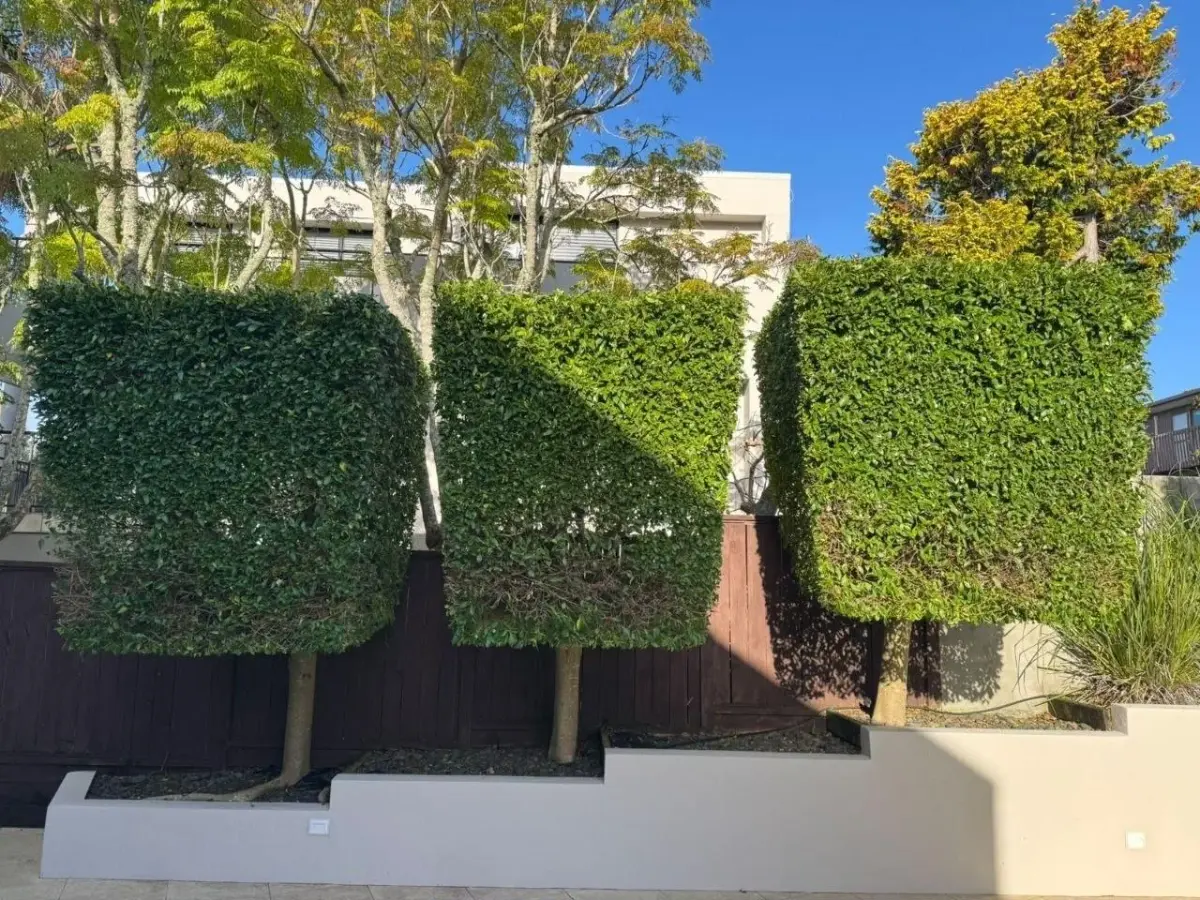
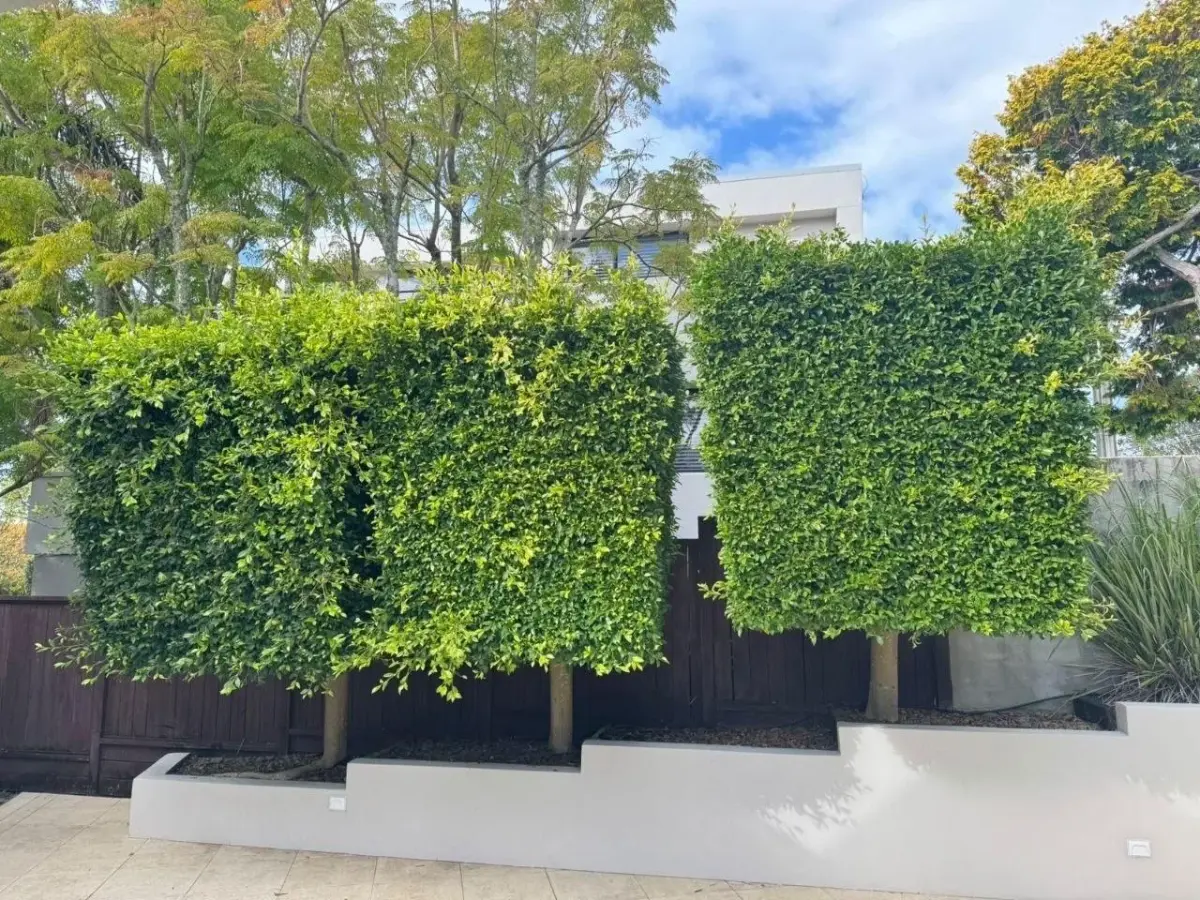
Crown lifting to get branches off a roof or driveway, crown thinning to let light through, and deadwooding to take out what’s already dead or hanging. Cuts made at the branch collar so the wound seals properly.

04

Boundary & shelter belt runs

Long perimeter hedges and shelter belts on lifestyle blocks. These are priced by the run rather than the plant, and the waste volume is usually the biggest part of the job.

05

Clearance work around structures

Branches over roofs, gutters, fences and driveways cut back so they stop dropping debris and rubbing. Also the branches blocking the light from a window you’d forgotten used to get sun.

06

Full clean-up and waste removal

Everything cut leaves with us. Hedge and tree work generates a genuinely large volume of green waste — far more than most people expect — and clearing it is a real part of the job, not an afterthought.

The one rule that decides whether a hedge stays dense Cut a hedge slightly narrower at the top than at the base — a subtle ‘A’ profile. It lets light reach the lower foliage. Trim it wider at the top and the hedge shades its own base, goes leggy and bares off underneath. It is far and away the most common structural fault we find in older Tauranga hedges, and it is very slow to undo.
RightNarrower at the top — light reaches the bottom
WrongWider at the top — the base goes bare
Know your hedge

How hard you can cut depends entirely on what it is

Some species come back from bare wood without complaint. Others never do, and a single cut too deep leaves a brown hole that stays there. Here’s how the common Bay of Plenty hedges behave.

01 Griselinia NZ native · fast Cuts back hard

The most popular hedge in the country, and the most forgiving

Glossy apple-green foliage, thrives in coastal wind and salt — which is exactly why it’s everywhere from Mount Maunganui to Pāpāmoa. It will put on around 50cm a year when it’s happy, so it needs a schedule or it takes over.

  • Trim frequencyTwo to three times a year to stay sharp
  • Best timingMid-spring for the main cut, tidy in late summer
  • RecoveryRe-shoots from bare wood over a season or two
  • If it’s thinTrim the sides more than the top to thicken it
02 Pittosporum & Photinia, Camellia Cuts back hard

Tough, fast and happy to be restored

Another group that tolerates a hard cut, which makes them the easiest overgrown hedges to rescue. Pittosporum in particular can take a strong reduction in early spring and be back to a dense screen within a couple of seasons.

  • Trim frequencyTwice a year suits most established runs
  • Best timingSpring after flowering, then again late summer
  • RestorationHard reduction in early spring to reset the shape
  • Camellia & photiniaCut once flowering finishes, or you lose next season’s buds
03 Buxus Slow & formal Light cuts only

Slow-growing, so precision matters more than power

The classic low border and formal shape. It grows slowly enough that mistakes take a long time to grow out, so it wants shaping rather than cutting. Worth knowing: the humid Bay of Plenty summer is prime conditions for buxus blight.

  • Trim frequencyOnce or twice a year is plenty
  • Best timingA cut around late October, tidy again in February
  • Watch for blightBrown patches spreading — infected material removed, not composted
  • Cut on a dull dayFull sun scorches the freshly cut leaf edges brown
04 Conifers Leylandii, macrocarpa Never cut past green
The one people get badly wrong

Cut into brown wood and it stays brown — permanently

Leylandii, macrocarpa and thuja will not regrow from bare, needle-free wood. There is only a thin shell of green on the outside, and once you cut past it you are left with a hole that never fills in. We see this on Tauranga boundaries constantly, usually after someone was told a hedge could just be “taken back a metre”.

  • ReductionOnly gradual — trimmed to just inside the green each time
  • Already too far gone?Honest answer is usually replacement, not restoration
  • PreventionRegular light trims keep the green shell where you want the face
  • Height workThe top can be reduced; the sides are where the risk sits
See the difference

Shapeless to sharp

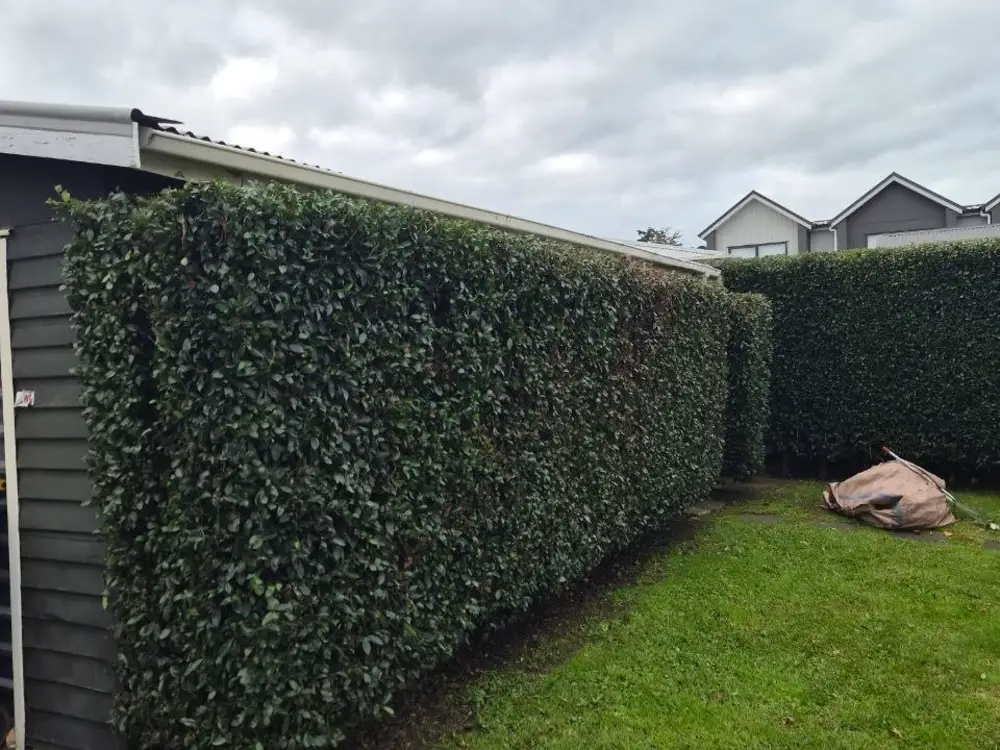
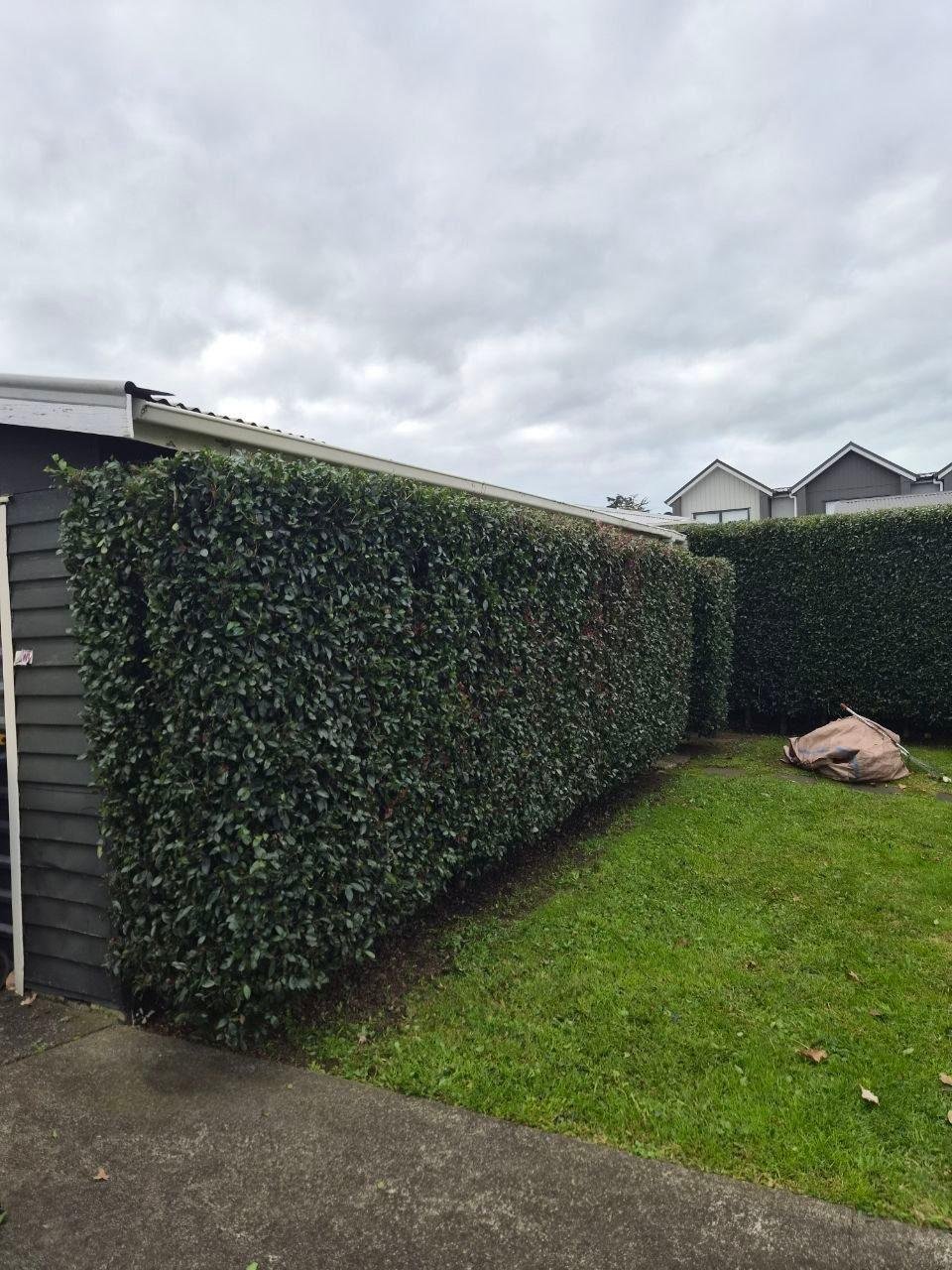
Drag the slider across to see a Tauranga boundary hedge before a reduction, and after it was cut back to a proper profile.

A neatly trimmed boundary hedge with a clean square profile An overgrown, shapeless boundary hedge before trimming Before After
01
Cut to the speciesHow hard we went was decided by what the hedge is.
02
Profiled properlyNarrower at the top so the base stays green and dense.
03
Cleared outClippings off the hedge, out of the beds, onto the trailer.
Pricing

What hedge and tree work costs

Nobody can quote a hedge by the metre honestly — height, species, access and waste volume change the number far more than length does. These are the bands most Bay of Plenty jobs land in.

Indicative only. We quote per property after looking at it, prices exclude GST, before anything starts.

Get an exact number
Light maintenance trim A small hedge in good condition that gets cut regularly. Quick, clean, minimal waste.
From $80 + GST
Standard residential hedge The typical suburban hedge wanting a tidy cut and some shaping. The most common job we do.
From $150 + GST
Large boundary hedge or shelter belt Long perimeter runs and tall hedges. More labour, more gear, and a great deal more green waste.
From $300 + GST
Overgrown hedge reduction Neglected hedges needing height reduction, reshaping and recovery work over one or more visits.
From $400 + GST
Tree pruning & crown work Depends heavily on size and access. Crown thinning a mature tree takes far longer than deadwooding a small ornamental.
From $300 + GST
On a regular schedule Two to four trims a year, depending on species. Nothing is ever overgrown, so each visit is quicker and the cost per trim drops substantially.
Best value
Before you cut

Two things worth knowing before anyone touches that tree

Tree work near lines and on protected trees is regulated in New Zealand, and the obligations sit with the property owner. Most people find this out via a letter.

Trees near power lines

Under the Electricity (Hazards from Trees) Regulations 2003, keeping trees a safe distance from overhead lines is the tree owner’s legal responsibility, not the network’s. Powerco is the lines company across most of the Bay of Plenty.

  • Work within 4 metres of a live line needs a close approach consent from the line company first
  • Inside that zone, only approved and qualified operators may do the work
  • The network typically does the first cut free; after that the cost sits with the owner
  • A Cut or Trim Notice comes with a deadline — commonly within 45 working days

If your branches are anywhere near a line, tell us when you call. We’ll look at the clearance before quoting and point you to the right people if the job sits inside the consent zone.
Protected & notable trees

Some trees are protected under the district plan or listed as notable, even on private land. Felling one or significantly altering it can need resource consent, and doing it without can carry real penalties.

  • Protection can apply to a specific tree, or to any tree in a listed area
  • Routine maintenance trimming is usually fine; significant alteration is the trigger
  • Worth a check with Tauranga City Council before committing to a big reduction
  • Protected trees are also excluded from the standard ‘clear to the sky’ line rules

We’ll flag it if a tree looks like it might be protected. Getting that answered first is a lot cheaper than getting it wrong.

Why Lawnify

The damage from a bad trim shows up months later

By the time a hedge browns off or a tree throws out weak regrowth, whoever cut it is long gone. Which is why we’d rather get it right the first time.

We identify it before we cut it

Griselinia and pittosporum can take a hard reduction. A conifer cannot, and cutting one past the green shell leaves a permanent brown hole. Knowing which is which before the saw starts is the whole job.

Profile and timing, not just a straight line

Cut narrower at the top so the base stays dense. Main reductions timed to late winter or early spring, before new growth. Camellia and photinia cut only once flowering has finished, or you take next year’s buds off with the clippings.

We know where our limit is

Fully insured with public liability on every job. But large removals, anything requiring climbing gear, and work inside the power line consent zone belong with a qualified arborist — and we’ll tell you that rather than have a go.

Lawnify crew trimming a hedge in Tauranga
5+ Years shaping
Bay of Plenty hedges
Service areas

Where we work

From the foot of Mauao right through to Te Puke and Ōmokoroa. If your suburb is not listed it is still worth asking — our coverage across the Bay keeps growing.

FAQs

Hedge & tree questions, answered

The things Tauranga homeowners ask us most before booking.

Still got a question? Send a photo of the hedge or tree and we’ll tell you straight what can be done with it.

Get my free quote 0800 632 723
How often should my hedge be trimmed?

Two to four times a year for most residential hedges, depending on the species. Fast growers like griselinia and leylandii want three; pittosporum and photinia are happy with two; slow formal buxus often only needs one or two shaping cuts. Trimming regularly is also considerably cheaper over time, because you never end up paying for a reduction.

When’s the best time of year to do it?

Late winter to early spring is best for a major trim, just before new growth starts — it sets the hedge up to fill in strongly. Light maintenance trims can happen through spring and summer. We avoid heavy work in late autumn, since fresh cuts going into winter don’t heal well, and we avoid cutting in wet weather because that’s how disease travels between plants.

Can you cut my overgrown hedge right back?

It depends entirely on the species, and this is the single most important question to get right. Griselinia, pittosporum, photinia, camellia and corokia will all re-shoot from bare wood, so an overgrown one can usually be reduced hard and be back to a good screen within a season or two. Conifers — leylandii, macrocarpa, thuja — will not. Cut past the green and it stays brown permanently. Those can only be brought in gradually, or accepted as they are.

My branches are near the power lines. Can you deal with that?

Tell us when you call and we’ll assess the clearance first. Work within four metres of a live line requires a close approach consent from the lines company and can only be done by approved operators. If the job sits inside that zone we’ll point you to the right people rather than take it on. Also worth knowing: keeping trees clear of lines is legally the property owner’s responsibility, and the network will usually do the first cut free.

Why does my hedge look bare at the bottom?

Almost always because it’s been cut wider at the top than at the base, so the top shades the bottom and the lower foliage gives up. It’s the most common structural fault in older hedges. The fix is to re-profile it slightly narrower at the top and give the base a couple of seasons of light to fill back in — achievable on most species, though not on conifers.

Do you take the clippings away?

Yes, included. Hedge and tree work produces a lot more green waste than people expect — a single boundary run can fill a trailer. It all leaves with us, and the beds underneath get cleared out too, not just the lawn.

Do you remove whole trees?

We handle trimming, pruning and crown work, plus smaller shrubs and trees that can be taken down safely from the ground. Large removals, anything needing climbing gear or a cherry picker, and anything near a structure or line belongs with a qualified arborist. We’ll tell you honestly which side of that line your job falls on. If you’re left with a stump afterwards, we can grind that out.

How is GST handled on your quotes?

Prices are quoted exclusive of GST, with GST added at the standard rate on your invoice. The number you approve is the number you pay. If we find something on the day that changes the scope, we stop and talk to you about it before carrying on.

Free quote

Get those hedges back into shape

Prices exclude GST. Fully insured. Every clipping removed.