
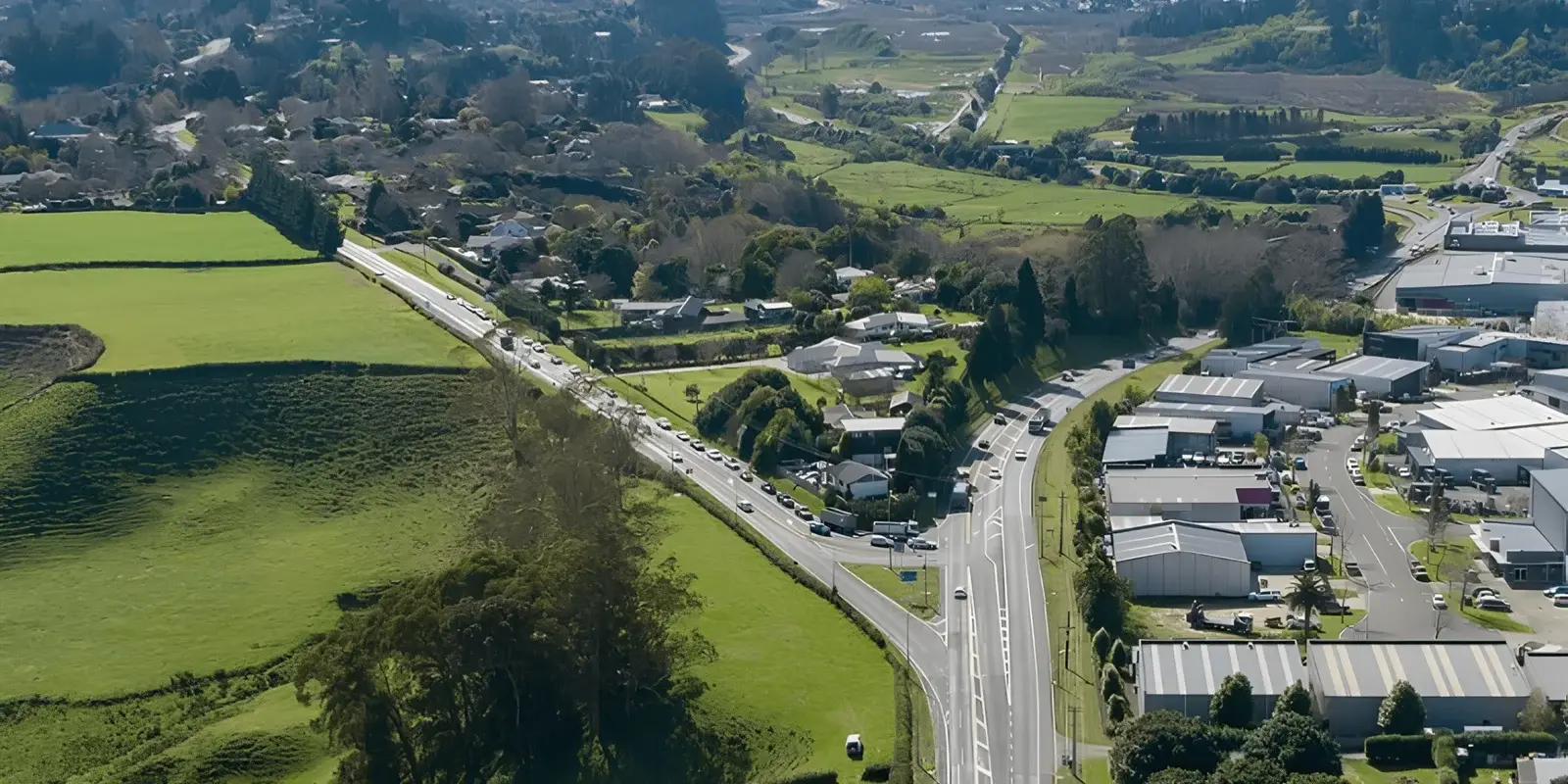
Pittosporum, photinia, camellia and corokia take a hard cut and fill back in. Griselinia and buxus come back slowly and want staging. Leylandii, macrocarpa, thuja and cryptomeria do not regrow from brown wood at all. Same hedge trimmer, three completely different jobs, and knowing which one you have is the service.
Tree & Hedge Trimming
Bethlehem
Tree & Hedge Trimming in Bethlehem
We identify what we are cutting before we cut it, because a hard trim that a pittosporum shrugs off will leave a griselinia bare for a season and will finish a conifer permanently. Hedges get shaped narrower at the top so the base stays green, overgrown ones come down in stages, and every clipping is chipped and taken. From $85 a visit.
From $85per visit, clippings removed
Agreed before a blade moves. Chipping and disposal are inside it.
- Species checked before we cut
- Canopy checked in nesting season
- Clippings chipped and taken
- We say what a hedge can take
Hedge trim quote
Address, rough length and height, and the species if you know it.
Police-vetted crews
Species identified first
Green waste included
No topping, ever
Three things that decide how a hedge trim turns out
Get all three right and the hedge is green the week after. Get one wrong and you are looking at brown sticks until next summer.
Native birds are protected under the Wildlife Act, and that protection extends to their eggs. Nesting season is also exactly when everyone wants their hedges tidied after winter, so we look through the canopy before the trimmer starts. It is our own rule rather than a box-ticking exercise, and on the old tree-lined streets here it earns its place.
A hedge left wider at the top shades out its own lower growth, year on year, until the bottom metre is bare twigs and nothing will fix it quickly. Leaning the sides in means the bottom never stops getting sun. It is the single most common reason an old hedge looks thin down low.
3groupsHow fast a species recovers from a cut
CanopycheckedLooked through before the trimmer starts
NotoppingWe will not cut leaders back to stubs
$85fromPer visit, clippings taken
Staged reduction or one hard cut
One decision, and it is the difference between a green hedge and a row of sticks.
Take a pittosporum or a photinia back hard and it barely notices; the growth is back inside a season. Do the identical thing to a griselinia or a buxus and the blade goes into brown wood carrying no live buds, and that stretch of hedge stays bare for a very long time. Occasionally for good.
Where a slow-recovering hedge has got away on you, the answer is staging it: a third at a time across two or three seasons, every cut landing in green growth rather than brown. It takes longer and it is the only route that arrives at a shorter hedge without an ugly year in the middle.
The conifers are not a staging problem, they are a one-way door. That whole group refuses to push new growth out of bare wood, so the moment a cut on one of them goes past the green, that stretch is finished. Staged or not, there is no coming back, which is why we will say no to bringing one down rather than take the money.
Which is why nobody here asks how much you want off until we know what we are standing in front of.
We will not top a tree, whoever asks. Cutting leaders back to stubs reads as a fix for about a week. What grows back is weak, crowded and badly attached, and on several species it starts a decline that ends in removal.
What a hedge trimming visit includes
Five steps, and the first two happen before a blade moves.
- Work out what it isWhich of the three recovery groups your hedge belongs to. Everything after this step follows from the answer.
- Look through the canopyIn nesting season, before cutting starts. Native birds and their eggs are protected, and we would rather lose twenty minutes than find a nest with the trimmer.
- Cut it to a taperNarrower at the top than the bottom, so the base keeps getting light, and the line kept straight down its length.
- Bring it down in stagesWhere the species needs it, a third per season and no more, however much you want it gone in one go.
- Chip it and take itEverything cut goes through the chipper and leaves on the trailer. Nothing gets stacked behind the shed for you to deal with.
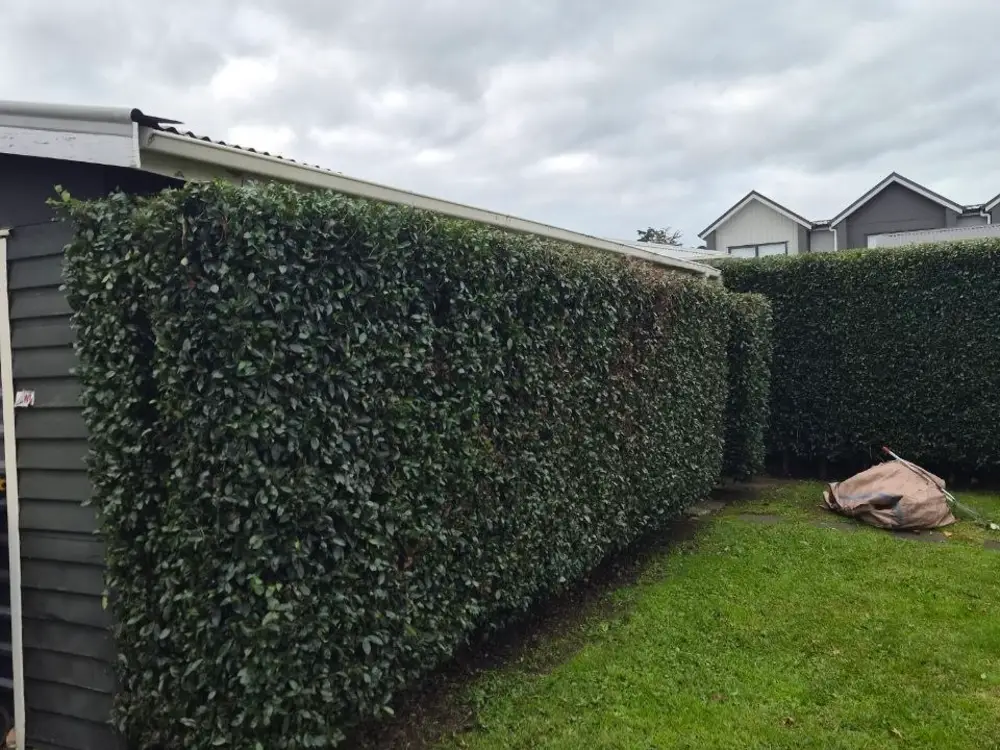
ClippingsChipped and gone
PhotoSent after
Nothing goes into brown wood on a slow-recovering hedge, whatever the instruction is. Where yours genuinely needs bringing down a long way, you get the staged plan and the timeline for it before you agree to anything — rather than a promise of one visit that hands you a bare hedge.
Young and mature hedges across Bethlehem
Young planting and thirty-year-old hedges want opposite things from a trimmer.
Up on the ridge streets most of the hedging went in as boundary and shelter planting and is still filling out. Down on the older established streets the hedges and trees were planted long before any of that and have a full canopy on them. A young hedge wants shaping lightly and often; a mature one wants a line held and occasionally a careful reduction. Telling us which you have saves a conversation on the day.
Young ridge-top planting
- Light formative trims while the roots are still establishing, rather than anything that counts as a cut back
- Fast shelter species take early shaping well, which is lucky, because that is what most of these boundaries were planted in
- Wind on an open ridge is already stressing young planting, so a hard cut on top of that is two problems at once
- Getting the taper right in the first few years is what stops you paying for a staged correction later
Established, tree-lined streets
- Hedges on these streets are often decades old, fully grown, and holding a line somebody set a long time ago
- A slow-recovering hedge left too long is a staging job, and the first visit will not be the finish
- A full mature canopy is exactly where a nest is easiest to miss, so it gets looked through in nesting season
- The work here is holding a line that already exists rather than creating one
Sometimes the advice is to leave it alone for another year. Cutting young planting back before it is ready slows down exactly the shelter it was put in to provide, and on an exposed ridge that costs you more than the trim was worth. You will get told that rather than charged for it.
What hedge trimming costs in Bethlehem
From $85 a visit with the clippings chipped and carted, fixed once we have seen the hedge.
-
From $85
Shape trim, per visit
Small to medium hedge, tapered and tidied, clippings taken
-
Quoted per visit
Longer boundary runs
Measured and quoted on the length and the height
-
Quoted per stage
Overgrown hedge, staged down
A third per season on a slow-recovering species
-
Quoted per job
Tree pruning
Depends entirely on height and what we can get a platform to
What moves it
Getting to itA narrow run costs more time than an extra ten metres of hedge does
SpeciesWhich group it falls in sets both the method and how many visits
HeightAnything off the ground needs a platform, and that is slower
What comes offA neglected hedge fills a trailer that a maintained one would not
Past the starting figure this gets quoted rather than tabulated, because length is the least of it. Height, access, species and the state you have let it get into all move the number, and a band pitched on metres would be wrong on half the street. What is reliably true is that a hedge kept to its line costs less across a year than one rescued annually, and a slow-recovering species rescued annually eventually stops recovering.
The Bethlehem trimming year
What a hedge will tolerate changes month to month more than people expect.
JanFebMarAprMayJun
JulAugSepOctNovDec
Canopy checked first — Sep–DecGrowth flush trims — Dec–FebMain shaping — Mar–Aug
Nesting season does not close the door, it just changes the order of the morning. A light trim still goes ahead. It simply does not start until somebody has looked through the canopy, and if there is an active nest in there you will be told and we will come back for it later.
Ask us to take a conifer hedge down into brown wood and the answer is no, even with the job already won. It will not regrow from there, and a row of dead screening is a worse outcome for you than a conversation you did not want to have.
What Bethlehem owners ask about hedge trimming
What owners ask before they let anyone near a hedge they have waited years for.
01How much is hedge trimming in Bethlehem?
Eighty-five dollars is where a visit starts, chipping and disposal included. From there it moves on height, how easy the hedge is to get at, which species it is, and how long it has been left. Send photos and a rough length, or we come and look. Either way the figure is agreed first.
02Which hedges can take a hard cut and which cannot?
Broadly three groups. Pittosporum, photinia, camellia and corokia bounce back from a hard cut. Griselinia and buxus take their time and need the work split across seasons. The big conifers will not refurnish bare wood under any circumstances. Not knowing which you own is normal, and sorting that out is the first thing we do.
03Our hedge has got far too tall. Can you just take it down?
On something fast-growing, usually. On a slow one it has to come down in thirds across a few seasons, with every cut staying in live growth. On a conifer it does not come down, because the blade would have to go somewhere nothing will grow back from.
04Will you top our tree?
No, and not for any price. Cutting the leaders back to stubs looks tidy for about a week. What regrows is weak, crowded and poorly attached to the trunk, and on several species it begins a decline that finishes in removal.
05Why do you look through the canopy before cutting?
The Wildlife Act protects native birds, and that protection reaches their eggs. Nesting season also happens to be when everybody wants the winter mess tidied up. So the canopy gets a proper look first. Nobody makes us do it; on streets with canopies this full it is simply the sensible order.
06What if you find an active nest?
Then that section waits. We will do what can be done safely elsewhere, tell you what we found, and come back for the rest once it is clear. Nobody wants the alternative outcome on their conscience or their property.
07What is the A profile and why does it matter?
The hedge is cut so it leans in as it rises. Left wider up high, it throws shade on its own lower growth year after year, and eventually the bottom is nothing but bare stems, which takes a long time to undo. Leaning the sides in keeps light on the base for good.
08How often should a hedge be trimmed?
Six to eight weeks keeps an edge on it through the warm growth flush, stretching to two or three months once things cool off. Keeping the line costs less over twelve months than one annual rescue does, and it is considerably better for the hedge.
09What happens to all the clippings?
Through the chipper and onto the trailer. Nothing gets left in a heap by the fence, and the disposal was inside the figure you were quoted rather than added to it afterwards.
10Does a newly planted hedge get treated differently?
Very much so. Young planting gets light formative trims while the root system is still establishing, not anything resembling a cut back. On an exposed ridge section where the wind is already stressing it, that matters more again.
11Do you take whole trees down?
Felling a standing tree sits outside this service. We prune, reduce and shape. If a tree genuinely has to come out we will say so and point you toward the right people, and stump grinding is here for whatever they leave behind.
12Can you clear the mess from an old hedge we pulled out?
Yes, though that is shrub and rubbish removal rather than trimming, and it gets quoted as its own job so the two do not blur together on one invoice.
13Do I need to be home?
No. We need access to both sides of the hedge where that is possible, and a clear instruction on the height you want held. The after photo goes through either way.
14Which parts of Bethlehem do you cover?
All of it. The hedging is young on the ridge streets and mature on the older ones, which changes the work rather than the coverage. An address on the suburb boundary is worth sending over to check.
Other Lawnify services in Bethlehem
The jobs a trim usually leads to. Shrub and rubbish removal handles anything coming out rather than coming back, and the regional trimming page covers the other towns.
08
Stump GrindingCompact grinders for sections a full-size machine can’t reach.
09
Shrubs & Rubbish RemovalRoots out properly, waste sorted into the right stream.
10
Mulching, Bark & Weed MatLaid at a depth that actually blocks light, and kept off the stems.
11
Rental & Section Clean-UpsDated before and after photos, itemised invoice.
12
Commercial Grounds MaintenanceScheduled visits, single point of contact, H&S done properly.
01
Lawn Mowing & EdgingWeekly to monthly, edges cut every visit.
00
All Bethlehem servicesEvery service we run here, and what this ground does to each of them.
Tree & Hedge Trimming in other areas
