
Three recovery groups, and which one your hedge belongs to decides everything after it. Pittosporum, photinia, camellia and corokia shrug off a hard cut and fill back in within a season. Griselinia and buxus take it badly and have to be staged. The conifers — leylandii, macrocarpa, thuja, cryptomeria — have no buds in brown wood at all, so a cut past the green is permanent.
Tree & Hedge Trimming
Mount Maunganui
Tree & Hedge Trimming in Mount Maunganui
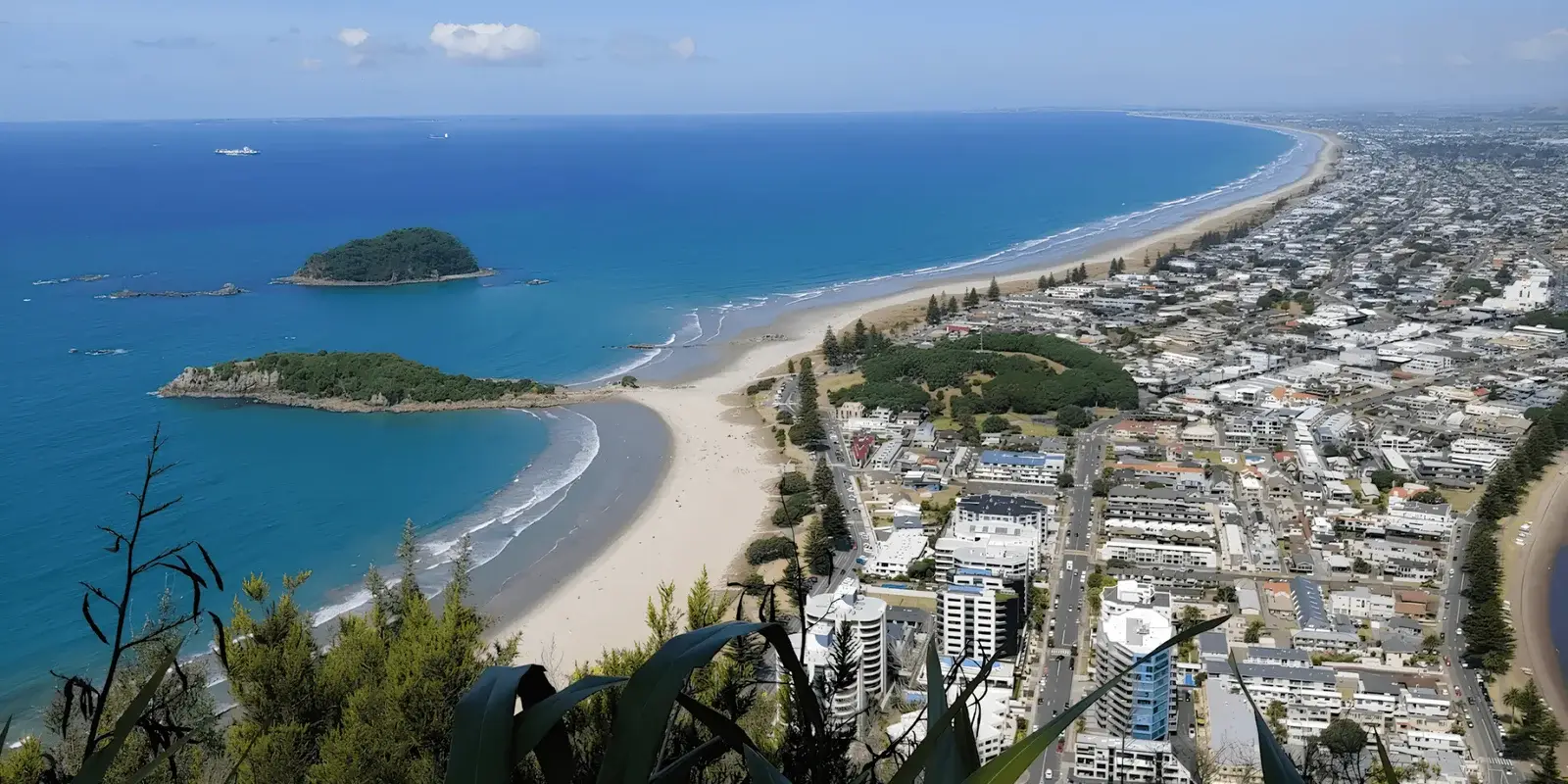
We trim hedges and prune trees across Mount Maunganui — the twenty-year griselinia boundaries behind Oceanbeach Road, the salt-burnt coprosma along the Marine Parade frontages, the pōhutukawa leaning over a harbour-side drive. The first thing we do is identify what it is, because on this peninsula the species decides what the hedge can survive far more than the trim does.
From $85a visit, chipping and carting in
Agreed before a blade comes out, with the chipping and carting already counted in.
- Species identified before any cut
- Canopy checked for nests in spring
- Clippings chipped and carted off
- Never a cut into brown wood on a conifer
Hedge trimming quote
What the hedge is, and roughly how long and how tall it has got.
Police-vetted team
Owner-run, based in Tauranga
Clippings leave on the trailer
Figure agreed before we cut
Three things that decide how a Mount hedge trimming job turns out
Get them right and the hedge stays green all the way through the cut. Miss one and there is grey wood on your boundary until next summer.
Disturbing an active native bird’s nest is an offence under the Wildlife Act, and spring is both when they nest and when everyone decides the hedge has got away over winter. So the canopy gets looked over before anything starts. That is not us being careful, it is the law, and it occasionally means a trim waits a fortnight.
Let a hedge grow wider at the top than the bottom and it shades out its own base, which thins and then goes bare — and bare base on a slow-recovering species is the one fault that cannot be cut back into shape. Taper it the other way and light reaches the whole face, year after year. It costs nothing extra to cut it correctly.
3recovery groupsWhich one yours is in decides the method
100+customersHappy customers across the Bay
30+jobsJobs completed around Tauranga
$85fromPer visit, clippings carted off
Staged reduction against one hard hedge trimming cut
The difference between a griselinia boundary that stays green and a row of grey sticks you look at for two years.
A pittosporum or a photinia barely registers a hard cut — one season later the gap has closed over and you would not know. Griselinia and buxus are the opposite: the blade passes into old wood that holds no dormant buds, and that run of hedge stands grey and open for a very long stretch. Now and again it simply never fills in.
What works instead on a slow recoverer that has got too tall is a reduction taken in stages — about a third off each season over two or three years, keeping every cut inside live growth. It is the patient route, and the only one that reaches the height you asked for without a grim-looking year on the way through.
The conifers sit outside all of this. Leylandii, macrocarpa, thuja and cryptomeria carry no dormant buds in old wood whatsoever, so staging changes nothing: once a cut is past the green, that face of the hedge is finished for good.
So the opening question here is never how much you would like taken off. It is what we are looking at.
Nobody here will top a tree, whatever you offer to pay for it. Taking main leaders back to stubs reads as a fix for about a week; what follows is weak, crowded regrowth attached to wood that was never meant to carry it.
What a Mount Maunganui hedge trimming visit includes
Two checks before a blade moves, and nothing gets cut until both are done.
- Species checkConfirms the recovery tier before a single cut — this decides everything that follows.
- Nest check, spring visitsCanopy checked for active native bird nests before any cutting starts, as required under the Wildlife Act.
- Shape to the “A” profileTapered narrower at the top so light keeps reaching the base, hedge line kept straight.
- Reduction, staged if neededA third at a time on slow-recovering species that need bringing down — never more in one visit.
- Chip it and take itEverything cut gets chipped and loaded, with nothing stacked behind the garage for somebody else to deal with. The disposal was in the figure you agreed.
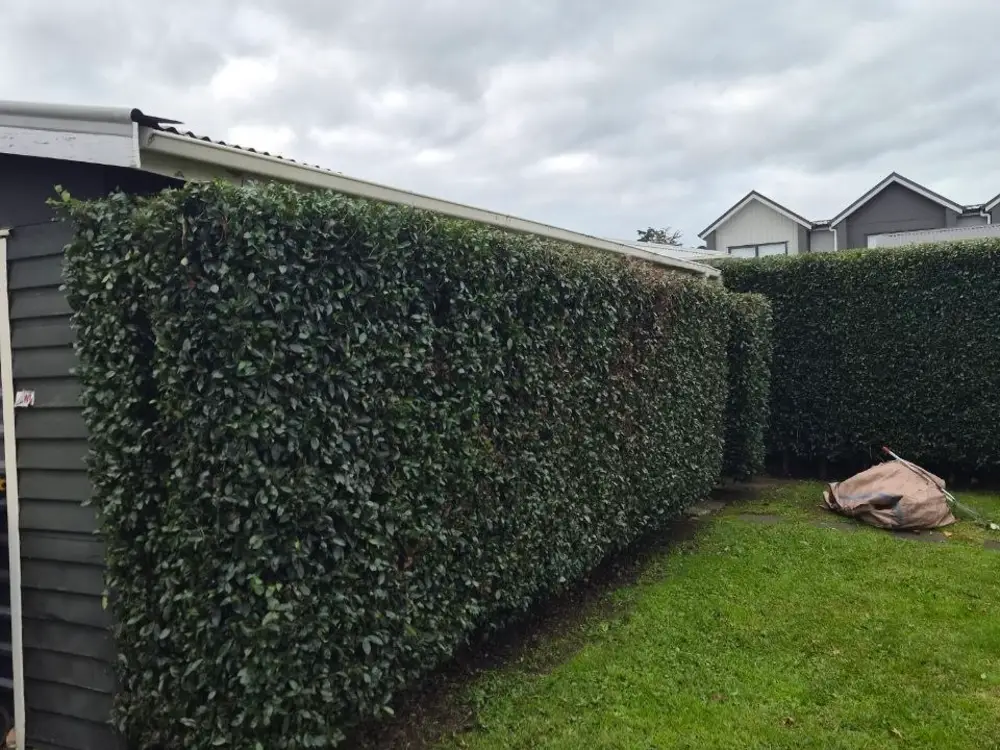
A griselinia or buxus hedge does not get taken into brown wood here, at any price. Where one truly has to lose a lot of height, what you get first is the plan in writing: how much comes off each season and how many seasons it runs for. Not a single-visit promise and a grey boundary afterwards.
What a Mount Maunganui hedge is up against, by coastline
Mature planting is everywhere on this peninsula. What it is fighting depends entirely on which way it faces.
Twenty-year griselinia boundaries and well-established pōhutukawa turn up on sections all over the Mount. Put two of them a few hundred metres apart, one facing the surf and one facing the harbour, and they will be ageing in completely different directions — which means they want completely different work from us.
Salt-damaged growth
- Onshore wind and airborne salt scorch the seaward face and leave it brown
- Light trims more often, to take the burnt growth off before it spreads back
- Griselinia and coprosma dominate out here, and not by accident
- The inland face is almost always in better condition than the one facing the beach
Faster, lusher growth
- Out of the salt and most of the wind, so everything grows considerably harder
- Softer hedging and big established pōhutukawa are far more common here
- Shaping comes round more often, purely to keep up with the growth rate
- Damp shaded corners are where fungal trouble shows up in a dense hedge
Mauao is why the harbour side has any shelter at all. It is also a pā site of national significance, which is to say the reason your harbour-side hedge has an easier life than your neighbour’s is a place that is treated with respect rather than used as a selling point.
What tree and hedge trimming costs in Mount Maunganui
From $85 a visit with the chipping and carting inside it, settled once somebody has identified what they are cutting.
| Tree & hedge trimming | Shaped, tapered, clippings chipped and carted | From $85 |
|---|---|---|
| Overgrown hedge, staged reduction | A third a season on slow-recovering species | Quoted per stage |
| Stump grinding | Once something has come out altogether | Priced on site |
| Shrubs & rubbish removal | Clearing whatever else is going from the bed | From $95 |
What moves it
Getting to itA tight side run slows a job more than extra hedge length does
What it isThe recovery group sets both the method and how many visits
How highAnything off a ladder or a platform costs more than ground-level work
How much comes offA hedge left for two years is mostly a chipping job
Little and often is cheaper over a year than one big catch-up, and it is not close. A hedge kept in shape is a short visit every time, and it is the only reliable way of never needing a staged reduction at all — which is the expensive, slow outcome this whole page is trying to keep you away from.
The hedge trimming year on this peninsula
How much a hedge can safely have taken off changes month by month, and by more than people expect.
JanFebMarAprMayJun
JulAugSepOctNovDec
Main shaping window — Mar to Aug
Light trims only — Dec to Feb
Nest check first — Sep to Nov
None of this puts spring off-limits, it just puts a check in front of it. A light tidy still happens in October. It simply does not begin until the canopy has been searched for an active nest, and where one turns up, that length of hedge is left standing until the chicks are gone.
Two jobs get turned down on this service, every time, regardless of what is offered for them. Topping a tree, because the regrowth that follows is weaker than what was removed and the bill for it arrives years later as a removal. And taking a conifer into brown wood, because that face of the hedge will never put out another leaf and no amount of explaining afterwards changes it. Both would be easy money today and a complaint we would deserve in three years.
Hedge trimming questions from Mount Maunganui
The eight that come up at the gate, more or less every time we quote a boundary here.
01Does tree and hedge trimming in Mount Maunganui include topping a tree?
It does not, and that is a flat no rather than a negotiating position. Cutting leaders back to stubs buys a tidy outline for about a week; after that you get crowded, weakly attached regrowth on wood that was never structured to hold it, and on several species the tree starts a slow decline that finishes as a removal bill. Where something genuinely has outgrown its position we will quote a proper reduction, or recommend taking it out, and leave the topping to somebody else.
02Why does hedge trimming in Mount Maunganui pause for a nest check in spring?
Because an active native nest is protected, and interfering with one is an offence. Spring happens to be both when the birds are sitting and when every hedge on the peninsula looks like it needs attention, so the two collide constantly. Somebody goes through the canopy before a blade moves, and if there is a nest in it, that run of hedge waits until the birds have finished.
03Which Mount Maunganui hedges can take a hard cut, and which cannot?
Three groups, and yours will be in one of them. The forgiving ones close a hard cut over inside a season. The slow ones resent it and have to be brought down in stages across two or three years. And the conifers cannot be cut past their green at all, not once, because there is no bud behind it to come away. We will tell you which group you have before quoting, and on this coast the answer is griselinia more often than anything else.
04How often does a Mount Maunganui hedge need trimming?
Through the warm half of the year, roughly every six to eight weeks; through the cool half, every couple of months. Which end of those ranges you sit at is a question of which way your section faces — sheltered harbour-side hedges put on noticeably more growth than a frontage taking the full onshore wind, so the same hedge on two Mount streets wants two different cycles.
05What happens to the clippings after hedge trimming in Mount Maunganui?
They go through the chipper and leave with us. Nothing gets stacked along the fence line or tucked behind the garage for you to find later, and the tip charge sat inside the number you agreed to rather than arriving behind it.
06Can a salt-burnt Mount Maunganui hedge be brought back by trimming?
Improved, reliably. Cured, no. Taking the scorched seaward growth off lets the plant put its energy into the parts that are still working, and the hedge visibly recovers from it. What does not change is the exposure, so on a genuinely open frontage this is a cycle of management rather than a single repair, and anyone promising otherwise has not stood in that wind.
07Will hedge trimming in Mount Maunganui cover taking a whole tree out?
No. Felling a standing tree is a separate trade with separate gear, and we refer that out rather than take it on. What we can do is tell you honestly whether the tree needs to come out or whether a reduction would do, and once it is down and only the stump is left, grinding that out is ours.
08What drives a Mount Maunganui hedge trimming price?
Getting to the hedge, ahead of the length of it. A boundary you can walk a chipper alongside is quick work; the same boundary reached through a 900mm side gate, carrying everything out by armful, is not. Height comes next, since working from a ladder or a platform is slower than working off your feet, and after that the sheer volume coming off a boundary nobody has touched for two seasons.
Other Mount Maunganui jobs for the same visit
Cheaper bolted onto a trim than called in as a separate visit, because the gear is already through the gate.
Stump GrindingCompact machines for sections a full-size grinder will not fit.
Shrubs & Rubbish RemovalRoots lifted out whole, waste split into its proper streams.
Mulching, Bark & Weed MatLaid at full depth, kept a hand width clear of every stem.
Rental & Section Clean-UpsPhotographed start and finish, one itemised invoice.
Commercial Grounds MaintenanceOne contact, a set visit schedule, H&S paperwork that stands up.
Lawn Mowing & EdgingTwo cutting heights on this peninsula, edges done every time.
All Mount Maunganui servicesEvery service we run here, and what this coast does to each.
Tree & Hedge Trimming in other areas
