
Under that and daylight still gets through to the seed sitting in the top centimetre of soil, which is the only thing a bark layer is really there to stop. We check depth against a marked stake as the beds fill, not by standing back and squinting at it.
Mulching, Bark & Weed Mat
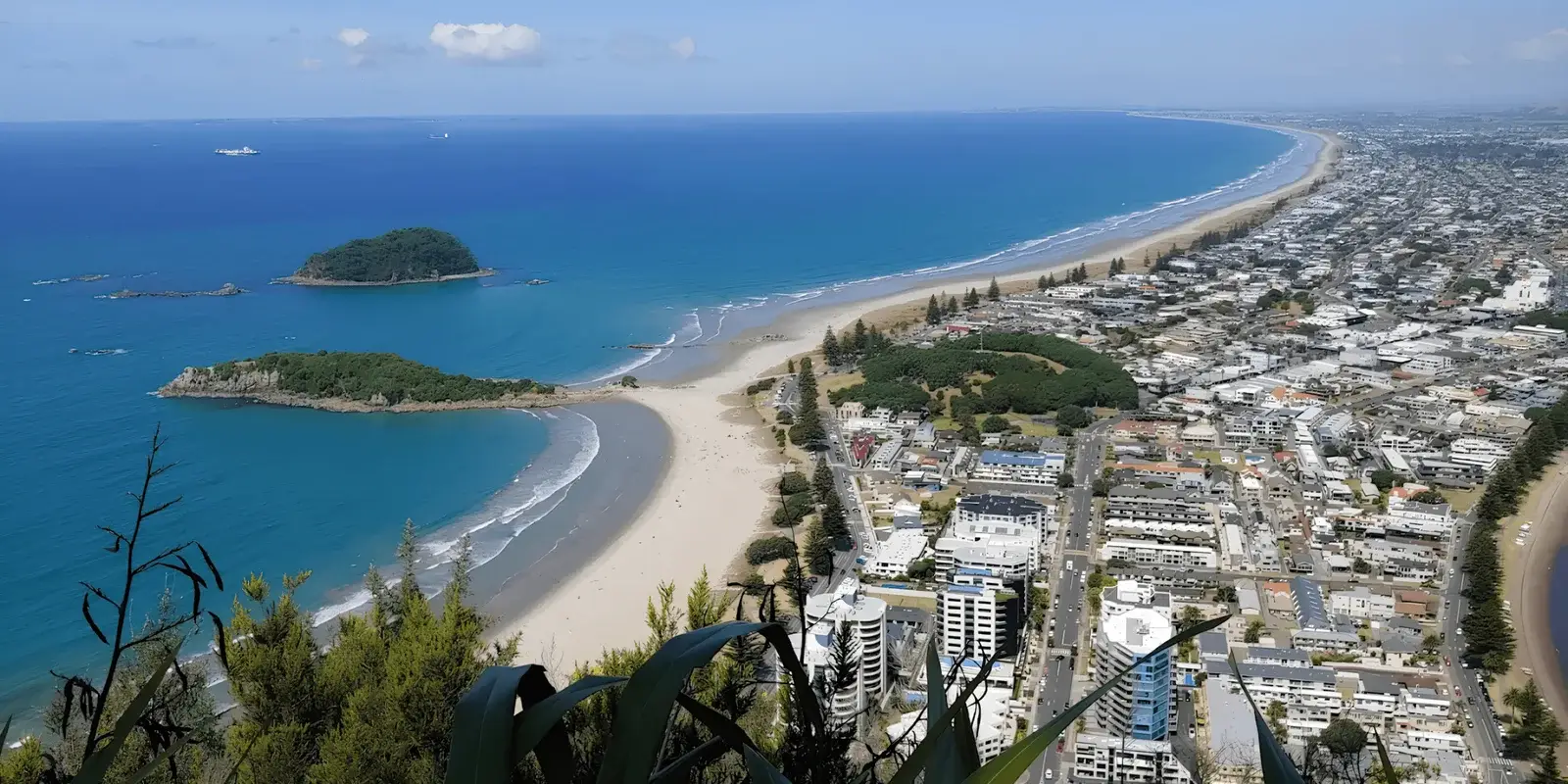
Mount Maunganui
Mulching, Bark & Weed Mat in Mount Maunganui
We weed, edge and bark garden beds right across the Mount — the narrow courtyard strips behind Maunganui Road, the long front borders out on Oceanbeach Road, the shaded side beds down towards Pilot Bay. Bark goes on at 75 to 100mm, measured off a stake rather than eyeballed, because anything thinner lets light back to the weed seed and lets dune sand dry out between waterings.
From $149supplied, delivered & spread
One number, agreed standing in the bed. Bark, labour and every weed we pull out sit inside it.
- Measured to 75–100mm, not scattered
- Weed mat only in beds that earn it
- Every bed hand-cleared before bark
- Bark grade is your call, not ours
Mulching quote
Street name and a rough bed size is plenty to price it from.
Police-vetted team
Owner-run, based in Tauranga
Weeds and clippings taken away
Fixed price before any bark lands
Three things that decide whether mulching works
Two of the three are free to get right. They are also the two most often skipped.
Bark heaped up the trunk of a pittosporum or a photinia keeps the bark permanently damp, and that is the one condition collar rot needs to get started. Pulling the layer back by a hand width at each base costs nothing and saves the shrub.
Rolled across a bed that did not need it, mat slows the water and air a root system depends on, and in five years it is a sheet of torn plastic to dig out. We lay it where something stubborn keeps coming back and nowhere else, and we will tell you which beds those are.
75–100mmDepth we measure every bed to
100+customersHappy customers across the Bay
30+jobsJobs completed around Tauranga
$149fromSupplied, delivered and spread
When mulching starts paying for itself
Bark is the only garden job we sell that is meant to shrink the invoices after it.
A bare bed on Mount dune sand is a nursery. It dries and opens between waterings, daylight gets down to whatever seed is lying in the surface, and something green is up again before the next visit. So every garden visit on a bare bed begins the same way: on your knees, clearing what arrived since last time, and that clearing is on the invoice.
A bark layer at full depth takes the daylight away. It also keeps the moisture in reach of the roots you are paying to keep alive, so what you planted is not losing the water race to something you never planted. What you notice is the first few minutes of the visit going into the job you wanted done rather than into the bed.
That is the whole trade. One priced application now, against a slice of every single visit spent clearing ground that would already be covered. We would rather have the application and a shorter list each month than the bare bed and the longer one.
The more often your garden is maintained, the sharper that trade gets — a monthly round on bare beds loses part of each attendance to ground a bark layer would already have had covered.
We make less from you after this job than before it. That is not generosity, it is the point of the service — and it is the reason we will tell you plainly when a bed is not worth barking yet.
What a mulching visit includes
Four of the five steps happen before a single barrow of bark gets tipped out.
- Clear the bed by handBark tipped over a living weed hides it for a fortnight and then the weed comes up through the bark. Roots out first, by hand, including the runners under the edge of the lawn.
- Cut the bed line back inA spade-cut edge gives the bark a wall to sit against. Without one, the first southerly and the first hose put half of it on your path.
- Mat only the beds that earned itPegged down where something stubborn keeps returning, and left out everywhere else. You get told which beds we picked out and why before anything is cut to size.
- Barrow and rake to depthRaked out to 75 to 100mm across the whole bed, pulled back a hand width from every stem and trunk, and checked against a marked stake rather than by eye.
- Water it in before we pack upA soak on the day knits the surface together so the layer stays where we raked it instead of drifting into the corners.
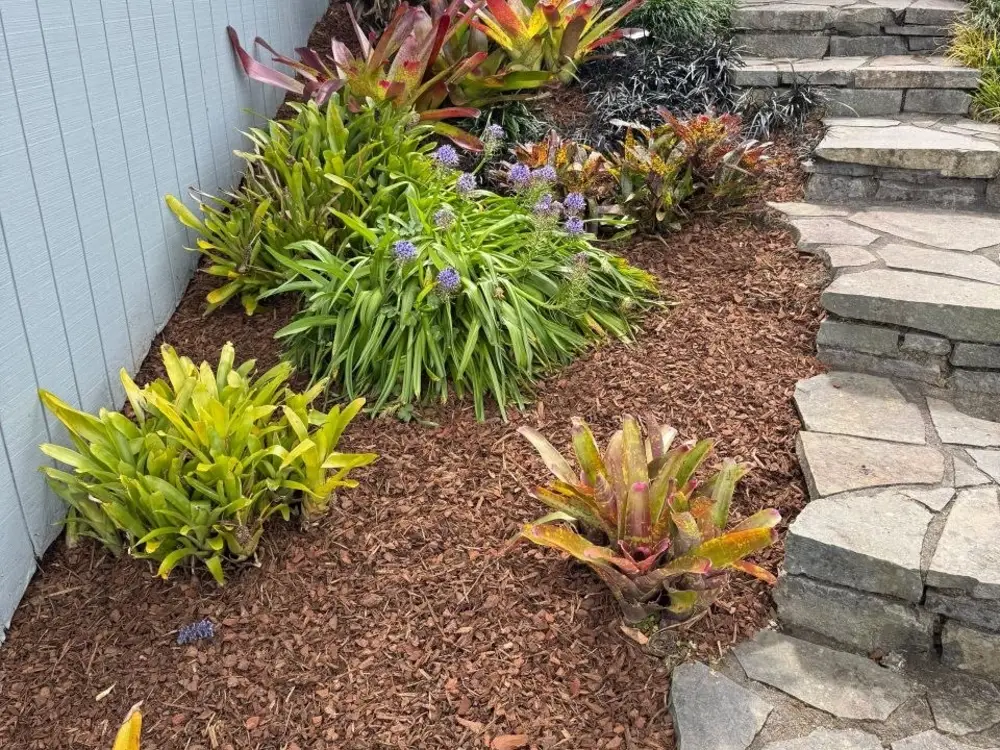
You pick the grade, we just tell you the trade-off. Coarse chip holds its shape on a slope and through wind; fine bark looks tidier and knits down flatter but moves more. Say which look you want and that is what goes in the barrow.
Why mulching changes sides of Mount Maunganui
Same dune sand under both. Completely different reason for putting bark on top of it.
A bed off Marine Parade and a bed off Golf Road sit on the same free-draining dune sand, yet the bark we spread on them is doing two different jobs. Which side you are on decides the depth we recommend and whether weed mat comes off the trailer at all.
Moisture matters most
- Onshore wind and open sun take the surface water off a bed before lunchtime
- Here the bark is holding water in the root zone, not just tidying the frontage
- We go to the top of the depth range, because a thin layer lifts and drifts in that wind
- Coarse chip over fine bark, every time, on anything facing the open beach
Weed suppression matters most
- Out of the wind, so the sand under a bed keeps its moisture far longer on its own
- The bark is earning its place on weed suppression here, and that is what we price for
- Damp shaded corners are where the hand-width gap around every stem really matters
- Everything grows harder on this side, weeds included, so beds get looked at more often
Put your street in the form and the recommendation is already different before we arrive — coarse chip at full depth for anything taking the beach wind, a shallower fine-bark finish and real care around the stems for a shaded harbour-side bed.
What mulching costs in Mount Maunganui
Starting prices below. The number we give you on site is the number on the invoice.
| Mulching, bark & weed mat | Beds cleared, edged, bark raked to depth | From $149 |
|---|---|---|
| Garden maintenance, same visit | Beds kept on top of between barkings | From $65 |
| Shrubs & rubbish removal | Anything coming out before bark goes on | From $95 |
| Tree & hedge trimming | Overhang cut back while we are on site | From $85 |
What moves it
Bed areaDecides the barrow count, and that is most of it
What is in there nowA bed gone to seed takes an hour to clear first
Grade you chooseFine bark costs more per cubic metre than coarse chip
Access for a barrowCarrying bark through a gate adds time, a driveway drop does not
This is a line you see once or twice a year, not every month. A layer put down at full depth holds its cover for six to twelve months before it wants topping up, and longer on a sheltered harbour-side bed than on anything open to the beach.
The mulching year on this coast
The same job, same price, buys you very different value depending on the month you book it.
JanFebMarAprMayJun
JulAugSepOctNovDec
Best window — Sep to Nov, ahead of the dry
Worth a top-up — Mar to May
Least to gain — Jun to Aug
Book it in spring and the layer is already down when the beach wind starts pulling water out of your beds. Book the identical job in July and you have paid the same money for a tidy look and almost none of the moisture benefit, because nothing is drying out and nothing much is growing.
A bed that is about to be replanted, or one where half the shrubs are coming out anyway, does not get barked on the same visit. It gets left bare and quoted for afterwards, because bark raked around plants that are about to be dug up is a load of material paid for twice. We would rather make the second trip than take the money for work that is about to be undone.
Mulching questions we get around Mount Maunganui
Eight we answer most weeks on this peninsula, with the answer we actually give on the doorstep.
01How long does a bark layer last on a Mount Maunganui bed?
Six to twelve months, and which end of that you get is decided almost entirely by exposure. A sheltered harbour-side bed in Ōtūmoetai-facing shade holds its cover close to a year. The same layer on an open frontage off Oceanbeach Road is thinning by month six, because wind lifts the surface and sun breaks it down faster. Which of those two your beds are is something we work out standing in them, and the quote says so.
02Will the bark blow out of my beds in an onshore southerly?
Not if it is laid the way we lay it. A spade-cut bed line gives the layer something to sit against, full depth gives it enough weight, and coarse chip rather than fine bark is what goes on a frontage taking the full onshore blast, for exactly this reason. Fine bark on an exposed Mount frontage with no edge cut in is the combination that ends up on the footpath.
03There is nowhere to park a trailer outside my place off Maunganui Road. Is that a problem?
No, and about a third of the Mount jobs we quote are like that. Bark comes in by barrow from wherever we can legally stop, and the carry distance goes into the price before you agree it rather than appearing afterwards as an extra. Narrow rear sites, shared townhouse driveways and body-corporate frontages are normal work for us here.
04Is weed mat worth it in Mount Maunganui dune sand?
Sometimes, and less often than people expect. Free-draining sand is already the easy case for a plain bark layer, so mat only earns its place where something like oxalis or wandering willie keeps coming back through. Put down where nothing warranted it, mat gets between the roots and the water and air they rely on, and a few summers later it is brittle plastic you are paying somebody to lift out again.
05Will bark sit all right around pōhutukawa, harakeke and the other salt-tolerant planting?
Yes, as long as it is kept off them. Those are the plantings that cope with a Mount frontage, and none of them mind a bark layer over their root zone — what they do mind is bark heaped against the trunk or packed into the crown of a flax, which holds moisture where it does damage. Keep the layer off the bark and out of the crowns and there is nothing else to it.
06Do you need to take the old layer off first?
Usually not. Most Mount beds we see have one thin layer left and the new bark goes straight over it, topped up to full depth. The exception is a frontage that has been barked every year for a decade — those build up into a water-shedding crust that is better broken up and thinned before anything new goes on, and we will say so standing in the bed rather than after the trailer arrives.
07Can you do the beds at a Mount holiday rental between bookings?
Yes, and that is a large part of why this job sells here. Give us the window between guests and the dates we are allowed on site, and the beds get cleared, edged and barked inside it. Photos of the finished frontage come back to you if you are not in town, which most of our short-stay owners are not.
08Can one quote cover beds at the Mount and beds in Pāpāmoa or Ōtūmoetai?
It can. We work right across the western Bay, so a Mount Maunganui frontage and a second property further round the coast or back across the harbour bridge go on one quote, one visit schedule where the dates suit, and one invoice. The bark grade and the depth may well differ between them, and the quote says which is going where.
While we’re on your Mount Maunganui section
Our gear is already on your drive and the side gate is already open, which is why these come in cheaper added to the same booking than called in separately.
Rental & Section Clean-UpsPhotographed start and finish, one itemised invoice.
Commercial Grounds MaintenanceOne contact, a set visit schedule, H&S paperwork that stands up.
Lawn Mowing & EdgingTwo cutting heights on this peninsula, edges done every time.
Ride-On MowingBrought out when the area justifies it, never as the default.
Weed Control & FertilisationFed little and often, because sand lets a heavy feed straight past.
Lawn DethatchingOnly once the thatch layer has genuinely built up underneath.
All Mount Maunganui servicesEvery service we run here, and what this coast does to each.
Mulching, Bark & Weed Mat in other areas
