
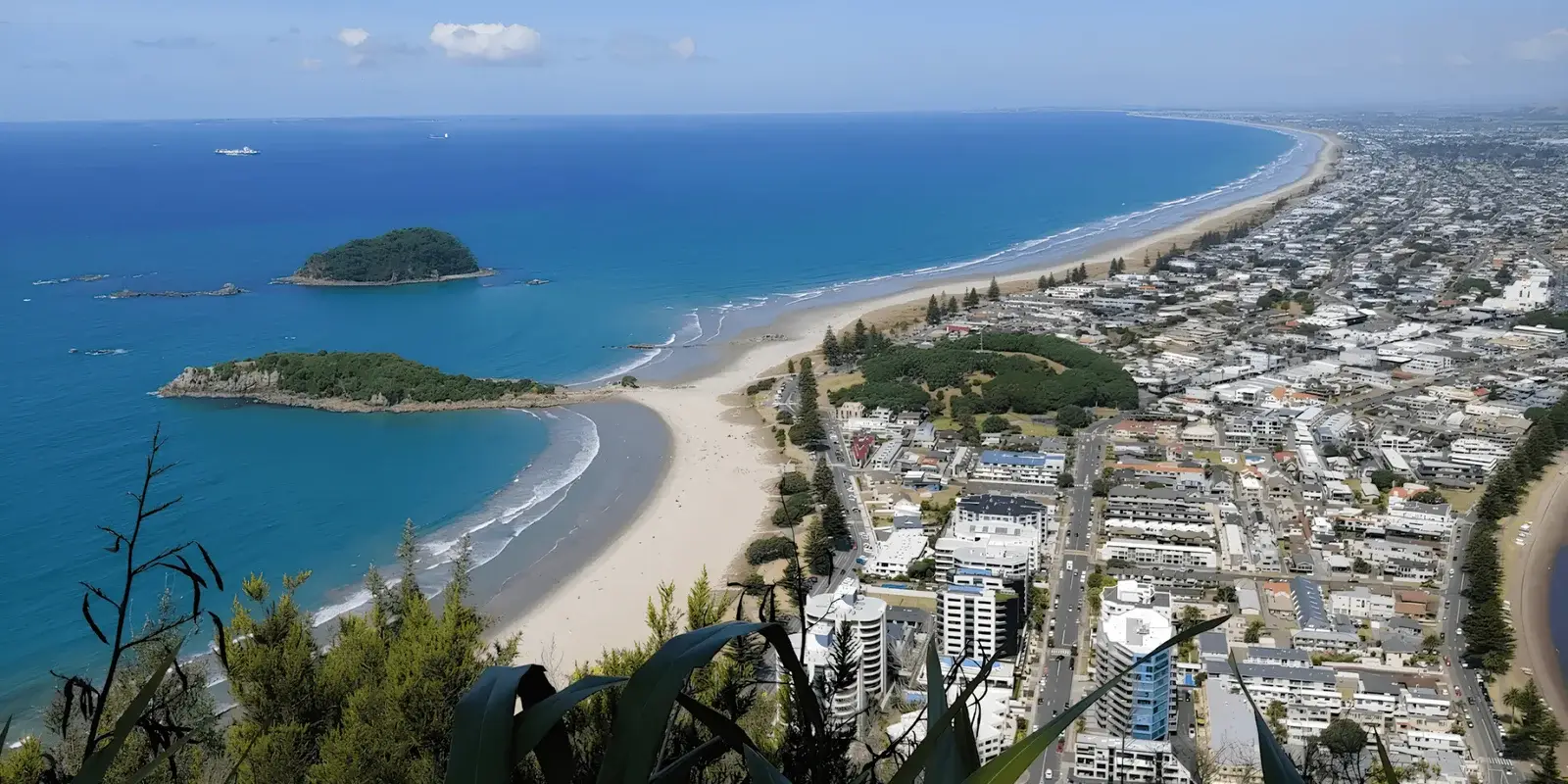
On a private lawn a late visit is a mild irritation. On a body corporate it goes in the minutes, gets raised at the next meeting, and turns into a conversation about changing contractors. The schedule is the product here — the mowing is just how it gets delivered.
Commercial Grounds Maintenance
Mount Maunganui
Commercial Grounds Maintenance in Mount Maunganui
A body corporate on Marine Parade, a retail frontage halfway up Maunganui Road and a community ground out by Blake Park have almost nothing in common except the number of people who notice when a visit gets missed — residents, tenants, customers, and a committee that meets monthly and keeps minutes. Commercial grounds maintenance at the Mount is three things: a schedule that actually holds, one person whose name is on the site, and the health and safety coordination done on the first visit rather than after something has happened.
From $75per visit, on a fixed programme
Quoted after a site walk, written into the scope, and invoiced to your own accounting cycle.
- Fixed day, fixed scope, same crew
- One name on the site, not a different face each visit
- Site induction before any work starts, every site
- Police-vetted crew, no lock-in
Commercial grounds quote
The address and roughly what is there. A site walk sets the figure.
Police-vetted
Induction on the first visit, not skipped to come in cheaper
Green waste inside the price
No lock-in contract
What commercial grounds maintenance has to get right
Three things, and only one of them is about mowing.
The value of the same contact is not politeness, it is memory. Where the irrigation valve is, which bed the committee argued about, what was agreed last autumn. Explaining the site again every few months is a cost, and it lands on whoever manages the property.
Two businesses working the same property each owe the other a legal duty to coordinate, and WorkSafe’s position on that is blunt: you cannot buy your way out of it by hiring somebody. So the induction happens at every commercial site here, because the obligation belongs to the property as much as to us — section 02 sets out exactly where that comes from.
s34HSWAWhere the overlapping-duties rule sits
1contactAccountable contact, named in writing
$75fromA single defined area, waste included
100+Happy customers across the Bay
Why the cheapest grounds quote can cost a Mount site more
What a cheaper number sometimes means, and where the liability it skipped actually goes.
Three businesses can be working on the same body corporate at once — the body corporate itself, whoever manages the property, and the contractor cutting the grass. Under the Health and Safety at Work Act 2015 each of those is a separate PCBU, and each owes the others a duty to consult, cooperate and coordinate. WorkSafe’s guidance on contracting puts it bluntly: you cannot contract out of your health and safety duties, or push the risk down the contracting chain.
It also puts contractors, their subcontractors and their employees in the same category as the lead contracting business’s own workers. Read that twice if you chair a committee: the site’s duty of care reaches the person on the mower. It does not stop at the boundary because somebody else is being paid to do the work.
On price, WorkSafe is equally direct: cost may be a factor, but it should never be prioritised over health and safety, and compliance should be a precondition of a successful tender. So when one quote comes back materially cheaper, the question worth asking is what it has left out — because a quote that skips the induction and documents no hazards has not removed the duty those things existed to meet. It has only moved who is exposed when something goes wrong.
Which is why the induction and the documentation happen on every commercial site here from the first visit, whether or not that makes the number the lowest one on the table.
That is a summary of published WorkSafe guidance, not advice about your site. What any particular body corporate or facilities manager owes depends on the property, and WorkSafe publishes the contracting material that answers it.
How a Mount Maunganui grounds contract actually runs
One visit sets it up. After that it is meant to be boring.
- Walk the site together, before anything is quotedHazards written down, the awkward corners pointed out, and the areas agreed by name so nobody argues later about what was in scope.
- Induction on the first working visitAccess, keys and codes, where the crew parks, who to find on site — settled once so it is not improvised every month.
- The visits themselves, to a fixed day and a fixed scopeMowing, edging and the garden work agreed in the scope. Same crew, so the site does not get re-learned.
- A short report after each visitPhotographs or a few lines to whoever has to answer for the grounds — enough to table at a meeting without anyone needing to go and look.
- Invoiced to fit your cycle, not oursPer visit, monthly, or lined up with a body corporate’s own accounting period.
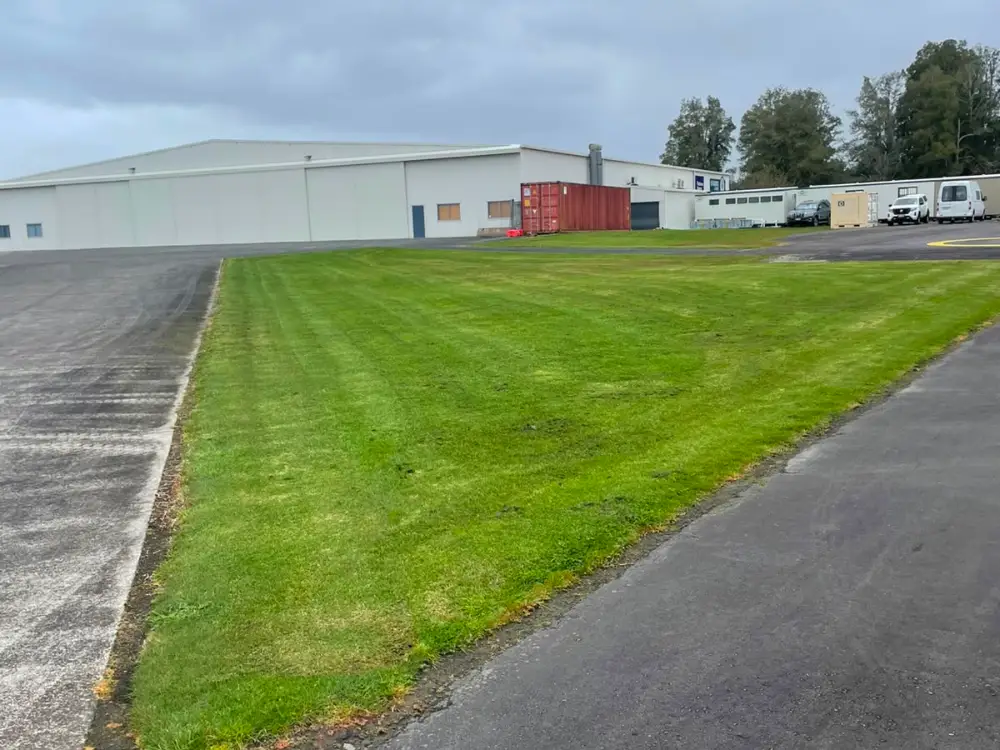
Nobody here will drop the induction to sharpen a number. If a competing quote is cheaper and you cannot see what has been left out of it, ask the question in writing — on a committee-run site, the answer belongs in the minutes either way.
The Mount Maunganui sites this is built for
Short streets, small sections, and more distinct areas than the frontage suggests.
Commercial grounds on the peninsula are squeezed in the same way the houses are. A body corporate off Marine Parade has a strip of lawn, a courtyard and a street frontage that all need different things, on a footprint a suburban back yard would laugh at. Retail along Maunganui Road has a planter run, a service lane and a car park edge. And everything within a few hundred metres of the water is working in sand with a salt wind over it, which decides what survives in the beds far more than the maintenance schedule does.
One area, one visit type
- A small body corporate or a retail frontage with one defined area
- The same visit every time, so the scope fits on one page
- Usually dealing with the owner or property manager direct, not a committee
- One site walk is enough to put a fixed figure on it
Several areas, one schedule
- Community and sports grounds, or a body corporate across more than one building
- Areas named separately in the scope because they need different work
- Other contractors on site, so the duties overlap and have to be coordinated
- Ocean-facing beds planted for salt and wind, or they get replaced annually
Access is the thing that gets discovered too late on the Mount. A gate that will not take a ride-on, a service lane that is blocked between eight and ten, a car park that has to be mown before the shops open. All of that comes out on the site walk and goes into the scope, because it decides which machine turns up and at what hour — and neither is something you want a crew working out on the day.
Nothing on this page is legal or compliance advice. It summarises what WorkSafe publishes about overlapping duties and contracting; whether and how any of it applies to your property is a question for WorkSafe’s own material or a health and safety advisor.
What commercial grounds maintenance costs in Mount Maunganui
Opens at $75 for one area, disposal included. The figure itself comes off a site walk.
| Small body corporate or retail frontage | One defined area, same visit every time | From $75 a visit |
|---|---|---|
| Community or sports grounds | Areas named separately, different work in each | Priced per area |
| Several properties, one contract | Consistent standard and reporting across all of them | Priced per site |
| One-off catch-up first | Get it back to standard, then start the schedule | Priced once seen |
What moves it
How many areasEach one named in the scope is a separate job on the day
How oftenWeekly in summer, or a lighter year-round cycle
What gets reportedPhotographs per area take longer than a note
Who else is on siteOther contractors mean duties to coordinate, and time doing it
The site walk is not a sales call, it is how the number gets made. A single retail frontage and a three-building body corporate are the same service and nothing like the same job, and the difference is in things you cannot see from the street — how many areas, who else works there, what the access does to the machine choice. Twenty minutes on site settles all of it.
Commercial grounds maintenance through the Mount year
The visit count moves with the grass. The standard does not move at all.
JanFebMarAprMayJun
JulAugSepOctNovDec
Weekly, November to February
Fortnightly, March to May and September to October
Monthly, June to August
Winter is where cheap grounds contracts quietly fall over. Growth slows, visits drop to monthly, and the easy thing is to let the frontage look a bit rough until spring. It is also the time of year a committee walks the site and wonders what it is paying for. So the scope through June, July and August is written down with the rest of it — fewer visits, same finish, and the edges still cut.
No commercial site here starts without a site walk and an induction, and neither gets dropped to make a quote more competitive. That is not generosity. Where duties overlap they cannot be contracted away, so skipping the paperwork does not remove the exposure — it just leaves it sitting with the site and with us, undocumented. Being the cheapest quote on the table is not worth that.
Grounds maintenance at the Mount: what committees ask
Eight questions from Mount committees and property managers, with the answers this peninsula actually needs.
01What does commercial grounds maintenance cost in Mount Maunganui?
It opens at $75 a visit for one defined area with the green waste included. Where it goes from there depends on how many separate areas the property has, and Mount properties almost always have more than the frontage suggests. Count them on your own site before you ask anyone for a number: a retail block on Maunganui Road usually turns out to be three or four, and a beachfront body corporate off Marine Parade the same once you include the courtyard and the strip between the buildings. The figure comes after somebody has walked it, because none of that is countable from the footpath.
02Our owners are mostly out of town — who actually manages the site?
One named contact, and the same crew where it can be managed. That matters more at the Mount than most places, because a lot of the beachfront body corporates are holiday apartments with owners in Auckland or Hamilton and a committee that meets by video. Nobody is standing on site to point things out, so the person on the contract has to be the one who already knows where the tap is and what was agreed last autumn.
03What happens before the first visit to a Mount Maunganui property?
Two things, in order. A walk round before anything is quoted, so the hazards go on paper and every area gets agreed by name. Then the induction on the day work starts. On the peninsula that second one earns its keep: where the crew can legally park on a Marine Parade frontage, which gate takes a mower and which does not, whether the service lane is blocked at delivery time. Settle it once and it stops being improvised every month.
04Why does an induction matter on a site this small?
Size is exactly why. A compact Mount body corporate can have a pool contractor, a lift company, a cleaner and a grounds crew all on the same small footprint in the same week, which is textbook overlapping duties. WorkSafe’s guidance on contracting classes a contractor’s people as workers of the lead contracting business, and says those duties cannot be contracted out or pushed down the chain. A contractor who skips the induction has not taken the duty off your property. The duty is still there, with nothing on file to show it was met.
05Can you invoice to suit a body corporate’s accounting period?
Yes. Whichever of the three fits, and for a Mount body corporate running a levy year it is almost always the third — aligned to your cycle, so it reconciles against the budget the committee already approved instead of being re-cut by whoever does the books. Tell us which on the walk round and it is written into the scope.
06We hold properties at the Mount and in Pāpāmoa — one arrangement?
Yes. Priced per site, run as one contract, one contact, same reporting format for each. Across the Mount, Pāpāmoa and Ōtūmoetai that is usually the whole point — one set of invoices and one definition of tidy, instead of four contractors with four opinions about it and four inductions nobody has a record of.
07What goes in our contractor file before a Mount site starts?
Lawnify trades as At Your Service Limited, a New Zealand company, and the crew is police-vetted — which is the part owners usually ask about when a property has keys and codes handed around. Whatever else your own approval process needs, ask for it at the site walk and it is provided in writing before the first visit rather than chased afterwards.
08Can we try one visit before committing the grounds budget?
Yes, and on a property that has been let go over a Mount summer that is the sensible order anyway — one catch-up visit to bring it back, then a schedule that holds it. There is no lock-in on the ongoing arrangement, so a committee can put one visit to a vote without committing the year’s grounds line.
Written into the same grounds scope
One contract, one invoice, one contact — rather than four contractors on one site.
Lawn Mowing & EdgingThe core of most grounds scopes, on a fixed day.
Ride-On MowingFor community and sports grounds, where the gate allows it.
Weed Control & FertilisationKeeps a frontage presentable between mows, not just green.
Lawn DethatchingOne autumn visit, scheduled into the year rather than reacted to.
New Lawn InstallWhere a worn common area is past being maintained back.
Garden MaintenanceBeds and planters kept ahead of the season, waste off site.
All Mount Maunganui servicesEvery service on the peninsula, and what this coast does to each.
Commercial grounds maintenance in other Bay of Plenty suburbs
