
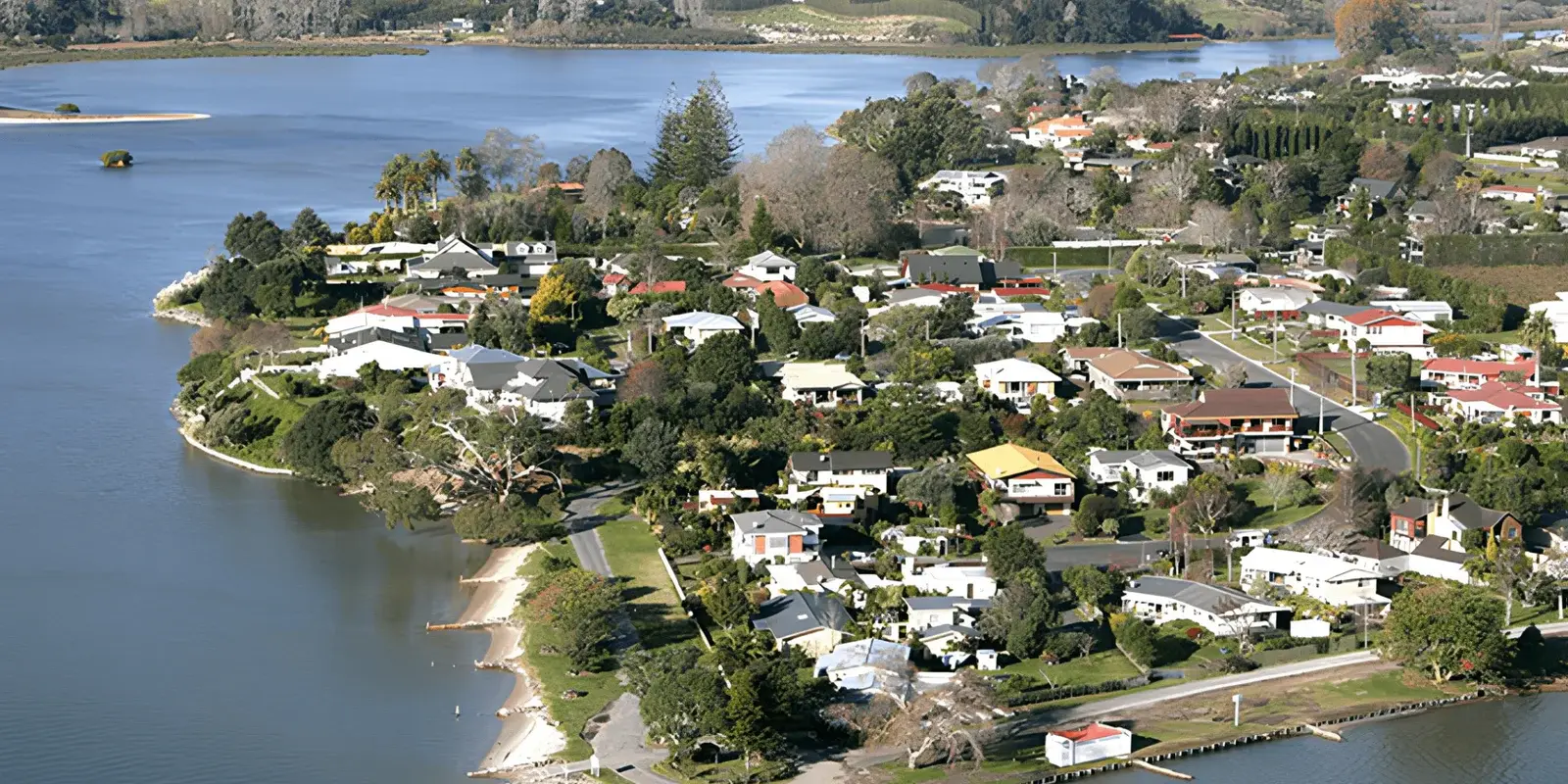
Grass mown the same way for years without a dethatch builds a spongy layer of dead stem and runner between the green and the soil.
Lawn Dethatching
Te Puna
Lawn Dethatching in Te Puna
A lawn that’s carried the same routine for years on an established lifestyle block usually has a thatch layer worth dealing with. A younger lawn near the highway corner often doesn’t need it yet. We check before recommending it either way.
- Removes the dead layer, not the lawn
- Machine-raked, not just a light rake-over
- Waste collected and removed
- No lock-in contract
Tell us about your lawn
How long it’s been since the last dethatch helps us scope the visit.
Fully insured
Machine-raked, proper depth
Waste always removed
Fixed price, no surprises
Where dethatching actually matters
Not every lawn needs it, and age is the biggest signal.
A lawn only a few years old, laid on fresh topsoil, generally hasn’t built up enough thatch to need machine dethatching.
Lawn grown right up against orchard shelter planting can thatch faster if it’s a runner-heavy grass type competing hard for light.
12–18moTypical interval, established lawns
10–15mmThatch depth that’s worth treating
From $189Per visit, fixed price
0lock-inOne-off job, no contract
Why we check thatch depth before booking a dethatch
Doing it too early wastes money. Too late costs more to fix.
Under 10mm
Not worth doing yet
15mm+
Actively strangling the lawn
A thin thatch layer under about 10mm is actually normal and even slightly protective — it’s not costing your lawn anything and dethatching it would just be an unnecessary expense.
Past around 15mm, thatch starts blocking water, air and nutrients from reaching the soil. The lawn can look green on top while the roots underneath are genuinely struggling — a common story on established Te Puna lifestyle blocks that have never had one done.
We check the depth before recommending it. A quick probe into the turf tells us whether your lawn is in the “leave it” zone or the “this is actually the problem” zone.
Newer lawns on fresher ground almost never need it in the first few years — there simply hasn’t been time to build a layer worth removing.
Thatch under about 10mm is normal, not a problem. We won’t sell you a dethatch your lawn doesn’t need yet.
What a dethatching visit includes
Machine-raked to the right depth, then cleared properly.
01
Check thatch depth
A probe into the turf confirms it’s actually worth doing before we start.
02
Mow lower than usual
A shorter first cut so the dethatching machine can reach the layer properly.
03
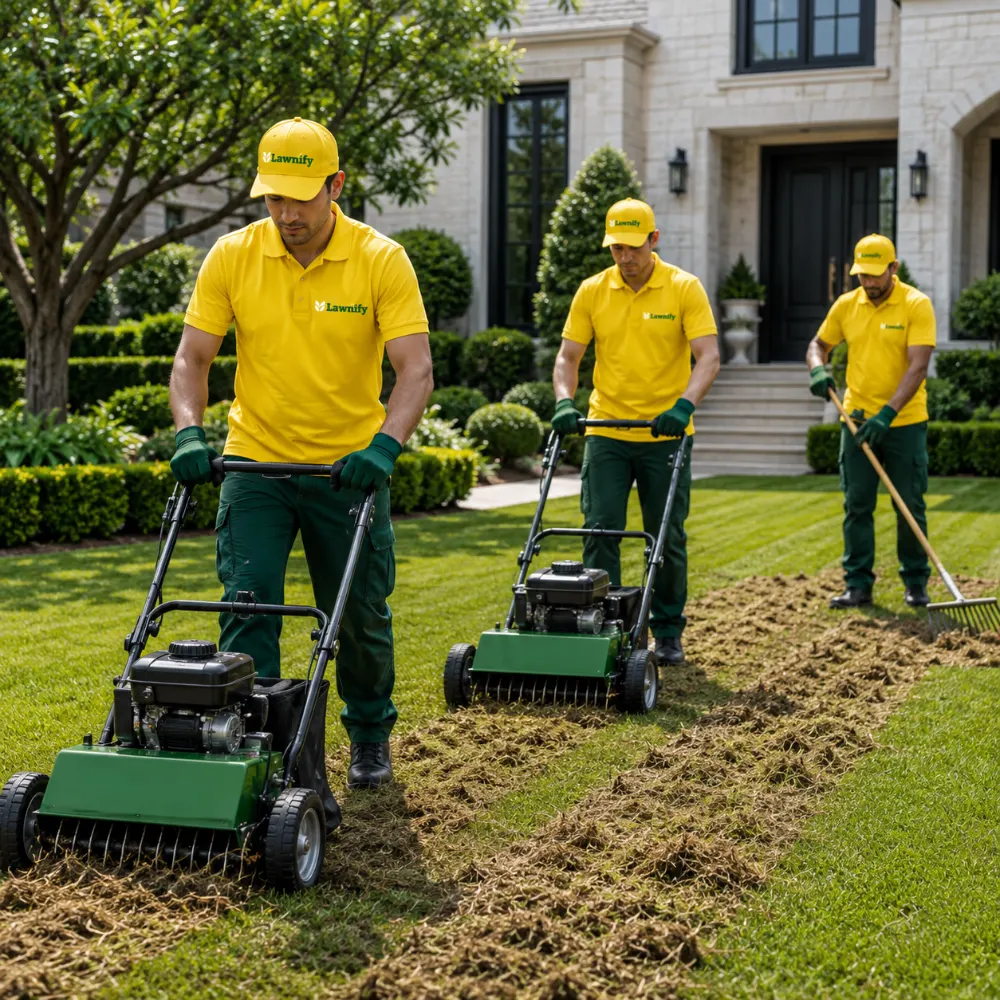
Machine dethatch
Blades lift the dead layer out without tearing up healthy turf.
04
Collect and remove
All the raked-out thatch bagged and taken away, not left on the lawn.
05
Aftercare advice
Watering and recovery guidance for the weeks after, sent through.
Same sequence every visit — checked, raked to depth, fully cleared.
01
Check thatch depthA probe into the turf confirms it’s actually worth doing before we start.
02
Mow lower than usualA shorter first cut so the dethatching machine can reach the layer properly.
03
Machine dethatchBlades lift the dead layer out without tearing up healthy turf.
04
Collect and removeAll the raked-out thatch bagged and taken away, not left on the lawn.
05
Aftercare adviceWatering and recovery guidance for the weeks after, sent through.
On site30–60 min, size dependent
Recovery2–3 weeks to fill back in
A dethatched lawn looks rough for a couple of weeks — that’s normal. It fills back in noticeably healthier than before, especially paired with a feed straight after.
Established lawns versus newer turf — Te Puna’s two situations
One usually needs it, the other usually doesn’t yet.
A lawn on an established Te Puna lifestyle block that’s carried the same mowing routine for years is the classic dethatching candidate. A newer lawn near the highway corner, still only a few years old, usually hasn’t built up enough thatch to bother with. We check rather than assume.
Where dethatching earns its keep
- Established lawns, often five or more years on the same routine
- Spongy or waterlogged feel underfoot even without recent rain
- Water pooling on the surface instead of soaking in
- Genuine improvement in lawn health follows within a season
Where it’s usually not needed yet
- Newer lawns on fresher topsoil, typically under about five years old
- Not enough time yet to build a meaningful thatch layer
- Money better spent on feeding or weed control at this stage
- Worth reassessing again in a couple of years, not now
We’ll check the actual depth before recommending anything. An established lawn and a newer one on the same street can need completely different advice.
What it costs
Fixed once we’ve looked, starting from $189 per visit. Green waste is already in it.
-
From $95Small lawn, established Under a quarter acre
-
$140–$260Standard lifestyle-block lawn Most common size we see
-
QuotedLarger established lawn Bigger orchard-fringe area
-
+$40Combined with a feed Recommended straight after
What moves it
Lawn areaThe main driver of time and cost
Thatch depthDeeper thatch takes longer to fully clear
AccessWaste needs a clear path out to be removed
Grass typeRunner-heavy grasses thatch faster and need more care
We’ll only recommend it if the depth actually justifies it. Genuinely not needed yet is a fine and common answer.
Best time of year to dethatch
Spring and autumn give the lawn the easiest recovery.
JanFebMarAprMayJun
JulAugSepOctNovDec
Frequency key
Ideal windowWorkableAvoid
A dethatch needs a few weeks of good growing weather to recover well. Spring and autumn give it exactly that.
Our lawn had felt spongy for a couple of years and we assumed that was normal for an older section. Turned out the thatch was over 20mm in places — after dethatching and a feed, it’s noticeably firmer and greener within a month.
What people ask us
Mostly about the job rather than about us, which is how it should be.
01How do I know if my Te Puna lawn needs lawn dethatching?
A spongy or waterlogged feel underfoot, or water pooling instead of soaking in, are the main signs. We’ll check the actual depth before recommending it.
02Will lawn dethatching damage my Te Puna lawn?
Done properly it removes the dead layer without tearing up healthy turf. It looks rough for a couple of weeks afterward, then recovers noticeably healthier.
03How often does a Te Puna lawn need lawn dethatching?
Roughly every 12 to 18 months on an established lawn that’s prone to thatch. Newer lawns may not need it for several years.
04Does a Te Puna lawn only a few years old need lawn dethatching?
Probably not yet. Newer lawns on fresh topsoil rarely have enough thatch built up to be worth treating.
05What’s the best time of year for lawn dethatching in Te Puna?
Spring and early autumn, when the lawn has mild conditions to recover in. We’d generally avoid the height of summer or the depths of winter.
06Does lawn dethatching in Te Puna include taking the waste away?
Yes, all of it collected and removed the same visit — already included in the price.
07Can lawn dethatching in Te Puna be combined with feeding?
Yes, and it usually should be — a feed right after dethatching helps the lawn recover faster, and booking both together is often better value.
08How much does lawn dethatching in Te Puna cost?
Most Te Puna lawns start from around $189 a visit. The exact price depends on lawn size, turf type and how compacted the thatch is.
While we’re there
Most people add one or two of these, since we’re already on the property.
05
New Lawn Install
Ready lawn or seed — and we’ll say if your section just needs time.
06
Garden Maintenance
Beds kept ahead of the season, waste off site the same day.
07
Tree & Hedge Trimming
Species checked first, orchard-edge shelter planting included.
08
Stump Grinding
Compact grinders for sections a full-size machine can’t reach.
09
Shrubs & Rubbish Removal
Roots out properly, waste sorted into the right stream.
10
Mulching, Bark & Weed Mat
Roughly halves the weeding on every visit after it.
View all 12 Te Puna services
Lawn Dethatching in other areas
