
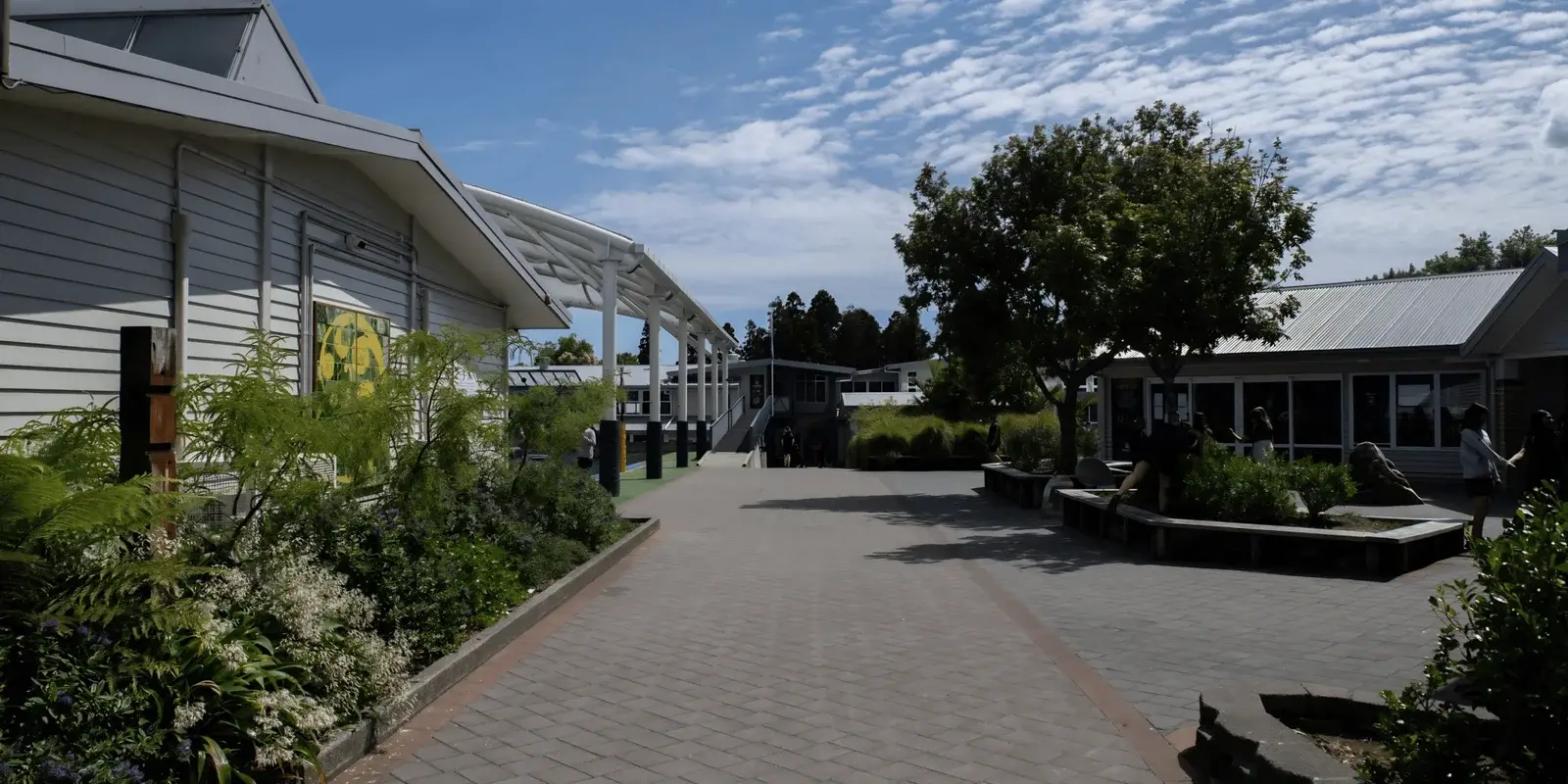
A ride-on can’t get near fences, beds or established borders, so on a typical Ōtūmoetai section you end up hand-trimming most of it anyway — paying for a machine that only did the easy half. A walk-behind gives a better finish for less.
Ride-On Mowing
Ōtūmoetai
Ride-On Mowing in Ōtūmoetai
A ride-on is arithmetic, not a luxury. Most Ōtūmoetai sections sit right on the edge of needing one — past it, the wider deck earns its keep; under it, a walk-behind gives a better finish for less.
From $65per visit
Fixed price agreed before we start — nothing added after.
- Quarter acre and up
- Hand-trimmed where it can’t reach
- Honest if you don’t need it
- No lock-in, cancel any time
How big is the section?
Rough size is fine. We’ll tell you which machine actually suits it.
Right machine for the ground
Fully insured
Green waste on the trailer
No lock-in
When a ride-on is worth it, and when it isn’t
It comes down to one number, and most standard Ōtūmoetai sections sit on the smaller side of it.
Some of the bigger mid-century properties near the golf club and harbour edge carry genuinely large mown areas. A wider deck covers the same ground in a fraction of the passes, so price per square metre drops the bigger the lawn gets.
Established borders and mature beds built up over forty-plus years mean careful trimming regardless of what cuts the open ground — that part of the job doesn’t get faster just because the mower’s bigger.
¼acreWhere the maths tips over
1mClear gate width needed
30–40mmKikuyu growth in a peak week
$65fromRide-on, per visit
The thing that actually stops the job
Not slope. Not size. The width of your side gate — and older Ōtūmoetai driveways aren’t always generous.
1,000mm+ clearance
Job’s on
Ride-on gets straight through, no delay
Under 1,000mm
Walk-behind instead
Common on older brick-and-tile driveways
A standard ride-on needs roughly a metre of clear width to get through. Plenty of Ōtūmoetai’s mid-century driveways were built generously for their era, but not always to that number — and it looks fine from the house until the machine’s actually sitting in front of it.
It’s the single most common reason a ride-on booking falls over on arrival, and it’s entirely avoidable with a tape measure. Two minutes now saves a wasted morning for both of us.
If it’s tight, there are options. A gate panel that lifts out is a cheap fix and pays for itself in the first season. Where there’s genuinely no way through, we price the job as walk-behind work at walk-behind rates rather than turning up and discovering it.
So measure the gap between the posts before you book — not the gate, the gap — and tell us the number when you enquire.
Measure the gap, not the gate. It’s the difference between a booking and a wasted morning.
What happens on the day
Longer than a standard mow, but the order never changes.
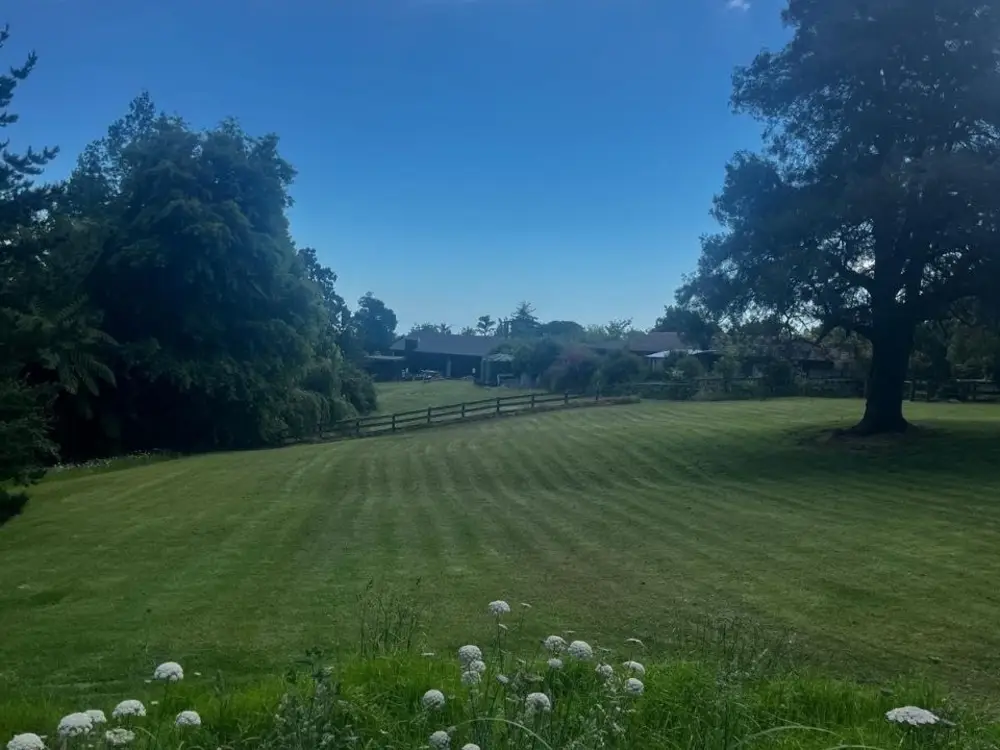
- 01Confirm the gate and the layoutBefore we book you in, not on the morning. On an established section this decides the machine as much as the size does.
- 02Walk the groundSprinkler heads, garden ornaments, anything hidden in long grass around forty-year-old beds and borders.
- 03Mow the open groundWide deck, season-right height, direction changed from last visit so tracks never set in.
- 04Trim what it can’t reachFence lines, around mature trees, tight corners, the letterbox. Included, not extra.
- 05Blow down, photo, goneDrives and paths cleared, then a photo through so you can see it wherever you are.
On site30–60 min
PhotoSent after
Clippings usually go back in. On a ride-on visit they’re mulched, which suits an established lawn well. If growth has got away enough that mulching would leave rows sitting on top, we catch and remove instead — already in your price.
Which size of Ōtūmoetai section actually needs the bigger machine
The suburb’s two very different lawns, and only one of them usually pays for a ride-on.
Ōtūmoetai’s name means “the place where the tide stands still, as if asleep” — fitting for one of Tauranga’s more settled suburbs. It’s largely built out rather than still filling in: 8,334 people at the last census, median age 42.9. Housing is a genuine mix — mid-century brick-and-tile homes on established sections with decades of growth, alongside newer townhouses on smaller, subdivided sections. Which one you’ve got is usually the whole answer to whether a ride-on makes sense.
Established quarter-acre
Bigger, and worth the machine
- Often the largest mown areas in the suburb, front and back, on the original quarter-acre allotments
- Mature trees and established beds add hand-trim time no machine changes
- Frequently sits right at or past the point where a wider deck pays for itself
- Side gate width is the one thing worth checking before booking
New townhouse section
Smaller, and usually the wrong tool
- Compact lawn area, often just a courtyard strip on the newer subdivided sections
- A ride-on can’t manoeuvre in tight modern courtyards without doing more damage than good
- A walk-behind covers the whole thing in one straightforward pass
- Quick, tidy visits — usually the shortest job type on the round
Tell us which one you are when you enquire. We’ll say honestly whether it’s ride-on ground, and a careful walk-behind pass at walk-behind rates is the right call when it isn’t.
What it costs
Ride-on visits start at $65. Fixed once we’ve looked, with green waste already in it — nothing added after.
-
From $45
Under a quarter acre
Walk-behind — better finish, lower price
-
From $65
Quarter acre, level
Where a ride-on starts paying for itself
-
$120–$180
Larger established section
Bigger mid-century lawns, front and back
-
Quoted
Sloped or awkward section
Safety-first, walk-behind rates
What moves it
Gate and accessOften decides the machine, and therefore the price
Mown areaNot section size. Beds and drives don’t get mown
ObstaclesEstablished trees and borders take longer to trim around
SlopeGenuinely steep ground rules a ride-on out
We’d rather quote you the safer machine. If a walk-behind is the right tool for your section, we’ll say so, even though a ride-on visit invoices for more.
The mowing year on a big lawn
Large established sections get away faster than small ones, and Tauranga’s mild climate barely gives growth a break.
JanFebMarAprMayJun
JulAugSepOctNovDec
FortnightlyMonthly
Nov–FebFortnightly peak
Mar–OctMonthly, steady
Same rateWhatever the season
Growth barely closes down here over winter. A big established lawn left three months comes back needing a rescue, not a routine mow.
Our section backs onto the golf club and it’s a proper mow — they measured the side gate before quoting instead of turning up and finding out. Been on the ride-on ever since and it shows.
What people ask us
Mostly about the job rather than about us, which is how it should be.
01How big does a Ōtūmoetai lawn need to be for ride-on mowing to make sense?
Roughly a quarter acre of open, mowable ground is the tipping point. Below that a walk-behind almost always gives a better finish for less, because so much of a smaller lawn is edges and beds a ride-on can’t reach anyway.
02Will ride-on mowing suit an established Ōtūmoetai quarter-acre?
Usually, but not automatically. Side gate width and how much of the section is mature garden bed versus open lawn both matter more than the label "quarter-acre." We’ll ask a couple of quick questions before confirming.
03What if my Ōtūmoetai gate is too narrow for ride-on mowing?
We price the job as walk-behind work instead, at walk-behind rates. A gate panel that lifts out is often a cheap permanent fix if you want the ride-on option in future.
04Is ride-on mowing safe on a sloped Ōtūmoetai section?
Not always. Beyond a certain gradient we won’t take one up it — it becomes a safety question before a cost one, and we’ll say so honestly rather than risk it.
05Does ride-on mowing in Ōtūmoetai collect the clippings?
Usually mulched back into the lawn, which suits an established section well. If growth has got away enough to leave visible rows, we catch and remove instead at no extra charge.
06Is a newer Ōtūmoetai townhouse section ever big enough for ride-on mowing?
Rarely. Most sit well under a quarter acre and are laid out with tight corners a ride-on can’t manoeuvre in cleanly — a walk-behind is nearly always the better, cheaper option.
07Can I switch from walk-behind to ride-on mowing in Ōtūmoetai later?
Yes, any time. If your section’s bigger than the walk-behind visit made sense of, just mention it and we’ll re-quote.
08Is there a minimum contract for ride-on mowing in Ōtūmoetai?
No. No minimum term, no cancellation fee, and a text is enough to pause or stop.
While we’re there
Most people add one or two of these, since we’re already on the property.
00
All Ōtūmoetai services
The full twelve, and what this established harbour suburb does to each.
Ride-On Mowing in other areas
03
Weed Control & Fertilisation
Calibrated for established lawns, not a one-size feed.
04
Lawn Dethatching
Where decades of the same cut have built up a layer worth clearing.
05
New Lawn Install
Ready lawn or seed — and we’ll say if your section just needs time.
06
Garden Maintenance
Mature beds kept ahead of the season, waste off site the same day.
07
Tree & Hedge Trimming
Species checked first, especially on decades-old established planting.
08
Stump Grinding
Compact grinders for sections a full-size machine can’t reach.
