
Pittosporum, photinia, camellia and corokia recover quickly from a hard cut. Griselinia and buxus recover slowly and need a staged approach. Leylandii, macrocarpa, thuja and cryptomeria never recover from a cut into brown wood — ever.
Tree & Hedge Trimming
Pyes Pā
Tree & Hedge Trimming in Pyes Pā
Not every hedge forgives a hard cut, and not every tree should be cut back hard at all. Species and timing decide the outcome here more than the trim itself does — and that matters even more on established orchard-fringe shelter planting.
From $85per visit, clippings removed
Fixed price agreed before we start — nothing added after.
- Species checked before we cut
- Spring nest check, always
- Chipped and removed same visit
- No lock-in, cancel any time
What’s your section like?
Tell us the street and we’ll give you a fixed price. Free, no obligation.
Fully insured
Sharp tools, tidy finish every visit
Green waste included
Pause any time
Three things that decide how a trim turns out
Get these right and a hedge stays green through the cut. Get them wrong and you’re looking at bare wood for a season.
Under the Wildlife Act, disturbing a native bird’s active nest is an offence. Spring growth flush is also when most people want a trim, so a quick check of the canopy before we start isn’t optional — it’s the law, and it matters more on Pyes Pā’s mature orchard-fringe shelter planting.
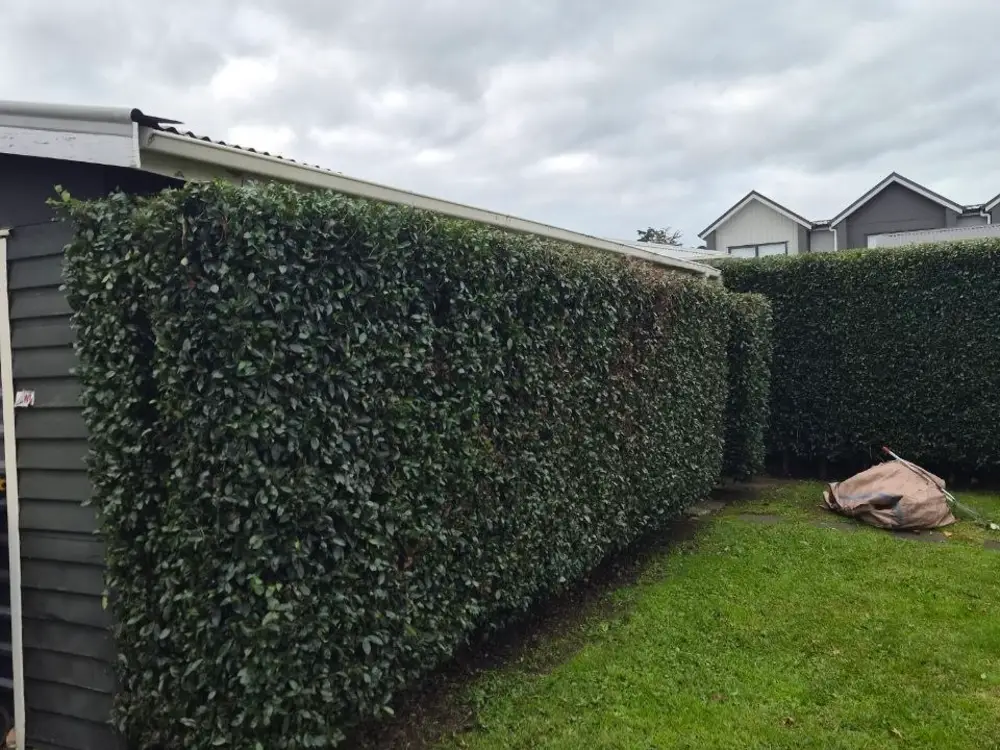
A hedge shaped wider at the top shades its own lower growth out over time, until the base goes bare and thin. Tapering it narrower up top keeps light reaching all the way down, every year.
3tiersRecovery speed groups by species
SpringWhen a nest check is legally required
SamedayWaste chipped and removed
$85fromPer visit, waste removed
Staged reduction versus one hard cut
This is the difference between a griselinia hedge that stays green and one that turns into a row of sticks.
Cut a fast-recovering species like pittosporum or photinia back hard and it’s filled back in within a season — the plant simply doesn’t mind. Try the same thing on griselinia or buxus and you’ll cut into brown wood that has no live buds left on it, and that section of hedge stays bare for a very long time, if it recovers at all.
The alternative on a slow-recovering species that’s gotten too tall is a staged reduction — taking it back over two or three seasons, a third at a time, always cutting back to green growth rather than brown. It’s slower, and it’s the only way that actually gets there without a bare hedge in between.
Leylandii, macrocarpa, thuja and cryptomeria are a different situation entirely. These conifers don’t recover from brown wood at all, staged or not — once you’ve cut past the green, that section is finished, permanently.
So the first question on any overgrown hedge isn’t how much to take off. It’s what species it is.
We won’t top a tree. Cutting main leaders back to stubs looks like a fix for a week, then it isn’t — regrowth comes back weak, dense and structurally poor.
What a trim visit includes
Checked before it’s cut, not the other way round.
- 01Species checkConfirms the recovery tier before a single cut — this decides everything that follows.
- 02Nest check, spring visitsCanopy checked for active native bird nests before any cutting starts, as required under the Wildlife Act.
- 03Shape to the “A” profileTapered narrower at the top so light keeps reaching the base, hedge line kept straight.
- 04Reduction, staged if neededA third at a time on slow-recovering species that need bringing down — never more in one visit.
- 05Chip and removeAll waste chipped and taken off site the same day, nothing left stacked by the fence.
On site30–90 min
PhotoSent after
Never a hard cut into brown wood on griselinia or buxus. If a hedge needs bringing down significantly, we’ll explain the staged plan and the timeline up front rather than promise a one-visit fix that leaves it bare.
Tauranga’s fastest-growing suburb, still growing
Young boundary hedging needs a different hand to established orchard shelter planting.
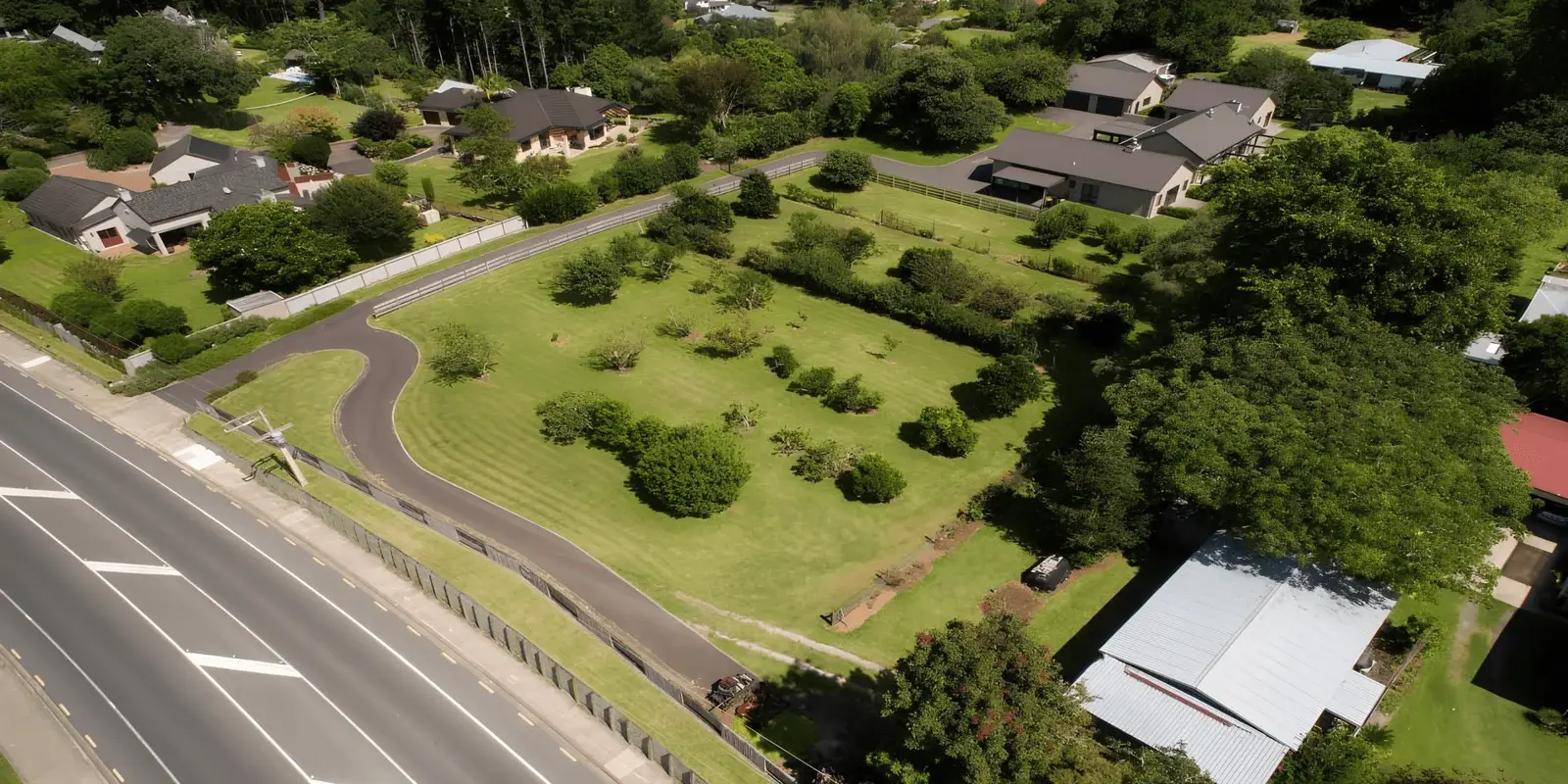
Pyes Pā has grown faster than any other suburb we cover — up 124.6% since 2013, 38.3% since 2018 — and plenty of new subdivisions like The Lakes carry fresh boundary hedging planted alongside the build, while a working orchard and lifestyle-block fringe still runs older, sometimes decades-old shelter planting along its edges. The two need genuinely different handling.
New subdivision boundary hedges
- Regular, moderate-sized boundary hedges that mostly need a consistent shape trim
- Species chosen for a tidy street-facing hedge generally forgive a routine trim well
- Young hedging still establishing benefits from light, formative trims rather than a hard cut
- Getting the shape right early avoids the staged correction an older, neglected hedge often needs
Orchard-fringe shelter planting
- Old kiwifruit-orchard windbreaks and shelter hedges along fence lines may be decades old, well established with a full canopy
- Slow-recovering species like griselinia or buxus need a staged approach if they’ve been left too long
- Established trees have a full canopy worth checking for nesting birds every spring
- Wind exposure on an open, rural-fringe block can be harder on young replacement planting than on a sheltered garden
We’ll tell you if young shelter planting needs another season before its first proper shape trim. Cutting it back too early can slow down exactly the shelter it was planted to provide, especially on an exposed new section.
What it costs
Prices start at $85. Fixed once we’ve looked, with green waste already in it — nothing added after.
-
From $85
Hedge trim, per visit
Small to medium hedge, shape trim, waste removed
-
From $18/m
Longer hedge runs, per metre
Boundary lengths, regular shape trim, waste removed
-
Quoted per stage
Overgrown hedge, staged reduction
Per season, slow-recovering species
-
$120–$400
Tree pruning
Access and height dependent
-
$60
Species assessment only
No cutting, advice on what a hedge can take
What moves it
AccessNarrow side runs slow the job down more than hedge length does
SpeciesRecovery tier changes both the method and the timeline
HeightLadder or platform work costs more than a ground-level trim
Waste volumeA badly overgrown hedge produces far more to chip and remove
A hedge trimmed lightly every visit costs less overall than one caught up on once a year. Regular shape-pruning is a shorter job each time, and it’s what avoids ever needing the slow, staged reduction in the first place.
The trim year
What’s appropriate to cut changes with the season more than most people expect.
JanFebMarAprMayJun
JulAugSepOctNovDec
Nest check required — Sep–DecGrowth flush trims — Dec–FebMain shaping — Mar–Aug
Spring isn’t off-limits — it just needs a check first. A light trim can still happen; it simply doesn’t start until the canopy’s been looked over for an active nest.
Nearly took our new griselinia hedge back hard myself before asking. Glad I didn’t — they said it needed another year to establish first on our exposed new section, then staged it down properly once it was ready.
What people ask us
Mostly about the job rather than about us, which is how it should be.
01Will tree and hedge trimming in Pyes Pā top my tree if I ask?
No. Topping — cutting main leaders back to stubs — looks tidy for a week and then isn’t. Regrowth comes back weak, densely packed and structurally poor, and on several species it starts a decline that ends in the tree needing removal a few years later.
02Why does tree and hedge trimming in Pyes Pā pause for a spring nest check?
Disturbing an active native bird’s nest is an offence under the Wildlife Act, and spring is exactly when birds are nesting and when most people want their hedges tidied after winter. We check the canopy before cutting starts on every spring visit — it isn’t optional, and it matters more on established orchard-fringe shelter planting.
03Which Pyes Pā hedges can take a hard cut during tree and hedge trimming?
Pittosporum, photinia, camellia and corokia recover quickly from a hard cut. Griselinia and buxus recover slowly and need staging. Leylandii, macrocarpa, thuja and cryptomeria never recover from a cut into brown wood.
04Does a new Pyes Pā hedge need different tree and hedge trimming?
Yes — light, formative trims rather than a hard cut while it’s still establishing a root system. This matters more on an exposed new-subdivision section, where wind stress adds to the strain of an early hard cut.
05What happens to the waste from tree and hedge trimming in Pyes Pā?
Chipped and removed off site the same visit — nothing left in a pile. Disposal is already included in the price.
06How often does a Pyes Pā hedge need tree and hedge trimming?
Roughly every six to eight weeks through the growth flush from spring into summer, and every two to three months over the cooler months.
07Does tree and hedge trimming in Pyes Pā include removing whole trees?
Cutting down and removing a whole tree sits outside this service — we can advise and point you the right way, but felling and stump grinding are handled separately.
08What drives the cost of tree and hedge trimming in Pyes Pā?
Access, more than hedge length. A narrow side run that a full-size trimmer can’t get through slows the job down more than an extra few metres of straightforward hedge would.
While we’re there
Most people add one or two of these, since we’re already on the property.
08
Stump Grinding
Compact grinders for sections a full-size machine can’t reach.
09
Shrubs & Rubbish Removal
Roots out properly, waste sorted into the right stream.
10
Mulching, Bark & Weed Mat
Roughly halves the weeding on every visit after it.
11
Rental & Section Clean-Ups
Dated before and after photos, itemised invoice.
12
Commercial Grounds Maintenance
Scheduled visits, single point of contact, H&S done properly.
01
Lawn Mowing & Edging
Weekly to monthly, edges cut every visit.
00
All Pyes Pā services
The full twelve, and what Tauranga’s fastest-growing suburb does to each.
Tree & Hedge Trimming in other areas
