
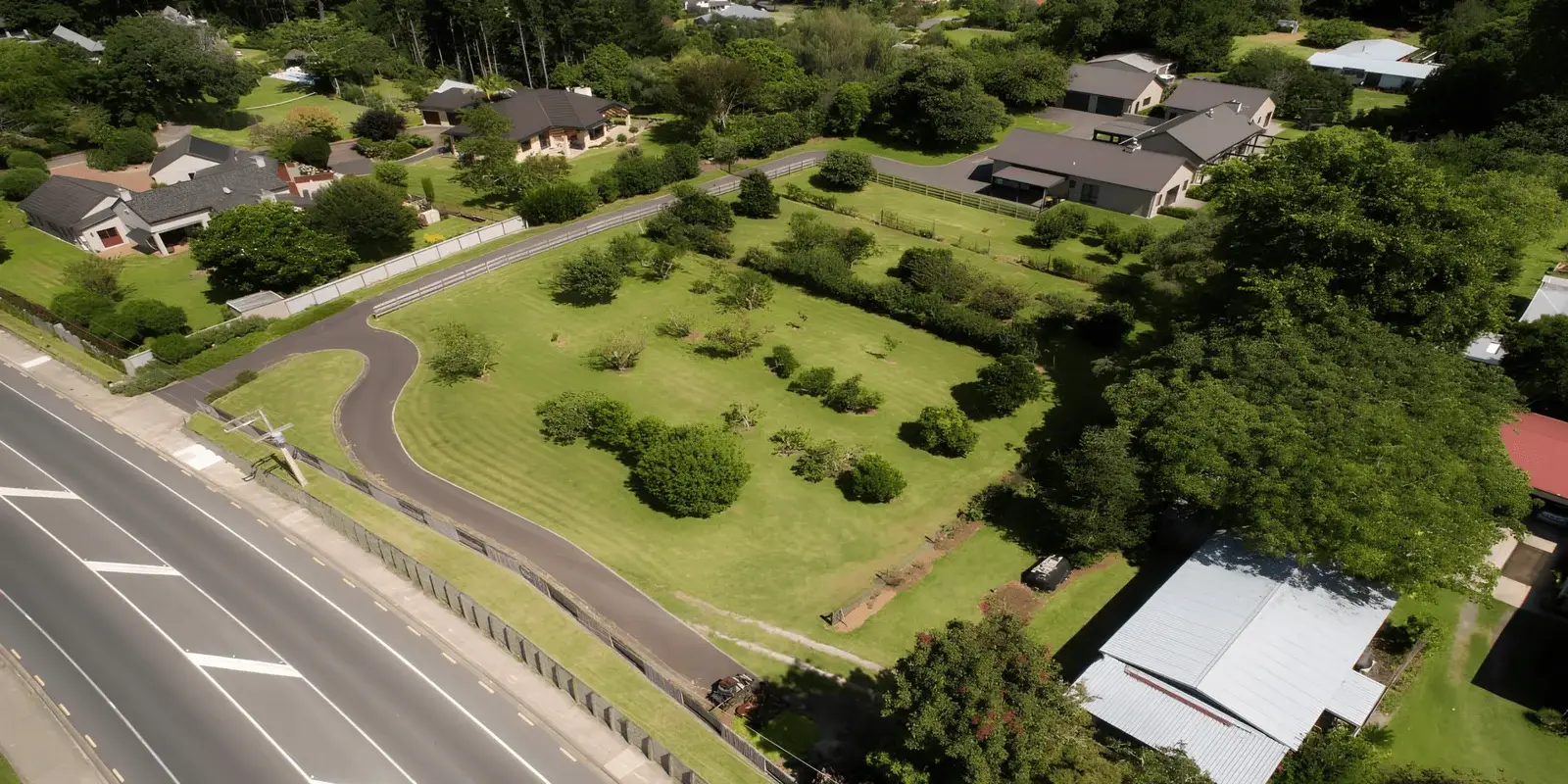
A body corporate or retail frontage has more eyes on it than a private lawn does — residents, tenants, customers. A missed or inconsistent visit gets noticed and raised, so the schedule has to actually hold.
Commercial Grounds Maintenance
Pyes Pā
Commercial Grounds Maintenance in Pyes Pā
Body corporates, the Pyes Pā Shopping Centre frontage and grounds around the newer commercial sites need a consistent schedule, a single point of contact, and the health and safety paperwork done properly — not just a bloke with a mower turning up when he can.
- Scheduled visits, consistent standard
- Single point of contact
- Site H&S induction, every site
- No lock-in contract
What kind of site is it?
Tell us a little about it and we’ll follow up to arrange a site visit.
Fully insured
Sharp tools, tidy finish every visit
Green waste included
Pause any time
Three things commercial grounds actually need
Different from a residential lawn, and not just in scale.
Facilities managers and committees need one person to raise issues with, not a rotating crew with no continuity. Reporting and communication matter as much as the mowing itself.
Under the Health and Safety at Work Act, overlapping businesses on a site have to consult, cooperate and coordinate. A site induction happens on the first visit, every time — it isn’t optional paperwork.
PCBUdutiesApply from the first visit, not after an incident
SinglecontactOne person accountable for the site
ScheduledConsistent visits, not ad hoc
From $75Per visit, fixed programme
Why the cheapest quote is sometimes the most expensive one
General information about overlapping duties under the Health and Safety at Work Act, not legal or compliance advice — see the note below.
Under the Health and Safety at Work Act 2015, businesses whose work overlaps on the same site — a body corporate, its facilities manager, and a grounds contractor, for instance — are all separate PCBUs with duties to consult, cooperate and coordinate with each other. None of them can contract those duties away.
A contractor’s crew is treated as workers of the lead PCBU on that site for health and safety purposes. That means the site’s own duty of care extends to whoever’s mowing the grounds — it doesn’t stop at the property boundary just because a contractor’s doing the work.
WorkSafe has been explicit that cost-based procurement shouldn’t weaken health and safety standards. A quote that’s cheaper because it skips a site induction, doesn’t document hazards, or doesn’t carry proper insurance isn’t actually a saving — the liability the paperwork was meant to manage doesn’t disappear with the paperwork.
So a slightly higher quote that includes a proper induction, documented hazard checks and current insurance is very often the cheaper option once the actual duties involved are counted.
A site induction on the first visit isn’t paperwork for its own sake. It’s how two separate businesses actually meet their legal duty to coordinate on a shared site.
What a commercial visit includes
Scheduled, reported, and consistent — that’s the whole point of a commercial arrangement.
- 01Site induction, first visitHazards, access points and site-specific requirements confirmed and documented before work starts.
- 02Scheduled grounds workMowing, edging, garden beds and general tidiness, to the standard agreed for the site.
- 03Photo reportSent through after each visit so a facilities manager or committee has a record without having to walk the site themselves.
- 04Flag anything unusualDamage, hazards or issues spotted on site are reported, not just worked around.
- 05Green waste removedEvery visit, nothing left on site for someone else to deal with.
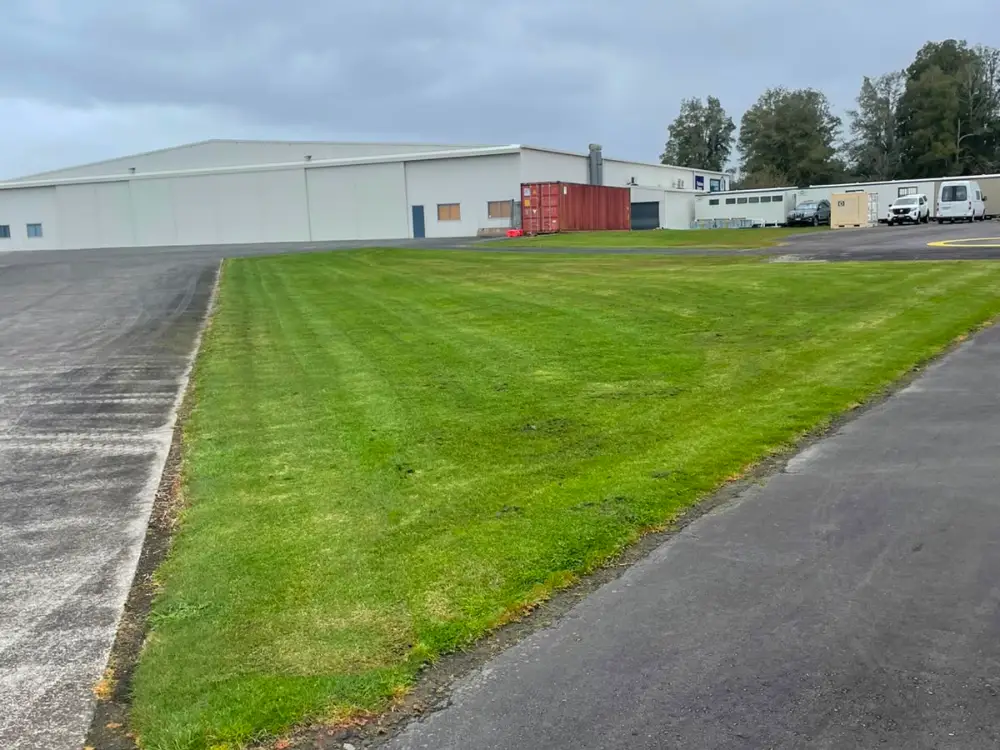
ScheduledConsistent day and time
ReportSent after every visit
One point of contact for the whole arrangement. Scheduling changes, special requests or issues all go through the same person, not whoever’s on site that day.
Tauranga’s fastest-growing suburb, still growing
New commercial development and older, established sites need different things from a grounds contract.
Pyes Pā has grown faster than any other suburb we cover — up 124.6% since 2013, 38.3% since 2018 — and that growth has brought new body corporate developments and retail frontages alongside longer-established commercial sites on the rural fringe. Both need a proper contract, but the starting point differs.
New commercial developments
- Fresh landscaping around new-build body corporates and retail sites often needs a more careful establishment approach in the first year
- Site inductions are usually straightforward on a purpose-built commercial layout
- Growing tenant and resident numbers mean the schedule needs to hold from day one, before habits and expectations are set
- Often the first formal grounds contract for a newly formed body corporate committee
Established commercial sites
- Older plantings and shelter trees may need more experienced assessment than a fresh site
- Site-specific hazards from years of use are usually already documented, but worth confirming on the first visit regardless
- Switching from an existing contractor is common, and a clean handover of site knowledge matters
- Larger, more established grounds areas can mean a broader scope than a newer, more compact site
We run a proper site induction on every first visit, new development or established site alike. It’s the same legal duty either way, and it’s not something we skip because a site looks straightforward.
What it costs
Fixed once we’ve looked, starting from $75 per visit. Green waste is already in it.
-
From $180/visit
Small body corporate
Shared grounds, regular schedule
-
$220–$450/visit
Retail or commercial frontage
Street-facing grounds, higher visibility standard
-
Quoted
Community or sports grounds
Larger areas, seasonal variation
-
Quoted
One-off site tidy
Before a new contract starts, or a single clean-up
What moves it
Site sizeThe main driver of visit length and cost
Visit frequencyWeekly, fortnightly or monthly schedules
ScopeMowing only versus mowing, beds and hedges
Access and H&S complexityMulti-tenant or public-access sites need more coordination
A consistent contract costs less per visit than repeated one-off call-outs — and it’s the only way to guarantee the schedule actually holds when a committee or facilities manager needs it to.
The commercial grounds year
A scheduled contract absorbs the seasonal swing so nobody has to manage it manually.
JanFebMarAprMayJun
JulAugSepOctNovDec
Peak growth — more frequent visitsStandard scheduleReduced — winter
The schedule adjusts to the season automatically under a proper contract. Nobody on a committee should have to remember to call and ask for an extra visit in November.
Took over as facilities manager for a body corporate near the new shopping centre and inherited a contractor who’d never done a proper induction in two years on site. Lawnify did one on their first visit without being asked. That alone told me everything about how the rest of the arrangement would go.
What people ask us
Mostly about the job rather than about us, which is how it should be.
01What sites does commercial grounds maintenance in Pyes Pā cover?
Body corporates, retail and commercial frontages, and community or sports grounds. If it’s a shared or commercial site rather than a single residential property, it likely fits here.
02Does your commercial grounds maintenance in Pyes Pā carry its own insurance?
Yes, and current insurance details are provided as part of any commercial arrangement — ask and we’ll send them through before the first visit.
03What does a site induction involve for commercial grounds maintenance in Pyes Pā?
Hazards, access points, site-specific requirements and any existing documentation are confirmed and recorded on the first visit. It’s a legal duty under the Health and Safety at Work Act, not a formality.
04Can we switch our commercial grounds maintenance in Pyes Pā from our current contractor?
Yes — tell us your current schedule and scope and we’ll quote a like-for-like or improved arrangement, with a clean handover so there’s no gap in service.
05How does commercial grounds maintenance in Pyes Pā report back to a committee or facilities manager?
A photo report sent after every visit, plus a single point of contact for anything that comes up between visits — no need to walk the site yourself to know it’s been done.
06Is commercial grounds maintenance in Pyes Pā priced differently from residential mowing?
Yes — commercial sites are priced by scope, frequency, and access and coordination complexity rather than a flat per-visit residential rate.
07What’s the minimum contract length for commercial grounds maintenance in Pyes Pā?
No lock-in — the arrangement runs on a schedule you agree to, and either side can end it with notice.
08Does commercial grounds maintenance in Pyes Pā handle community or sports grounds?
Yes, quoted individually given the wider variation in scope, area and seasonal requirements those sites carry.
While we’re there
Most people add one or two of these, since we’re already on the property.
01
Lawn Mowing & Edging
Weekly to monthly, edges cut every visit.
02
Ride-On Mowing
For lifestyle blocks and bigger sections, honest about which ones need it.
03
Weed Control & Fertilisation
Calibrated for hill-country ground, not a one-size feed.
04
Lawn Dethatching
Once a year, autumn — more on the vigorous new lawns going in on fresh subdivisions.
05
New Lawn Install
Ready lawn or seed — and we’ll say if your section just needs time.
06
Garden Maintenance
Beds kept ahead of the season, waste off site the same day.
00
All Pyes Pā services
The full twelve, and what Tauranga’s fastest-growing suburb does to each.
Commercial Grounds Maintenance in other areas
