
Lawn Dethatching in Pāpāmoa
Lawn dethatching for Pāpāmoa sections, from the older streets around Pacific View Road to the newer lawns of Golden Sands and Pāpāmoa East. Once the spongy mat between leaf and sand passes about 15mm it holds water and feed at the surface, so we scarify it out and cart every load away.
- Booked for autumn, not summer
- Every load taken away
- Overseeding on request
- No contract to sign
Pāpāmoa dethatch quote
Tell us how the lawn feels underfoot and when it was last scarified.
What lawn dethatching fixes on Pāpāmoa sand
The left column applies to any lawn. The right column is what this low, frost-free coast adds.
A mat of dead stem
Old runners, stems and clippings that never broke down sit between the living leaf and the soil. A thin layer cushions wear; once it passes about 15mm it starts blocking water and feed.
Fast growers build it fastest
The runner-forming warm-season grasses found on most Pāpāmoa sections grow hard and lay down stem quickly, both above and just below the surface. That vigour is what makes the mat.
Slowly, then all at once
For a couple of seasons nothing seems wrong. Then the lawn turns spongy, browns off early in summer and stops responding to feed.
Frost rarely interrupts it
Lawns further inland go quiet in the cold months. On this coast growth carries on through June and July, so stem keeps piling up for a larger share of the year.
Blades cut into the layer
A scarifier slices vertically through the mat and lifts it out rather than combing the surface, which is why the pile that comes up catches most owners off guard.
Water runs off, not in
Sand already drains quickly. Lay a spongy mat over it and the little rain that falls soaks into the thatch instead of the root zone, so the lawn goes thirsty even in a wet week.
Rough before it’s better
For the first couple of weeks the lawn looks thin and scratched. New growth fills the gaps over the weeks that follow, and the result is denser than before.
Salt adds to the pile
On sections facing the sea, salt-laden wind scorches leaf tips early, and that dead material settles into the mat too. It is one more reason to check the depth each autumn.
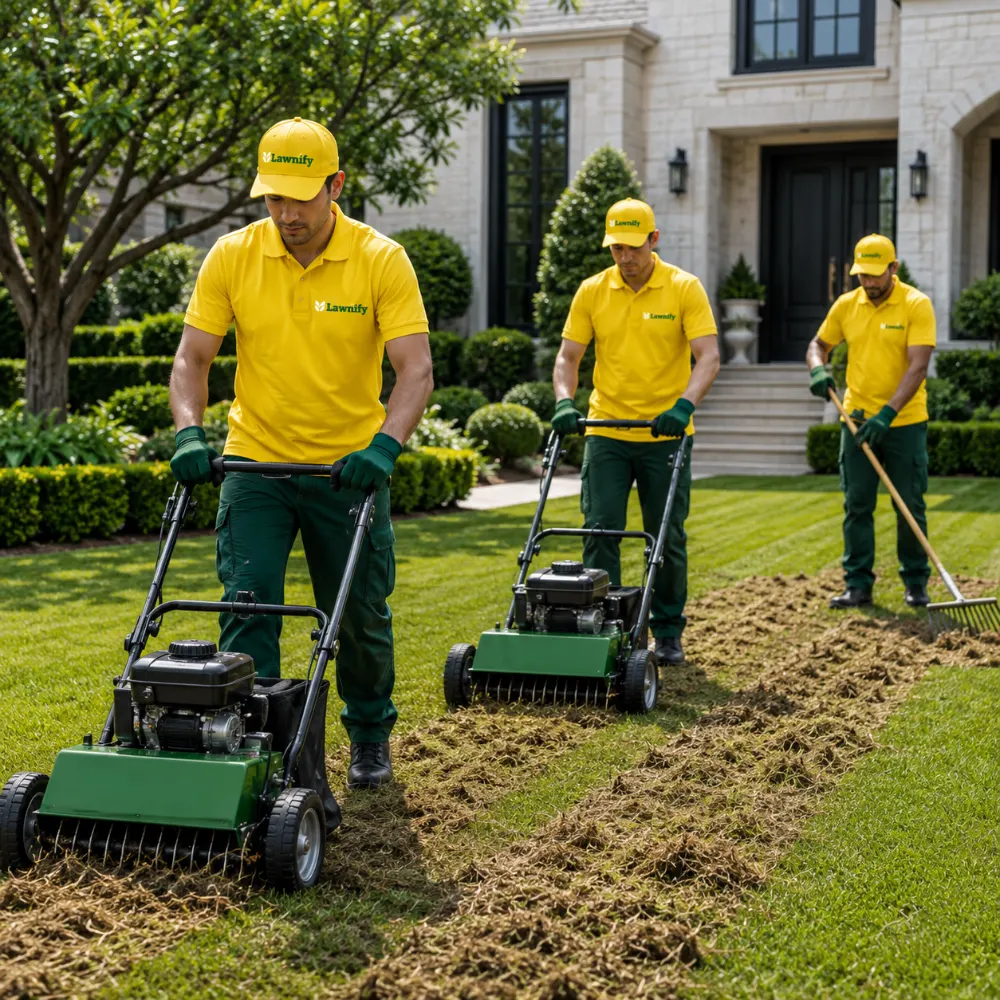
- A low mow first so the blades reach the mat
- Crossed passes, with an extra one where it is thick
- Every scrap raked up, never blown back in
- Overseeding offered while the soil is exposed
- The whole load taken away on the trailer
- Photos plus aftercare notes for the next few weeks
Nobody needs to be home. Just let us know about a locked gate or a dog and we’ll work around it.
Good and bad lawn dethatching compared
A careless scarify costs money and leaves the lawn worse off. These are the details that separate the two.
How a Pāpāmoa dethatching visit runs
Expect a bigger pile of dead material than you’d guess from looking at the lawn.
-
Mow it low
Taken down below the usual height so the blades work on the mat, not the leaf.
-
Scarify in two directions
A first run, then a second across it. Heavily matted patches get another.
-
Rake and load
Everything lifted goes onto the trailer — none of it is mulched in or left in bags on the berm.
-
Overseed if booked
Seed sown now reaches bare soil and has its best chance of the year.
-
Hand over
Water if the weather turns dry, keep foot traffic off, and let it thicken over the next few weeks.
Does your Pāpāmoa lawn need dethatching?
It takes two minutes and no tools to find out.
What lawn dethatching costs in Pāpāmoa
One figure, fixed after a look, with the removal of every load already counted in.
The final figure depends on lawn area and how thick the mat has grown. Overseeding after the pass is quoted separately, and only across the patches that need it.
Get a fixed figureOverseeding pays off on the same visit. Right after scarifying, seed can sit on bare soil instead of a mat, and that chance doesn’t come round again until the next pass. Booking a neighbour’s lawn on the same trip can also bring both figures down.
When to book lawn dethatching in Pāpāmoa
Choosing the wrong month costs you money and leaves a worse lawn. One window stands out.
Autumn wins clearly. The ground is still warm enough for seed to strike, the summer heat has passed, and the lawn has the cooler months to knit back before it is needed again. Spring can work if autumn was missed. Scarifying sand in midsummer exposes the roots to heat they can’t handle, so we decline those bookings.
If a probe shows your mat is still under the trouble depth, we’ll say so and leave the machine on the trailer. We won’t scarify a Pāpāmoa lawn in midsummer either, even when the booking is already in the diary.
Pāpāmoa lawn dethatching questions
The things owners ask before they book a scarify.
How often does a Pāpāmoa lawn need dethatching?
Every year or two for most coastal lawns, depending on how fast the mat builds. Growth rarely stops here, so thatch accumulates for more months than it does inland. A lawn that has never been scarified will give up far more material on its first pass; after that it becomes a routine autumn check, and we only bring the machine out when the depth calls for it.
Will lawn dethatching damage my Pāpāmoa lawn?
It will look worse before it looks better. Straight after the pass the turf is thin and scratched, and over the following weeks new shoots fill the gaps and the sward comes back denser. The real risk is timing: scarify sand in high summer and the exposed crowns cook, which is why we only book it for autumn or, at a stretch, spring.
Is lawn dethatching better than spraying moss on a Pāpāmoa section?
Spraying kills what is there today, but the moss returns because the conditions that grew it are unchanged. Moss settles where water lingers on a spongy layer in shade. Remove the mat so rain soaks into the soil, then overseed, and the grass crowds the moss out by itself. It is a fix rather than a cover-up.
Do I need to be home for dethatching in Pāpāmoa?
No. Access to the lawn and a heads-up about locked gates or pets is all we need. Photos are sent once the job is finished, which suits the many Pāpāmoa owners who rent the house out or only use it as a holiday place.
Where does the thatch go after a Pāpāmoa dethatching job?
It is raked up, loaded onto our trailer and taken away to be composted, and that removal is part of the quoted figure. Nothing is left bagged on the berm or tipped over a back fence. On a lawn that has not been scarified before, the sheer volume usually surprises people.
Should I overseed straight after lawn dethatching in Pāpāmoa?
In most cases, yes. With the mat gone, seed lands on bare soil instead of resting on dead stem where it would dry out, so it strikes far better. Coming back later for a separate overseeding visit costs more and gives a weaker result. We quote it only for the patches that genuinely need it.
Is a thin Pāpāmoa lawn always a dethatching problem?
Not always. A thick mat starves a lawn of water and feed and thins it out, so scarifying often fixes it. But in the newer subdivisions, a lawn that looked fine in its first year and thin in its second usually has compacted ground beneath it rather than thatch on top. We check which it is before we quote.
What does lawn dethatching cost in Pāpāmoa?
It starts from $189 a visit with every load of thatch taken away. The final figure depends on how much lawn there is, how deep the mat has grown and how easily the machine reaches it. Overseeding is priced separately and only where it’s needed. You get one fixed figure before any work starts.
Services that pair with Pāpāmoa dethatching
Jobs people add because the trailer and crew are already here.
