Thatch depth checked first
We cut a wedge out of the turf and look at it. Under about 10mm and dethatching is not what the lawn needs.

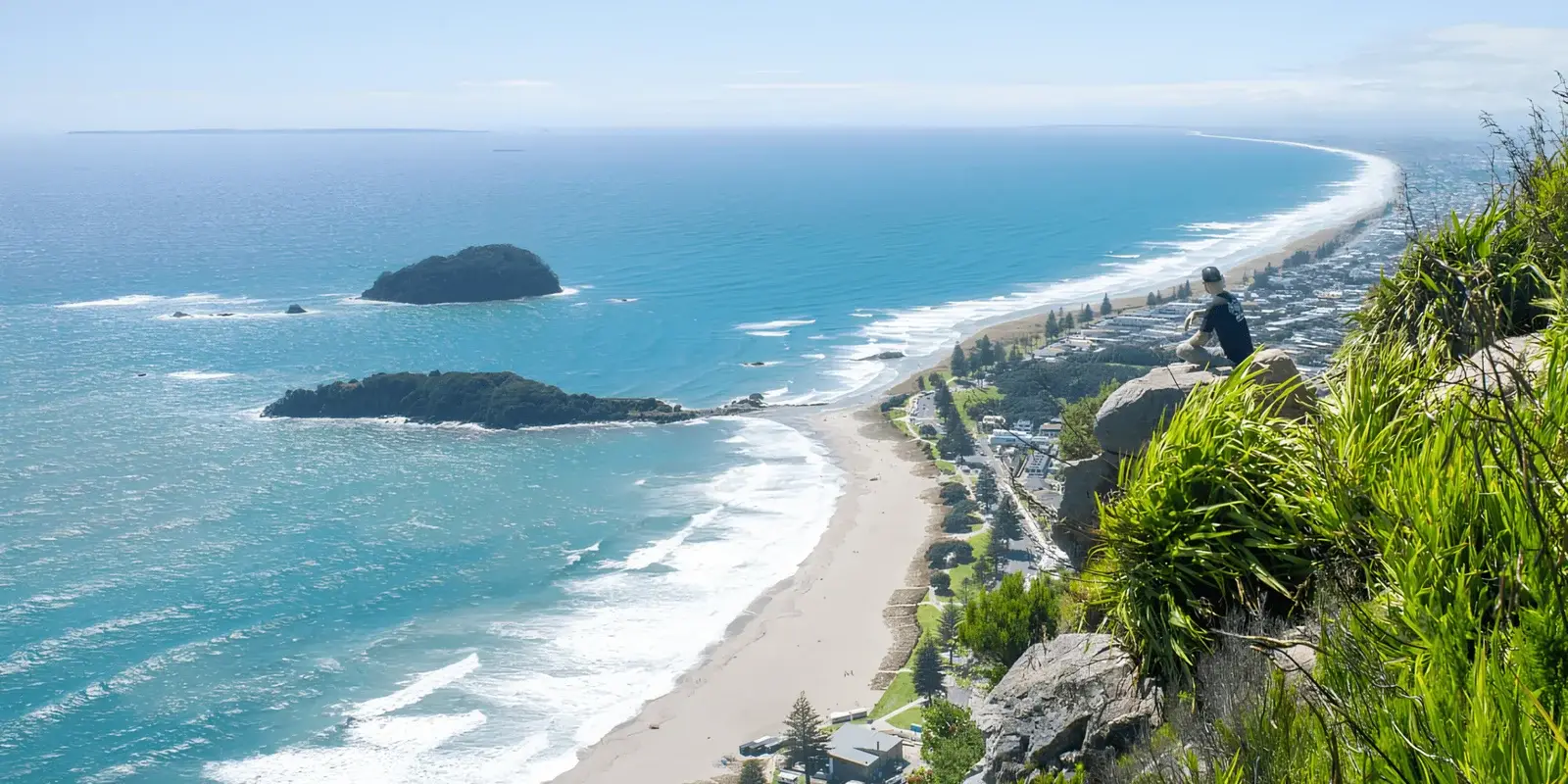
Mechanical lawn dethatching for Bay of Plenty lawns — Tauranga, Papamoa, Te Puke and the towns between. We measure the thatch layer first, cut it out with a powered dethatcher, and take every barrowload away.
Where the lawn is, and what it is doing.
Dethatching is a one-off job done properly rather than a round, so it is worth knowing exactly what the crew does while they are there.
We cut a wedge out of the turf and look at it. Under about 10mm and dethatching is not what the lawn needs.
Compaction, shade, poor drainage and grub damage all look like thatch from standing height and none of them are fixed by raking.
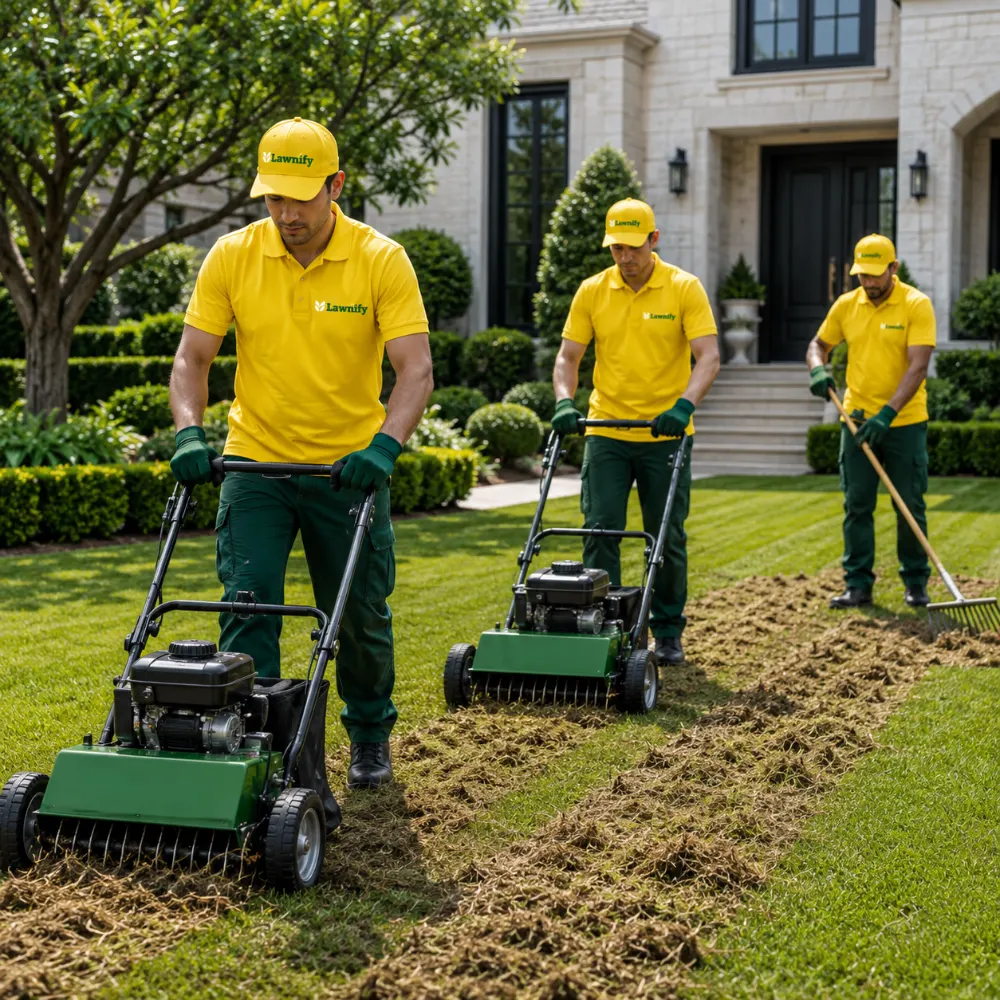
A powered dethatcher with steel tines set to a measured depth, so it lifts the mat without tearing out live crowns.
A badly matted lawn gives up a surprising volume of material. It leaves on the trailer rather than sitting in a heap.
Dethatching exposes the thin spots. We show you which ones will fill in on their own and which want overseeding.
A watering and feeding plan for the two or three weeks that decide whether the lawn comes back thicker.
Dethatching is the wrong answer for a lot of tired lawns. These are the signs that it is the right one.
The clearest sign. You are walking on a mat of dead stem rather than on soil, and it gets worse every season it is left.
Thatch is water-repellent once dry. If the sprinkler puddles and runs to the low corner, it is not reaching the roots at all.
Roots growing in the thatch layer rather than the soil have nothing to draw on, so the lawn gives up as soon as it turns dry.
Moss settles on a damp mat that never dries out. Clearing the mat removes what the moss was living on.
A thick spongy layer lets the mower sink and cut into the crowns, leaving pale patches after every mow.
A vigorous lawn in this climate builds a mat worth removing every few years. If it has never been done, it is probably due.
None of that sound like your lawn? It may be compaction, shade or feeding instead. Weed control and fertilisation or a regular mowing round fixes more tired lawns than dethatching does.
Lawn dethatching starts at $189. Nobody quotes it properly without seeing the thatch, so here is what shifts the figure:
Address, rough size, and how it feels to walk on.
A wedge cut out on site, then a fixed price.
Tines set to depth, then everything lifted is cleared.
You follow the water-and-feed plan and it thickens up.
Hire shops rent dethatchers, and a lawn set too deep by one is a genuinely expensive mistake to undo. Most of what you are paying for here is the depth setting and knowing when not to do it at all.
Too shallow does nothing, too deep tears out the crowns and you are looking at bare dirt for a month. The setting is the whole job.
Plenty of tired lawns do not have a thatch problem. Saying so costs us a job and saves you paying for the wrong one.
A dethatch produces barrowloads of debris. Getting it off the section and tipped is half the labour and all of it is included.
Each town below has its own page for this job. The machine travels, so a town missing from the list is usually still doable — ask. Every service we run is listed on the Bay of Plenty page.
Thatch is dead stem and root matter building up faster than it rots down. Four local things push that balance the wrong way.
Warm and damp most of the year means the lawn keeps producing stem matter long after a Canterbury lawn has gone dormant.
The vigorous creeping lawn types common up here spread by runner, and every runner that dies back adds to the mat.
People assume free-draining coastal ground avoids the problem. The mat sits above the soil either way, so Papamoa lawns thatch much like Te Puke ones.
The job tears a lawn up before it improves it. Done in the growing months it knits back over in weeks; done in the cold it just sits there torn.
Dethatching is the job people are least sure they need, so these come up every time.
Press a finger into the turf. If it sinks through a spongy layer before reaching soil, or water pools and runs off instead of soaking in, that layer is thatch. Under roughly 10mm it is doing no harm and is better left alone.
It starts at $189. Where a lawn lands depends on the area, how thick the mat has got, how many bags come off it and whether the machine can be walked straight in or has to go up steps.
Yes, for a couple of weeks — that part is normal and worth expecting. The job lifts out dead matter and the lawn looks thin and scruffy until it knits back over. What comes back is thicker.
While the grass is actively growing, so it can recover from the disturbance. Doing it going into the cold months leaves a torn-up lawn sitting there with nothing to knit it back together.
Scarifying is another word for the same job. Aerating is different — that pulls plugs out to relieve compacted soil. Some lawns want both, and if yours does we will say which to do first.
It can be done, but you would be paying to tidy up a lawn that needs a different fix. Weed control and fertilisation first, then dethatch once there is enough grass worth saving.
It goes on the trailer. A badly matted lawn can give up a remarkable volume of material and leaving it bagged on the berm is not much of a favour.
Sometimes. Dethatching exposes thin patches that the mat was hiding. We point out which will fill in from the surrounding grass and which are bare enough to want seed.
Tauranga, Bethlehem, Matua and Otumoetai on the city side; Papamoa, Mount Maunganui, Ohauiti and Welcome Bay out east; then Tauriko, Pyes Pa, Omokoroa, Te Puke and Te Puna. If your town is not on that list it is still worth asking.
Every operator clears police vetting before we hand them a machine. Worth knowing when someone is working on your section while you are out.
A dethatch is one stage of a lawn renovation; aeration, feeding and overseeding are the others. That is why it usually travels with weed control and fertilisation, or with a new lawn install where the surface is past saving.
Tell us the address and how the lawn behaves. Thatch depth checked on site, priced from what is there.
