
Pittosporum, photinia, camellia and corokia recover quickly from a hard cut. Griselinia and buxus recover slowly and need a staged approach. Leylandii, macrocarpa, thuja and cryptomeria never recover from a cut into brown wood — ever.

Not every hedge forgives a hard cut, and not every tree should be cut back hard at all. Species and timing decide the outcome here more than the trim itself does.
Tell us the street and we’ll give you a fixed price. Free, no obligation.
Get these right and a hedge stays green through the cut. Get them wrong and you’re looking at bare wood for a season.
Pittosporum, photinia, camellia and corokia recover quickly from a hard cut. Griselinia and buxus recover slowly and need a staged approach. Leylandii, macrocarpa, thuja and cryptomeria never recover from a cut into brown wood — ever.
Under the Wildlife Act, disturbing a native bird’s active nest is an offence. Spring growth flush is also when most people want a trim, so a quick check of the canopy before we start isn’t optional — it’s the law.
A hedge shaped wider at the top shades its own lower growth out over time, until the base goes bare and thin. Tapering it narrower up top keeps light reaching all the way down, every year.
This is the difference between a griselinia hedge that stays green and one that turns into a row of sticks.
Cut a fast-recovering species like pittosporum or photinia back hard and it’s filled back in within a season — the plant simply doesn’t mind. Try the same thing on griselinia or buxus and you’ll cut into brown wood that has no live buds left on it, and that section of hedge stays bare for a very long time, if it recovers at all.
The alternative on a slow-recovering species that’s gotten too tall is a staged reduction — taking it back over two or three seasons, a third at a time, always cutting back to green growth rather than brown. It’s slower, and it’s the only way that actually gets there without a bare hedge in between.
Leylandii, macrocarpa, thuja and cryptomeria are a different situation entirely. These conifers don’t recover from brown wood at all, staged or not — once you’ve cut past the green, that section is finished, permanently.
So the first question on any overgrown hedge isn’t how much to take off. It’s what species it is.
Checked before it’s cut, not the other way round.
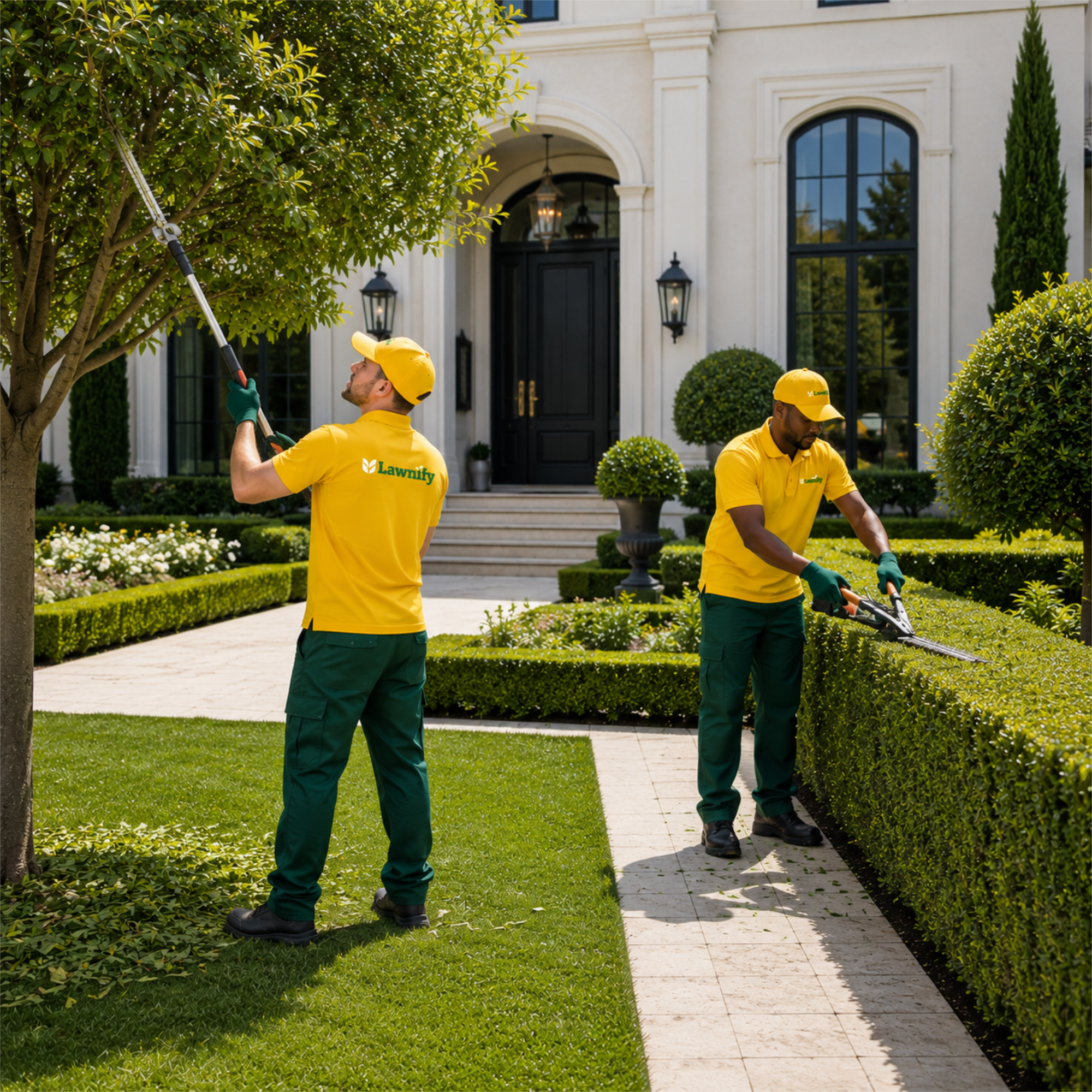
Never a hard cut into brown wood on griselinia or buxus. If a hedge needs bringing down significantly, we’ll explain the staged plan and the timeline up front rather than promise a one-visit fix that leaves it bare.
Mature planting is common right across the Mount — what it’s dealing with depends on which side you’re on.
The peninsula’s been settled since the early 1900s, and twenty-year griselinia hedges and established pōhutukawa are common everywhere on it. But an ocean-facing hedge and a harbour-facing one a few hundred metres apart are ageing very differently.
Mauao itself, sheltering the harbour side, is treated with the care it deserves as a pā site of national significance — it’s the reason the two coastlines differ, not a design feature to borrow from.
Fixed once we’ve looked. Green waste is in it and GST is already included.
| Standard hedge, per metre | Regular shape trim, waste removed | From $18/m |
|---|---|---|
| Overgrown hedge, staged reduction | Per season, slow-recovering species | Quoted per stage |
| Tree pruning | Access and height dependent | $120–$400 |
| Species assessment only | No cutting, advice on what a hedge can take | $60 |
A hedge trimmed lightly every visit costs less overall than one caught up on once a year. Regular shape-pruning is a shorter job each time, and it’s what avoids ever needing the slow, staged reduction in the first place.
What’s appropriate to cut changes with the season more than most people expect.
Spring isn’t off-limits — it just needs a check first. A light trim can still happen; it simply doesn’t start until the canopy’s been looked over for an active nest.
Nearly took the griselinia hedge back hard myself before asking. Glad I didn’t — they staged it down over two seasons instead and it never went bare once.
Mostly about the job rather than about us, which is how it should be.
No. Topping — cutting main leaders back to stubs — looks tidy for a week and then isn’t. Regrowth comes back weak, densely packed and structurally poor, and on several species it starts a decline that ends in the tree needing removal a few years later. If a tree’s outgrown its spot we’ll talk about a proper reduction, or removal if that’s genuinely needed — not a topping job.
Disturbing an active native bird’s nest is an offence under the Wildlife Act, and spring is exactly when birds are nesting and when most people want their hedges tidied after winter. We check the canopy before cutting starts on every spring visit — it isn’t optional.
Pittosporum, photinia, camellia and corokia recover quickly from a hard cut. Griselinia and buxus recover slowly and need staging. Leylandii, macrocarpa, thuja and cryptomeria never recover from a cut into brown wood — that’s a permanent decision, not a maintenance one.
Roughly every six to eight weeks through the growth flush from spring into summer, and every two to three months over the cooler months. Harbour-side hedges in more sheltered, moister spots often grow faster and need it more often than exposed ocean-facing ones.
Chipped and removed off site the same visit — nothing left in a pile. Disposal is already included in the price.
Trimming away the damaged seaward growth lets the plant redirect energy into healthy new growth, but it’s ongoing management on a fully exposed site rather than a single fix — the salt exposure doesn’t stop.
Cutting down and removing a whole tree sits outside this service — we can advise and point you the right way, but felling and stump grinding are handled separately.
Access, more than hedge length. A narrow side run that a full-size trimmer can’t get through slows the job down more than an extra few metres of straightforward hedge would.
Most people add one or two of these, since we’re already on the property.
