
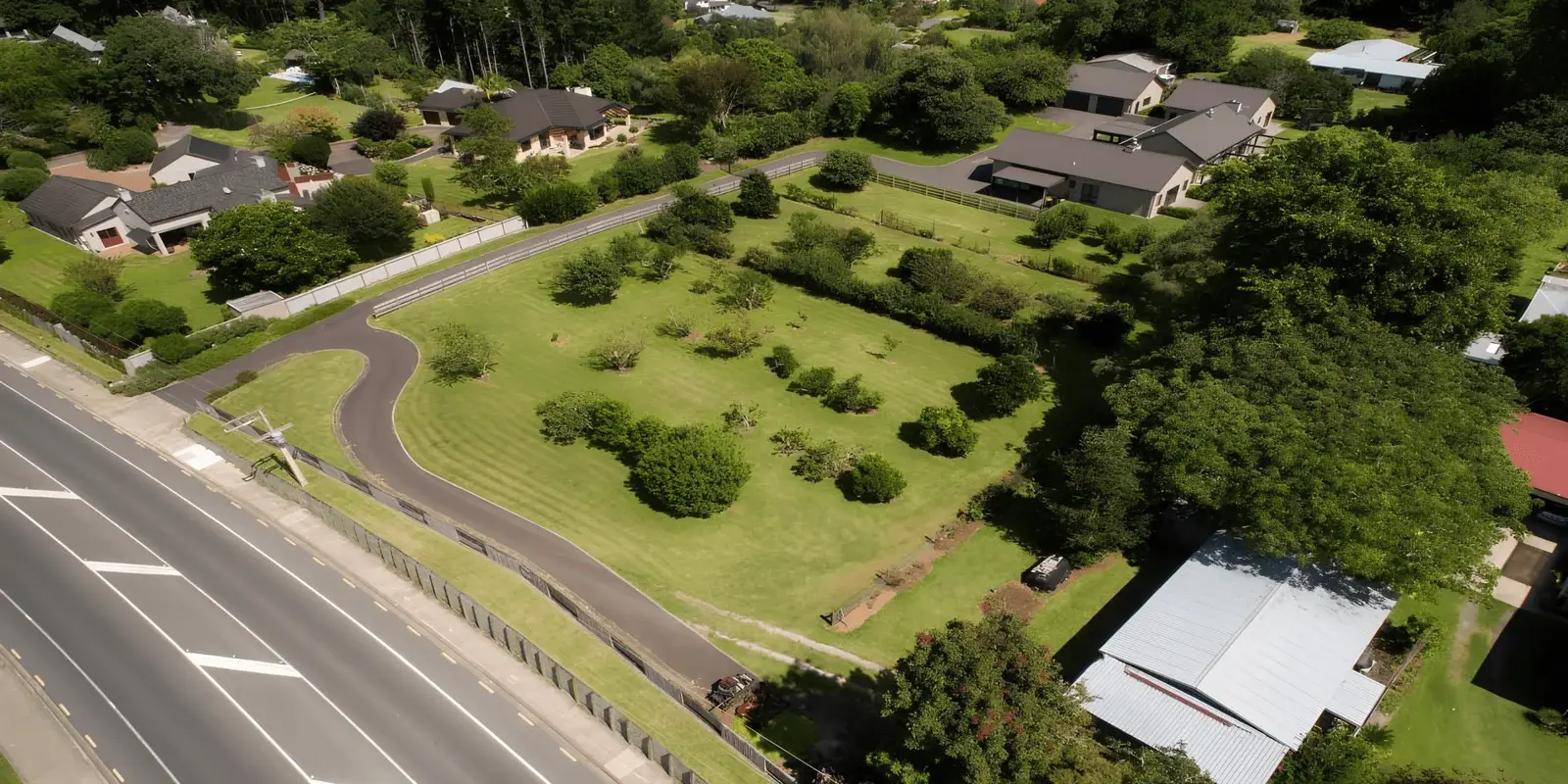
An old shelterbelt or boundary tree stump on the Pyes Pā rural fringe can have roots running well beyond its visible width. What’s planted nearby, and whether it shares roots with the stump, matters more than the stump’s own size.
Stump Grinding
Pyes Pā
Stump Grinding in Pyes Pā
Grinding gets a stump below grade fast, without the disruption of digging the whole root system out. On old orchard and shelterbelt ground, the one thing worth checking first is what else is sharing its roots.
From $95per stump
Fixed price agreed before we start — nothing added after.
- Compact grinders, tight access
- Below-grade, ready to plant over
- Grindings removed or left as mulch
- No lock-in, cancel any time
What’s your section like?
Tell us the street and we’ll give you a fixed price. Free, no obligation.
Fully insured
Sharp tools, tidy finish every visit
Green waste included
Pause any time
Three things that decide a stump job
None of them are obvious from looking at the stump above ground.
Clearing a spot for a path needs the stump flush. Planning a new lawn or garden bed over it needs it ground deeper, so roots don’t interfere with what goes in on top.
A lot of Pyes Pā sections have a slope on the approach to the stump, and narrow side runs on newer subdivision sections can rule out a full-size grinder. Smaller compact grinders exist specifically for this — through a standard gate, where a bigger machine simply doesn’t fit.
150–300mmTypical grind depth below grade
CompactMachines sized for standard gate access
SamedayJob done, grindings dealt with
$95fromPer stump, small
Grinding versus digging out
Almost nobody actually needs the whole root system gone.
Grinding a stump is fast, contained and leaves the surrounding lawn and any buried services alone — the grinder works down through the stump itself rather than excavating around it. Most jobs are done within a couple of hours and the area’s usable again the same day.
Digging a stump out, roots and all, is a different job entirely — a much bigger excavation, more disruption to anything nearby, and real risk on an older section where buried pipes or cables aren’t always exactly where the plans say they are.
The only reason to dig rather than grind is wanting every trace of root gone — typically because a new garden bed or lawn is going in on that exact spot and any regrowth from a live root would be a problem later.
For clearing a spot, levelling for a path, or just getting an eyesore gone, grinding does the job with a fraction of the disruption.
Most jobs just need the stump gone from view and safe underfoot. That’s a grinding job, not an excavation.
What a stump grinding job includes
Checked before the machine starts, not after.
- 01Check for buried services and nearby rootsConfirms nothing’s at risk before the grinder goes near the stump.
- 02Grind below gradeDown to a depth that suits what’s planned for the spot afterwards.
- 03Deal with the grindingsLeft as mulch over the hole if you want them, or loaded out and removed — your call.
- 04Level the siteBackfilled and levelled so the spot’s ready for turf, planting or paving.
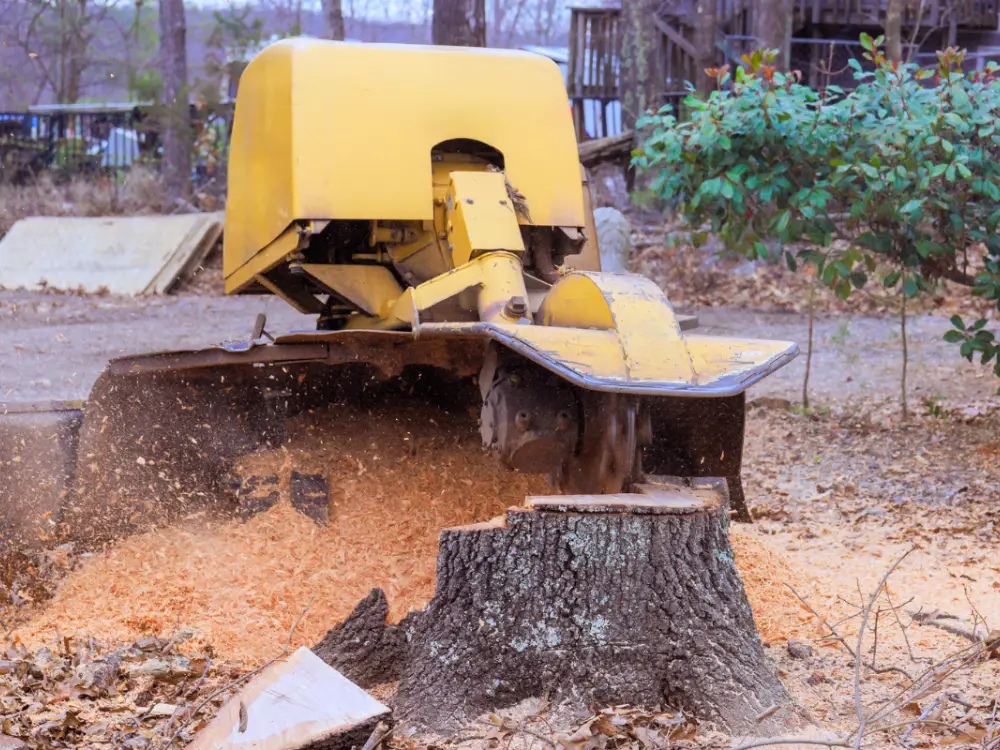
On site1–2 hrs
PhotoSent after
We check root spread before we start on anything close to a hedge or tree you want to keep. See the note on that below — it’s the one thing that changes how we approach a job right next to live planting.
Tauranga’s fastest-growing suburb, still growing
New subdivisions and the orchard fringe carry very different stump situations.
Pyes Pā has grown faster than any other suburb we cover — up 124.6% since 2013, 38.3% since 2018 — largely through new subdivisions like The Lakes, built out on cleared former kiwifruit-orchard and pastoral land. That clearing means most fresh sections start with a genuinely clean slate, while old shelterbelt and orchard-tree stumps still turn up more often along the working rural fringe.
New subdivision sections
- Bulk-earthworked sites are typically cleared of significant stumps before building, so this rarely comes up on a fresh section
- Where a stump does turn up, it’s usually smaller, recently planted boundary or feature planting
- Narrow side runs on standard-width sections often call for a compact grinder
- Straightforward access on most new-build driveways
Orchard-fringe sections
- Old shelterbelt or boundary tree stumps from cleared kiwifruit-orchard and pastoral land are more common here
- More open ground on a lifestyle block often allows a full-size grinder straight in
- Faster per stump, and better suited to multiple stumps in one visit on an ex-orchard block
- Root-spread checks matter more here, given the age and spread of established shelter planting nearby
We won’t grind a stump sitting inside a live hedge or tree’s root zone without checking first. Griselinia and a few other close-planted hedge species share roots at tight spacing, and a grinder doesn’t know the difference between a dead stump’s roots and a live neighbour’s.
What it costs
Prices start at $95. Fixed once we’ve looked, with green waste already in it — nothing added after.
-
From $95
Small stump
Under 300mm diameter
-
$140–$220
Medium stump
300–600mm diameter
-
$220–$380
Larger or established stump
Over 600mm, older trees
-
Quoted
Multiple stumps, same visit
Discount per additional stump
What moves it
Trunk diameterThe single biggest driver of grind time and cost
AccessCompact-machine and sloped-approach jobs take longer per stump than open, flat ones
Root spreadChecked against anything nearby you want kept
GrindingsLeft on site as mulch or removed — removal costs a little more
Multiple stumps in one visit cost less per stump than booking them separately — the machine’s already on site and set up, so it’s worth mentioning every stump on the property up front rather than one at a time, especially useful on an orchard-fringe block clearing old shelterbelt trees.
When to grind, and when to wait
No strong seasonality of its own — timing usually follows what’s planned for the space afterwards.
JanFebMarAprMayJun
JulAugSepOctNovDec
Any time — grinding itselfPair with new planting — Sep–Nov & Mar–MayAvoid if replanting — Dec–Feb
The grinding itself doesn’t care about the season. It’s only worth timing around if you’re planting straight afterwards — then it makes sense to line up with a good spring or autumn window.
Found an old shelterbelt stump on our block we didn’t even know was there until it wrecked a mower blade. Ground out and levelled in an afternoon, a lot less drama than we expected.
What people ask us
Mostly about the job rather than about us, which is how it should be.
01Does stump grinding in Pyes Pā kill the roots for good?
For most species, yes — without a stump to feed regrowth from, the root system dies off over time. A few species, including some hedge varieties, can resprout from live roots left in the ground regardless of what happens to the visible stump. We’ll flag if that’s a risk on your job.
02How deep does stump grinding go in Pyes Pā?
Typically 150 to 300mm below grade, enough to clear for a lawn or garden bed on top. Deeper is possible if something’s being built directly over the spot — tell us what’s planned and we’ll grind to suit it.
03Will stump grinding damage nearby Pyes Pā plants?
Not if we check first. The main risk is a stump sitting inside another tree or hedge’s root zone, where roots can be shared or tangled — we check for that before starting anything close to planting you want to keep.
04What happens to the chips after stump grinding in Pyes Pā?
Left on site as mulch over the hole if you want them — genuinely useful, being fresh wood chip — or loaded out and removed if you’d rather a clean, level, chip-free finish.
05How long does stump grinding take per stump in Pyes Pā?
Most single stumps are done within one to two hours, including the services check and clean-up. Larger or older established stumps, or several in one visit, take longer.
06Do new Pyes Pā subdivision sections usually need stump grinding?
Rarely — most fresh sections are cleared of significant stumps as part of the bulk earthworks. It comes up far more often on older, orchard-fringe properties with established shelter planting.
07What drives the cost of stump grinding in Pyes Pā?
Trunk diameter first, then access. A big stump on an open, flat lifestyle block can still be faster and cheaper than a smaller one down a narrow, sloped side run.
08Is stump grinding in Pyes Pā the same as tree removal?
No — this is grinding an existing stump, not felling a standing tree. If the tree’s still up, that’s a different job we can point you toward.
While we’re there
Most people add one or two of these, since we’re already on the property.
09
Shrubs & Rubbish Removal
Roots out properly, waste sorted into the right stream.
10
Mulching, Bark & Weed Mat
Roughly halves the weeding on every visit after it.
11
Rental & Section Clean-Ups
Dated before and after photos, itemised invoice.
12
Commercial Grounds Maintenance
Scheduled visits, single point of contact, H&S done properly.
01
Lawn Mowing & Edging
Weekly to monthly, edges cut every visit.
02
Ride-On Mowing
For lifestyle blocks and bigger sections, honest about which ones need it.
00
All Pyes Pā services
The full twelve, and what Tauranga’s fastest-growing suburb does to each.
Stump Grinding in other areas
