
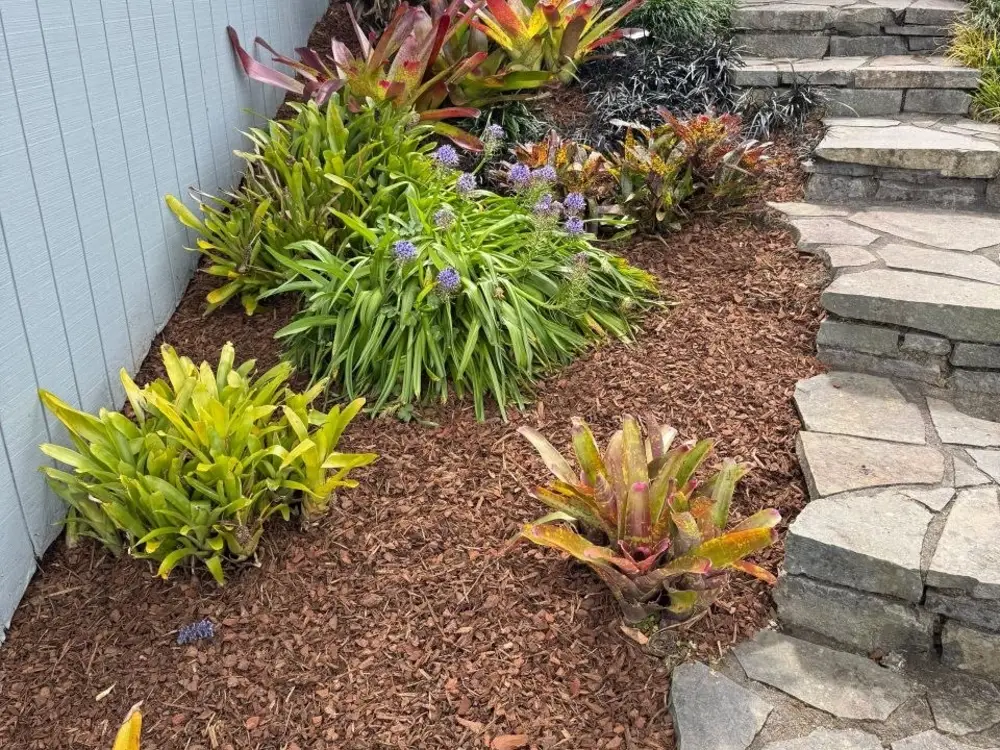
This is the depth that actually blocks light from reaching weed seed and holds meaningful moisture. Less than that suppresses nothing — weeds are back through a thin layer within weeks.
Mulching, Bark & Weed Mat
Pyes Pā
Mulching, Bark & Weed Mat in Pyes Pā
Done at the right depth, mulch does two jobs at once here — it holds moisture through a dry summer stretch, especially on exposed, freshly graded new-subdivision ground, and it roughly halves the weeding on every visit after it.
From $149supplied, delivered & spread
Fixed price agreed before we start — nothing added after.
- 75–100mm depth, done properly
- Weed mat where it actually helps
- Beds weeded first, always
- No lock-in, cancel any time
What’s your section like?
Tell us the street and we’ll give you a fixed price. Free, no obligation.
Fully insured
Sharp tools, tidy finish every visit
Green waste included
Pause any time
Three things that decide whether mulch actually works
Get any of these wrong and it looks fine for a fortnight and does nothing after that.
Mulch banked up against a stem or trunk holds constant moisture against the bark, which is exactly the condition collar rot needs. A gap around the base is a small detail with a real consequence if it’s skipped.
Weed mat under mulch stops tough regrowth in badly infested spots, but overused it restricts water and air reaching plant roots too. It’s a tool for specific problem areas, not a default layer under everything.
75–100mmDepth that actually suppresses weeds
~50%Typical drop in weeding time after
WeededfirstBeds cleared before mulch goes down
$149fromSupplied, delivered and spread
When mulching starts paying for itself
This is a cost-benefit question, and the answer is usually sooner than people expect.
An unmulched bed dries and crusts between waterings, particularly on an exposed, freshly graded Pyes Pā section — which is exactly the condition most weed seed likes to germinate in. Every visit starts with clearing what’s come up since the last one.
Mulch properly applied blocks most of that light from ever reaching the seed bank, and holds enough moisture that what’s planted isn’t competing with opportunistic weeds for it. The weeding time on every subsequent visit drops sharply — often by around half, and the effect is even more noticeable on an exposed new-build bed that dries faster.
Run the numbers over a year and the one-off cost of doing it properly is usually recovered within that year in reduced weeding time alone, before counting what the moisture retention does for the actual planting.
The crossover point comes faster on more frequently maintained gardens — the more often someone’s paying for weeding, the faster mulching earns its cost back.
This is a service designed to reduce what you pay us afterwards. Every bed properly mulched cuts the billable weeding time on every future visit.
What a mulching visit includes
The prep matters as much as the mulch itself.
- 01Weed the bed firstMulching over existing weeds just buries the problem — it doesn’t solve it. Every bed is cleared before anything goes down.
- 02Edge the bed lineA defined edge before mulching keeps the finished job looking sharp and holds the mulch in place, even on a sloped bed.
- 03Lay weed mat where it earns its placeOnly in genuinely problem spots — badly infested beds or areas with tough regrowth — not as a blanket default.
- 04Spread to depth75 to 100mm, kept clear of stems and trunks, worked evenly across the whole bed.
- 05Water inA first water-in on the day settles the mulch and helps it start doing its job immediately.
On site1–2 hrs
PhotoSent after
Bark type is your call. Different bark grades suit different beds — we’ll recommend one for the site, but if you’ve got a preference, tell us and that’s what goes down.
Tauranga’s fastest-growing suburb, still growing
Why mulch matters differently on a fresh subdivision bed versus a sheltered orchard-fringe one.
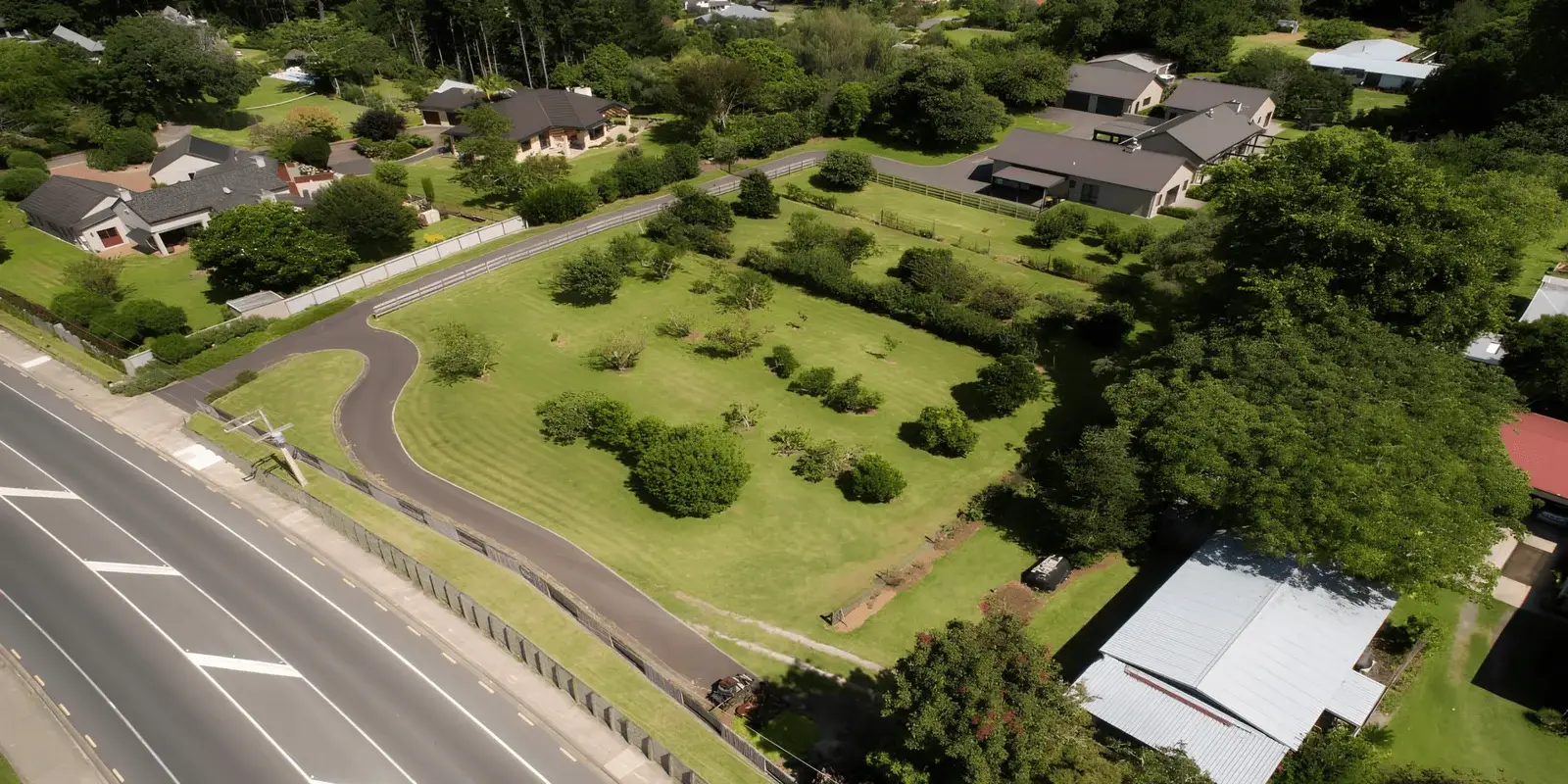
Pyes Pā has grown faster than any other suburb we cover — up 124.6% since 2013, 38.3% since 2018 — and a bed on a freshly graded new-subdivision section dries and drains very differently to one on flatter, more sheltered orchard-fringe ground — and that changes what mulch is actually doing for it.
New subdivision beds
- Fresh, exposed beds with little to no established shelter dry out fast in full sun and wind
- Mulch here is doing real moisture-retention work while planting is still finding its feet
- Thin layers disappear faster than you’d expect on freshly graded, sun-exposed ground
- A heavier first application is usually worth the extra cost while the garden establishes
Orchard-fringe beds
- Beds on a fairly level, settled orchard-fringe section dry and drain fairly predictably
- Mulch here is mostly earning its keep on weed suppression, with a moderate moisture benefit
- A larger property can span both an exposed bed and a heavier, shadier one under mature shelter planting
- A straightforward once- or twice-a-year application usually keeps pace
Tell us whether it’s a fresh, exposed bed or a sheltered one and it changes our recommendation — a heavier mulch depth on new-subdivision ground, versus more careful stem clearance in an established, shaded bed.
What it costs
Fixed once we’ve looked. Green waste is already in it — nothing added after.
-
From $149
Small courtyard beds
Weeded, edged and mulched
-
$160–$280
Standard garden beds
Front and back, full depth
-
$280–$450
Larger or multiple beds
Bigger properties, more area
-
From $12/m²
Weed mat, problem areas only
Added where genuinely needed
What moves it
Bed areaThe main driver of bark volume needed
Current weed loadA weedy bed takes longer to clear first
Bark gradeFiner grades cost more than coarser ones
Weed matOnly priced where it’s actually recommended
This is usually a once- or twice-a-year cost, not a recurring line — a proper mulch application at the right depth typically lasts six to twelve months before it needs topping up, longer on sheltered orchard-fringe beds than exposed, freshly graded ones.
The mulching year
Timing decides how much benefit you actually get from the job.
JanFebMarAprMayJun
JulAugSepOctNovDec
Ideal — Sep–Dec, before summer dryOptional top-up — Jan–MayLittle benefit — Jun–Aug
Mulch laid before the summer dry stretch is doing its most important job. The same job in the depths of winter, when growth and evaporation are both slow, does far less for you.
Weeded our new front beds myself every fortnight for the first summer before finally getting them mulched properly. Should’ve done it from the start — the difference in how often I’m out there now isn’t close.
What people ask us
Mostly about the job rather than about us, which is how it should be.
01How often does mulching, bark and weed mat in Pyes Pā need topping up?
Six to twelve months on most beds, depending on exposure and how established the garden is — a sheltered orchard-fringe bed lasts longer than an exposed, freshly graded one. We’ll flag it during a garden visit if it’s due.
02Does mulching, bark and weed mat in Pyes Pā stop all weeds?
No, but it stops most of them by blocking light to the seed bank. Some tougher, rhizome-spreading weeds still push through and need the occasional pull — it dramatically reduces the work, not eliminates it entirely.
03What bark types suit mulching, bark and weed mat in Pyes Pā?
A few grades from coarse to fine — we’ll recommend one suited to the bed, but tell us if you’ve got a preference and that’s what goes down.
04Is weed mat always used for mulching, bark and weed mat in Pyes Pā?
No — only in beds with a genuinely tough weed problem or persistent regrowth. Overused, it restricts water and air reaching plant roots, so it’s a targeted tool rather than a default under every bed.
05Does mulching, bark and weed mat in Pyes Pā really hold moisture?
Real, and it matters here too — an exposed, freshly graded bed dries and crusts between waterings faster than a sheltered, established one. A mulch layer slowing that down makes a genuine difference to new planting especially, through summer.
06What drives the cost of mulching, bark and weed mat in Pyes Pā?
Bed area, followed by current weed load — a weedy bed needs clearing before mulch goes down, which adds time the quote accounts for up front.
07Can mulching, bark and weed mat in Pyes Pā happen with garden maintenance?
Yes — most people book them together, since the bed’s already being weeded and edged as part of the mulching prep anyway.
08Does mulching, bark and weed mat in Pyes Pā attract pests?
Fresh bark occasionally attracts fungus gnats or similar in the first week or two while it settles, which isn’t harmful to the garden. Piled against stems it can invite rot, which is exactly why we keep it clear of the base.
While we’re there
Most people add one or two of these, since we’re already on the property.
11
Rental & Section Clean-Ups
Dated before and after photos, itemised invoice.
12
Commercial Grounds Maintenance
Scheduled visits, single point of contact, H&S done properly.
01
Lawn Mowing & Edging
Weekly to monthly, edges cut every visit.
02
Ride-On Mowing
For lifestyle blocks and bigger sections, honest about which ones need it.
03
Weed Control & Fertilisation
Calibrated for hill-country ground, not a one-size feed.
04
Lawn Dethatching
Once a year, autumn — more on the vigorous new lawns going in on fresh subdivisions.
00
All Pyes Pā services
The full twelve, and what Tauranga’s fastest-growing suburb does to each.
Mulching, Bark & Weed Mat in other areas
