
Weed seed wants two things to get going: bare ground, and light falling on it. A dense lawn hands over neither. Kill what is growing today and the gap it leaves gets filled by something else come September — so on a thin lawn, spraying is a subscription rather than a solution.
Weed Control & Fertilisation
Mount Maunganui
Lawn Weed Control & Fertilisation in Mount Maunganui
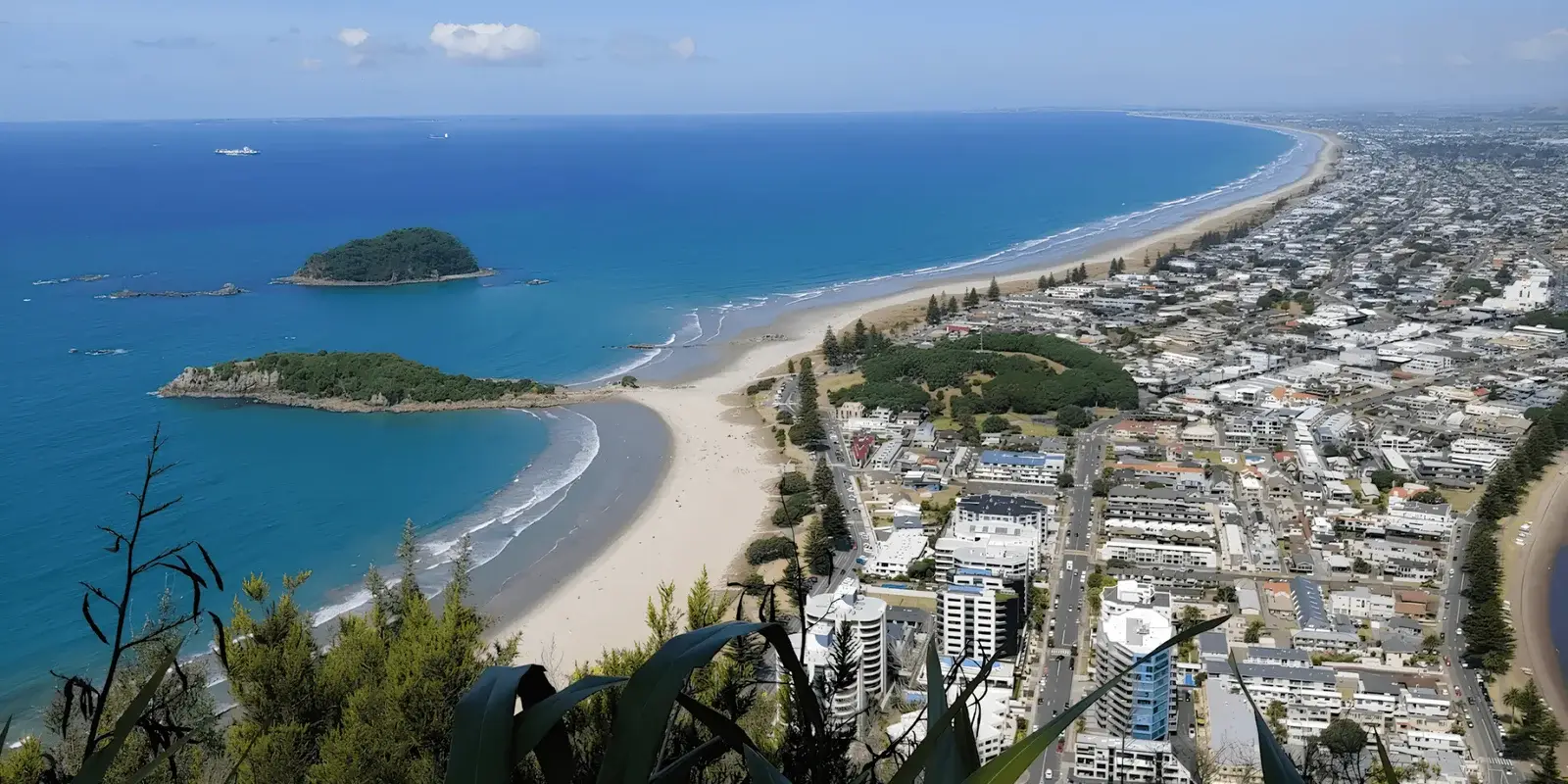
Weed control and fertilisation at the Mount is really one job wearing two names. Weeds need bare ground and light to start, so a thick lawn refuses them both — which means feeding does more lasting work here than spraying ever will. The complication is the ground itself: the peninsula is free-draining sand from Pilot Bay across to the surf beach, and sand lets a heavy feed past the roots before the grass has had any of it. That one fact decides the whole programme.
From $85per treatment
Buy it one visit at a time or take the year; either way the figure is set before the first application and the invoice matches it.
- Four to six lighter feeds, not one heavy one
- Products matched to the grass you actually have
- Runs on your fixed mowing day
- Police-vetted crew, no lock-in
Fertilisation quote
Your address, and whether the lawn faces the surf or the harbour.
Police-vetted
Product matched to your grass type
Told what went on and how long to stay off
No lock-in contract
Three things that decide a Mount Maunganui feeding programme
Understand these and you will know why most weed-and-feed money on this peninsula is wasted.
Feed a lawn that is actively growing and it gets taken up and used. Put the identical product on one that is dormant or cooking through February and most of it just sits on the surface. So the programme follows what the lawn is doing rather than a date in a diary, and summer goes on light — a stressed lawn on sand scorches with very little provocation.
Grass cannot take up most fertiliser as it comes out of the bag. Soil microbes have to unlock it first, which means biologically dead ground wastes whatever lands on it — and sand starts with very little biology. Hence products chosen to feed the soil rather than merely green the leaf, and hence mulching the clippings back in: free organic matter you would otherwise be buying by the bag.
4–6×Lighter feeds across the year
2wksHow fast a heavy feed leaches on sand
From $85An application, or a year at a time
100+Happy customers across the Bay
Why one big feed is wasted on Mount Maunganui sand
The single most useful thing to understand about fertilisation on this peninsula.
Sand has almost nothing in it to hold a nutrient with. Water is through it in minutes, and anything dissolved in that water leaves at the same speed.
So one heavy spring application performs exactly as advertised for a fortnight, after which most of it is below the root zone and unreachable. The lawn greens, fades, and the obvious conclusion is that the product was rubbish. The product was fine. The ground underneath it was not asked.
The same total quantity, split across four to six lighter applications, behaves completely differently. Each one stays within reach long enough for the grass to actually use it. Same spend, entirely different result.
Which is the entire case for a programme rather than a one-off, and the reason this one is priced by the year as readily as by the visit.
Same bag, same money, different lawn. Everything turns on how many times you open it.
What happens on a weed control and fertilisation visit
Under an hour on most Mount sections. There is no need for anyone to be there.
- Look at it firstWhat weeds, how thin, how the soil feels underfoot. The product follows the lawn rather than a schedule.
- Treat the weedsA selective chosen for the grass you actually have, spot-treated or right across depending on how far it has gone.
- FeedMatched to the season and spread evenly at a measured rate — not eyeballed, which is how you get burnt stripes.
- Water it inWhere there’s no irrigation we water it in, so nothing sits on the leaf and scorches.
- Tell you the waitHow long to keep kids and dogs off, sent through with a photo when we’re done.
Read the back of the box before you buy a supermarket weed and feed. The grasses that run across this coast do not all tolerate the same selective weedkillers, and more than one widely sold hose-on carries a caution about that — printed on the back in small type, on a shelf where nothing on the front suggests you need to look. Granular is generally the safer format. And not being sure which grass you have is itself the argument for not guessing with a hose-on.
What the Mount changes about weed control and feeding
It comes down to which way your section faces, and the two answers are not close.
Every lawn in this suburb sits on the same free-draining sand, which is why the leaching problem in section 02 applies to all of them. What is not shared is the weather. Mauao shelters one flank while the other takes the full onshore run. The upshot is that two lawns barely a few streets apart are living in different climates, and a single programme applied to both means one of them is being fed at the wrong rate from November onwards.
Exposed
- Salt carried in the wind, which stresses the leaf before anything else does
- First to dry out, so summer applications stay very light
- More applications, less in each one
- Returning the clippings counts for more on this side
- Watering in is not optional, it is part of the visit
Sheltered
- Sitting in the lee of Mauao, with far less stress on the leaf
- Holds its moisture longer, so each feed travels further
- Moss in the corners that never see sun
- Damp still air, so fungal problems start here first
- Never watered in late in the day on this side
The growing season here runs longer than it does inland. No frost on this coast means the lawn is still ticking over through June and July while one up at Pyes Pā has stopped for the winter. So an August application earns its place in the programme — which reliably surprises anyone who has moved here from somewhere colder.
What Lawn Weed Control & Fertilisation costs in Mount Maunganui
Opens at $85 for a single visit. A full year is quoted off that same per-visit figure.
| Single application | Standard section, weeds treated and fed | From $85 |
|---|---|---|
| The full year | Four visits on a healthy lawn, six on a struggling one | Priced per visit |
| Larger section | Arataki, Matapihi and the bigger blocks | Priced on mown area |
| Added to a mowing round | Same crew, same fixed day, one invoice | Costs less |
What moves it
Mown areaBeds, drive and deck are not part of the figure
How far the weeds gotSpot-treating is cheaper than a full pass
Four visits or sixA struggling lawn needs the extra two
OverseedingWorth adding where the lawn is genuinely thin
There is a version of this job that is a waste of your money, and it gets declined. A lawn held back by compaction, or sitting under a thatch band, cannot use what lands on it — the feed sits in the mat and leaches out of the bottom of it. On those, the dethatching comes first and the programme starts afterwards, which costs more up front and far less over three years. Walk across it — if it springs back like something laid over a cushion, that is the conversation you are about to have.
The Mount Maunganui feeding year
It runs longer here than almost anywhere else in the country, because growth barely closes down.
JanFebMarAprMayJun
JulAugSepOctNovDec
Main feeds, autumn and springLight applications, summerMostly rest, winter
The August application is the one nobody expects. Autumn and spring carry the programme, summer stays deliberately light because a heat-stressed lawn on sand scorches, and winter is largely a rest — but on a coast that does not frost, the lawn is still awake in August. Feed it then and it is moving a fortnight before every other lawn on the street in September.
Where a lawn is thin from compaction, or carrying a thatch band, it does not get sold a programme. It gets told to deal with that first, even though the programme is the better invoice for us and the dethatch is a one-off. Feeding a mat is money poured through a lawn onto sand, and the customer works that out by about the third visit — at which point we have lost the year as well as the argument.
Lawn Weed Control & Fertilisation questions, answered for the Mount
The eight that come up on nearly every lawn looked at on this peninsula.
01Why does my Mount lawn go pale even though I feed it?
Almost always because it is a big feed applied rarely, onto ground with nothing to hold it. The peninsula drains in minutes and retains very little, so one heavy application is past the roots inside a fortnight. Divide the identical quantity across four to six lighter visits and the cost lands in much the same place while the grass actually gets some. The product was never the problem.
02Can I just grab a weed and feed from the shop?
Read the back of it first, properly. The running grasses that dominate this coast are sensitive to some selective weedkillers, and a number of widely sold hose-on products carry a warning against using them on that kind of lawn — printed on the back, not the front, and sitting on the shelf beside everything else. Granular formats are generally safer. If you are not sure which grass you have, that uncertainty is itself the reason to not guess with a hose-on.
03Will feeding actually get rid of the weeds?
Over a season, largely yes, which surprises most people who ring about weeds. What is growing now gets treated on the first visit; what stops the next lot arriving is a lawn thick enough to leave them nowhere to start. On sand that takes a few lighter feeds rather than one, which is why this is sold as a programme and not a spray.
04How long do the kids and the dog need to stay off?
It depends what went on, and you get told rather than left to guess — the specific product and the wait both come through with the photo at the end of the visit. As a rule it is until the lawn has been watered in and dried off, which at the Mount in summer is a matter of hours. Nothing with a long exclusion period goes on a family lawn without that being discussed first.
05How often does a Mount Maunganui lawn need feeding?
Four to six times a year here, against perhaps three inland — but each application is lighter, so the annual quantity is similar. More visits is not more product; it is the same product arriving in doses the sand can hold long enough for the lawn to use. The programme shape is set out in section 06.
06Our lawn is thin and spongy — should we feed it?
Not yet, no. Springy underfoot means a thatch band has built up between the leaf and the sand, and anything applied on top of it mostly stays in the band — you would be paying to fertilise a mat. That band comes out first, then the programme starts. It is the more expensive answer on the day and the cheaper one by a distance over three years.
07What actually goes on the lawn, and can we limit it?
Registered products applied at label rates, and the name of what went on plus the exclusion time comes through with the photo. If you would rather the programme stayed with organic or lower-toxicity options, say so at the start — on a lawn that children are on every day of a Mount summer that is an entirely reasonable request, and it reshapes the programme rather than ruling it out.
08Does which side of the Mount we are on really matter?
More than almost anything else on this list. Facing the surf there is salt in the wind and the ground gives up its moisture first, so what goes on in summer is very light indeed and watering in is part of the visit rather than advice. Round in the lee it holds, so a feed lasts longer — but that still damp air is where fungal trouble starts, which is why nothing is watered in there after mid-afternoon. One suburb, two programmes.
What a Mount fertilisation programme works alongside
Two of these decide whether the feeding is worth doing at all.
Lawn Mowing & EdgingHeight and frequency do more than any bag of feed.
Lawn DethatchingComes first if the lawn feels spongy underfoot.
New Lawn InstallWhen there’s more weed than grass left to save.
Garden MaintenanceThe beds, on the same fixed day as the lawn work.
Mulching, Bark & Weed MatStops weeds in the beds the same way density does in the lawn.
Rental & Section Clean-UpsDated photos, itemised invoice.
All Mount Maunganui servicesEvery service on the peninsula, and what this coast does to each.
Lawn Weed Control & Fertilisation in other Bay of Plenty suburbs
