Kia ora — beds that stay clear

Mulching, bark & weed mat in New Zealand

Beds weeded out properly, then mulched at the right depth so they stay clear for months instead of weeks. We supply, deliver and spread — and we’ll tell you honestly whether weed mat is worth it for your garden or not.

  • Supplied, delivered & spread
  • Weeded out first, properly
  • Laid at the right depth
  • Bark, mulch, pebble or mat

Get your free quote

Rough bed measurements are enough for us to price it.

Free quote. Prices exclude GST. No obligation.

Fully insuredEvery job
Locally ownedNew Zealand crew
Prices + GSTMaterial & delivery in
Right depthMeasured, not guessed
What’s involved

Mulch only works if what’s underneath is right

Tipping bark over a weedy bed buys you about six weeks. The value is in the preparation and the depth, and both are the parts people skip.

Get my free quote
01

Beds cleared out first

Every weed pulled with its roots, not just topped off. Perennial weeds like kikuyu runners, oxalis and convolvulus will push straight back up through any depth of bark, so if they’re present we deal with them before anything goes down.

02

Edges cut and levelled

Bed edges cut back to a clean line and the surface levelled, so the mulch sits at a consistent depth and doesn’t spill onto lawn and paths the first time it rains.

03

Weed mat, only where it earns it

Under pebble, stone and fixed landscaping, weed mat is genuinely useful. Under bark in a planted bed it tends to cause more problems in year three than it solves in year one. We’ll give you a straight recommendation either way.

04

Material delivered and barrowed in

Bulk delivery to the driveway, then barrowed through to the beds — including the back section through the narrow side gate, which is the bit nobody wants to do themselves.

05

Spread to a measured depth

Raked out evenly to the depth the material and the bed actually need, and kept clear of plant stems and tree trunks. Depth is the single thing that decides whether mulch suppresses weeds or just decorates them.

06

Cleaned up before we go

Drives and paths blown down, spillage swept back into the beds, and any surplus material stacked where you want it rather than left on the lawn.

How deep should mulch actually go? Between 50 and 75mm for most beds — deep enough to block light from weed seed and hold moisture in, without sealing oxygen away from the roots. Thinner than that and weeds come straight through. And it should never be heaped against a trunk or stem, no matter how neat it looks.
Right50–75mm even, held back off the stem
WrongPiled up the trunk — rot, pests, dieback
Choosing a material

Bark, mulch or stone — which suits your beds?

They cost differently, last differently and do quite different things to your soil. Here’s the honest comparison, including which ones we’d actually recommend for a Bay of Plenty garden.

01 Nugget bark Radiata pine · 20–50mm Longest lasting

The traditional Kiwi garden look

Chunky pine bark nuggets, screened larger so they knit together and stay put. Excellent resistance to compaction, which makes them the pick for exposed coastal sections and anywhere on a slope where finer material would wash down in the first heavy Bay of Plenty downpour.

  • Best forBanks, windy sites, large beds
  • LifeThe longest of the bark grades
  • DepthUp to 100mm for full weed suppression
  • NoteSilvers off over time — a spring top-up restores colour
02 Fine bark Decorative · 15–25mm Neatest finish

A tidier, finer look for smaller gardens

The same radiata pine, screened smaller. It reads much neater in a front bed or a courtyard where you see it up close, and it’s comfortable to walk on barefoot. Breaks down faster than nugget grade, so it wants topping up more often.

  • Best forFront beds, courtyards, small gardens
  • LifeShorter — breaks down into compost
  • Depth50–75mm laid evenly
  • NotePine bark is acidic, which suits most NZ natives
03 Arborist mulch Chipped tree waste Best for soil
What we’d put on our own garden

Cheapest to buy, and the best thing for the soil

Chipped tree and branch material rather than screened bark. It looks less uniform, which is the only reason people pass on it. But it clings well to banks, encourages worm activity, and actually feeds the bed as it breaks down — where fresh bark draws nutrients while it sits.

  • Best forBig areas, banks, anywhere you want soil improved
  • CostAround half the price of screened bark
  • Feeds the soilBreaks down into organic matter, not away from it
  • NoteAppearance varies batch to batch
04 Pebble & stone River stone, chip Hard to undo

Permanent, low-maintenance, and a commitment

Doesn’t break down, doesn’t blow away and doesn’t need topping up — which is exactly why it’s the one material that genuinely pairs well with weed mat underneath. The catch is that stone is very hard to remove once it’s down, and it does nothing for your soil.

  • Best forStrips beside paths, drives, low-planted areas
  • LifeEffectively permanent
  • Pairs withWeed mat — both are non-degrading
  • Think firstChanging your mind later is a big job

Bulk bark in New Zealand typically starts from around $100 + GST per cubic metre, with arborist mulch starting from around half that. Delivery and spreading are quoted on top, per property.

See the difference

Weedy and tired to finished and holding

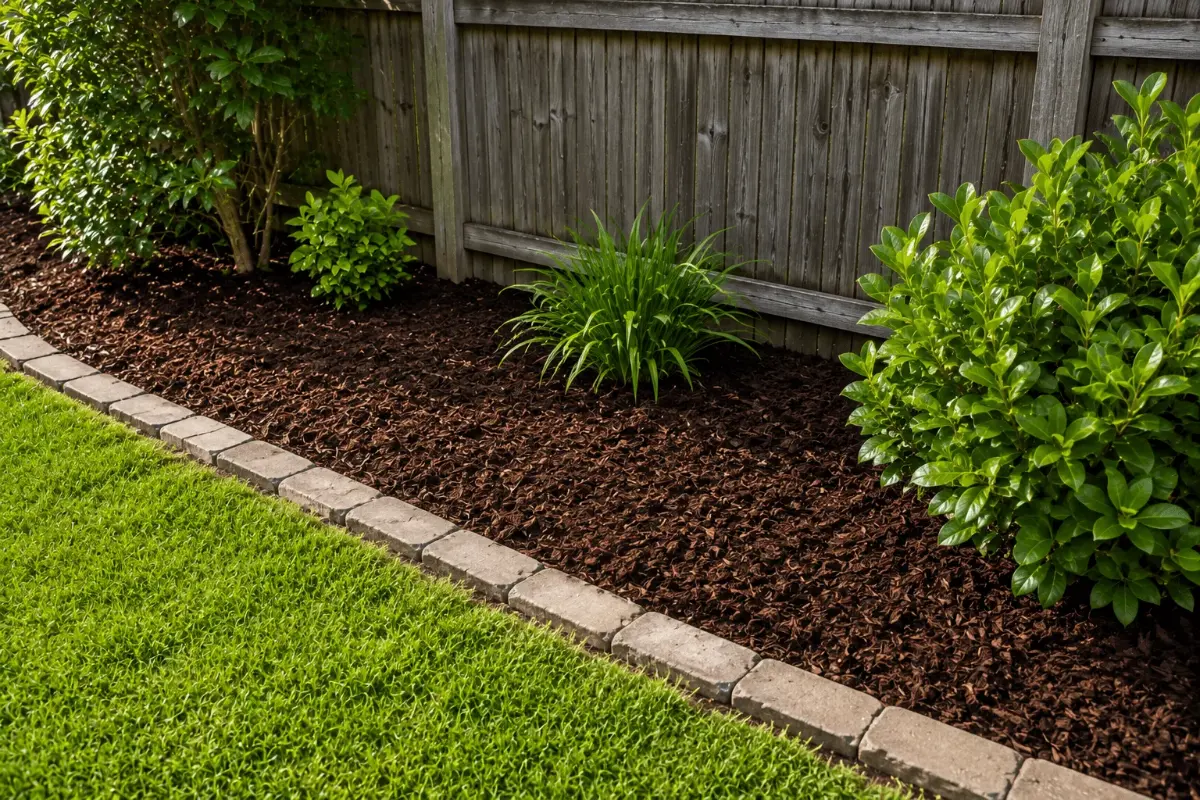
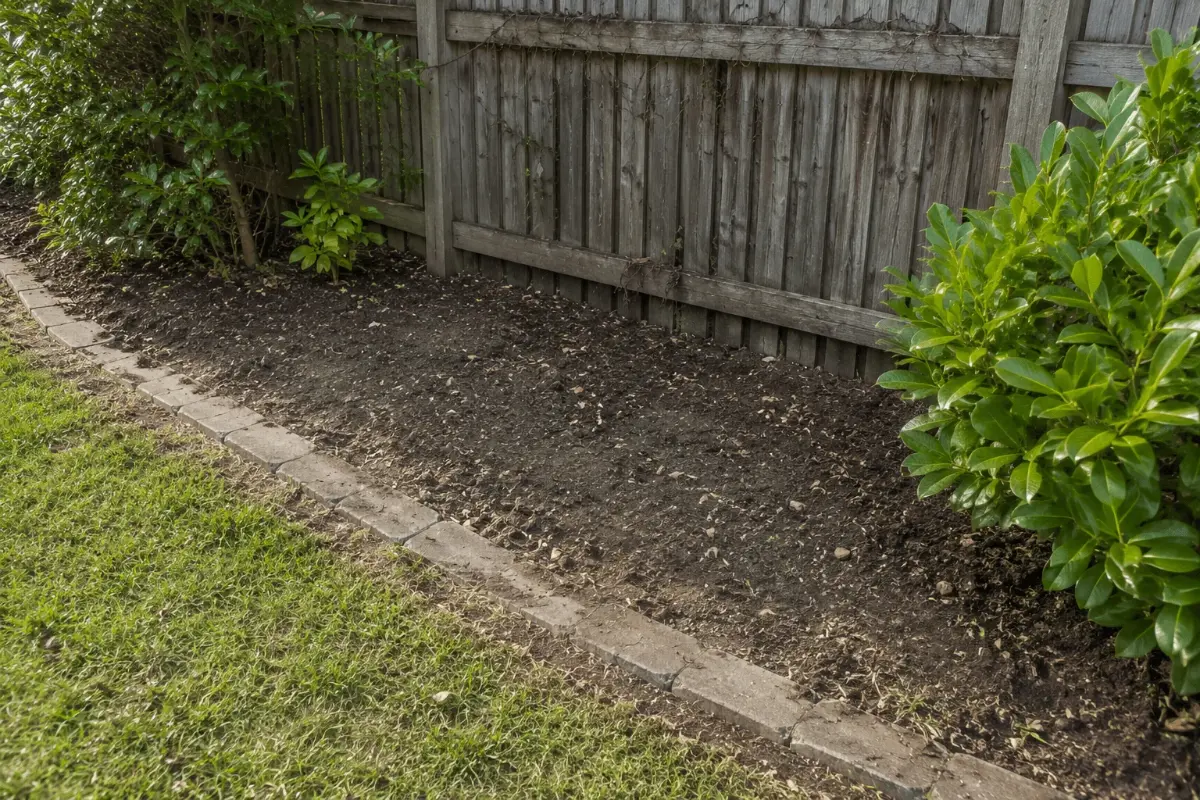
Drag the slider across to see a Tauranga front bed before, and after it was cleared out and mulched properly.

A freshly bark mulched garden bed with clean edges A weedy, bare garden bed before mulching Before After
01
Weeded to the rootBecause anything left will come back through it.
02
Edges cut inSo the mulch stays in the bed, not on the lawn.
03
Depth measuredEven across the bed, and clear of every stem.
Pricing

How much mulch do I need, and what does it cost?

Mulch is sold by volume but beds are measured by area, which is where most people come unstuck and order half of what they need. The maths is simple once you see it.

Working it out

Area in m² × depth in metres = cubic metres

A 20 m² bed at 75mm deep needs 1.5 m³ — about 38 of the 40-litre bags, or one and a half bulk scoops delivered. Bagged is convenient; bulk is a great deal cheaper past about a cubic metre.

Get an exact number
Total bed area Measured in square metres. The starting point for everything else, and worth measuring rather than eyeballing.
Biggest driver
Which material you choose Arborist mulch is roughly half the cost of screened bark for the same volume. Pebble and stone are several times more again.
Varies widely
How much clearing is needed first A bed that just needs a top-up is quick. One that has to be weeded right out, edged and levelled first is most of the labour on the job.
Adds time
Access from drive to beds Bulk material lands on the driveway. If every barrow load goes through a narrow side gate and up three steps, that’s the real cost of a back-section job.
Adds time
Weed mat, if you want it Material plus the time to cut it in around every existing plant. Under pebble it’s straightforward; through a densely planted bed it’s fiddly work.
Optional
Doing the whole property at once One delivery, one set-up, one visit. Splitting the same beds across two jobs a year apart costs noticeably more than doing the lot in one go.
Best value
The honest answer

Is weed mat actually worth it?

Sometimes genuinely, sometimes not at all — and plenty of landscapers will lay it either way because it’s an easy upsell. Here’s where it earns its place and where it causes problems three years later.

Think twice here

Where it causes problems

Under bark in a planted bed — which is, unfortunately, exactly where most of it gets laid.

  • Weeds seed on top — as bark breaks down it becomes a seedbed above the mat
  • Roots grow through it — and pull the mat up when you weed
  • Blocks organic matter — mulch can no longer break down into your soil
  • Hard to plant through — every new plant means cutting the fabric
  • Cheap mat shreds — leaving plastic fibres through the bed

For a planted bed, a proper weeding and 75mm of mulch usually outperforms mat over the long run — and costs less.

Why Lawnify

Anyone can tip bark. Fewer will tell you not to.

Mulching is one of the easiest jobs to do badly and have it look fine for a month. What matters is how the bed reads a year later.

We measure the depth

Fifty to seventy-five millimetres, consistently, across the whole bed. Spread too thin it does nothing but look tidy; heaped too deep it starves roots of oxygen through a dry spell. Both are common and both are avoidable.

Mulch pulled back off the stems

Bark heaped against a trunk holds moisture on the bark, which invites rot, pests and dieback. It takes an extra minute per plant to leave a clear collar, and it’s the difference between mulching a plant and slowly killing it.

A recommendation, not an upsell

If weed mat isn’t right for your bed we’ll say so, even though it’s a line item we could easily add. Same with material — arborist mulch costs us less to supply and is often the better answer, so that’s what we’ll suggest.

Lawnify crew spreading bark mulch on a Tauranga garden bed
5+ Years mulching
Bay of Plenty gardens
Service areas

Where we mulch

Mulching, bark laying and weed mat across Tauranga, Mount Maunganui, Pāpāmoa and the wider Bay of Plenty. If your suburb is not listed it is still worth asking — our coverage keeps growing.

FAQs

Mulching questions, answered

The things Tauranga homeowners ask us most before booking.

Still got a question? Send rough bed measurements or a photo and we’ll come back with a fixed price.

Get my free quote 0800 632 723
How much mulch do I need for my garden?

Multiply the bed area in square metres by the depth in metres. A 20 square metre bed at 75mm deep works out at 1.5 cubic metres. There are 1,000 litres in a cubic metre, so that’s roughly 38 of the standard 40-litre bags — which is why bulk delivery makes far more sense once you’re past about one cubic metre. Send us your measurements and we’ll do the sums.

How deep should bark or mulch be laid?

Fifty to seventy-five millimetres suits most garden beds. Chunky nugget bark can go up to about 100mm for maximum weed suppression. Thinner than 50mm and light still reaches weed seed, so it germinates straight through. Much thicker and you risk blocking oxygen to the roots, which shows up as stress in a dry summer.

What’s the difference between bark and mulch?

Bark is the outer layer stripped from pine and screened to a consistent size, so it looks uniform and lasts well. Arborist mulch is chipped branch and tree material, so it’s less uniform but around half the price, clings better to slopes and genuinely improves the soil as it breaks down. Bark is the tidier option; mulch is the better one for plant health.

Do I need weed mat under bark?

In a planted garden bed, usually not, and we’ll often advise against it. The problem is that bark breaks down into a seedbed sitting on top of the mat, so weeds germinate above it anyway, while their roots grow down through the fabric and pull it up when you weed. Meanwhile the mat stops organic matter reaching your soil. Under pebble, stone or a path it’s a different story and well worth doing.

Will mulch stop weeds completely?

It stops most of them, which is a very different thing from all of them. At a proper depth it blocks light from the seed already in your soil, and that’s the bulk of the problem solved. New seed blows in and germinates on the surface, but those seedlings sit in loose material and pull out with two fingers. What mulch won’t beat is established perennial weeds left in the bed, which is why we clear them first.

How often does bark need topping up?

Most gardens want a top-up annually, typically in spring. Bark silvers off in the sun and loses its colour, and the layer thins as the lower material breaks down into the soil. A top-up is a much smaller job than the original lay, since the bed is already clear — it’s topping up the depth rather than starting again.

Can you mulch around my existing plants?

Yes, that’s most of what we do. We work around everything that’s staying and keep the mulch pulled back from stems and trunks so there’s a clear collar around each one. Bark heaped up against bark holds moisture where it shouldn’t be and leads to rot and pest problems. If something’s coming out, tell us and we’ll remove it before the material goes down.

Is pine bark bad for my plants because it’s acidic?

For the overwhelming majority of gardens, no. Pine bark is mildly acidic, which happens to suit most New Zealand natives, camellias, rhododendrons and hydrangeas rather well. It sits on the surface rather than being dug in, so its effect on soil pH is slow and shallow. If you’re growing something genuinely lime-loving we’ll suggest a different material for that bed.

Do you supply the material or do I?

Either works. Most people have us supply it, since we can order the right volume in bulk and it arrives with us. If you’ve already got material sitting on the drive, we’re happy to just do the clearing, barrowing and spreading — which is the part that takes the day.

How is GST handled on your quotes?

Yes, and material and delivery too. Prices are quoted exclusive of GST, with GST added at the standard rate, and every quote is fixed before we start, so the number you approve is the number you pay.

Free quote

Get your beds finished properly

Fixed price with material and delivery included. Weeded first, laid at the right depth.