A face and a top
The sides are cut to a line and the top set slightly narrower, so the shape holds instead of drifting wider every year.

Tree and hedge trimming work covers the whole Bay of Plenty — a front boundary hedge at Ohauiti that has lost its line, a branch sitting on the roof at Omokoroa, a screen at Matua gone bare at the bottom. A hedge is cut to a face and a top, tapered so light still reaches the base, which is the difference between a hedge and a wall of sticks.
Address, plus the hedge length and height if you know them.
What is in the quoted visit, from a low front hedge at Bethlehem to a boundary run along a Te Puna drive.
The sides are cut to a line and the top set slightly narrower, so the shape holds instead of drifting wider every year.
Tree trimming at ground level too: growth leaning on gutters, decks or the washing line taken back to a proper cut point rather than snapped off short.
What comes off leaves with the crew, including whatever has dropped out of sight at the back of the hedge.
Work that needs climbing, a chainsaw at height or anything near the lines is arborist work, and you will hear that before we book it.
Clippings cleared from the drive, path and lawn before the crew leaves, so the job looks finished rather than halfway.
Sent after the visit, which matters for a rental or a property the owner does not live at.
Trimming is not just shortening. Where the blade stops decides what the hedge looks like in two years, so this is what the crew works to.
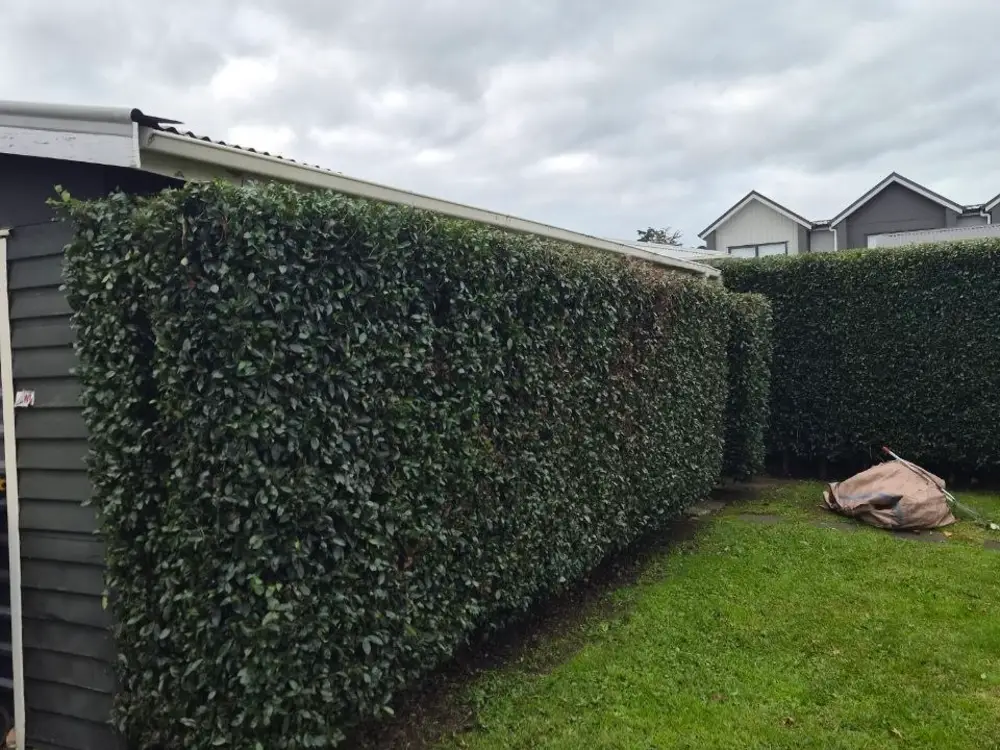
The faces lean in slightly towards the top. Cut dead vertical and the upper growth shades the bottom until the base goes bare and stops filling in.
Many conifers will not reshoot from bare wood, so a cut that goes too deep leaves a hole that never closes. We work back to green.
The height goes on last and sits narrower than the base, which is what makes the line read straight from the footpath rather than wavy.
Two light cuts through a season hold the shape better than one hard one, and the regrowth comes back denser instead of leggy.
Dense top growth gets thinned so air moves through. In a humid climate a hedge that never dries out is the one that browns off in patches.
A hedge left for years sometimes needs bringing back over two seasons rather than one brutal cut. If yours is one of those, we will say so.
Where this job ends: anything needing a climb, a chainsaw at height or work near the lines is arborist territory and we will tell you rather than take it on. A hard reshape that fills more than the trailer goes out as shrub and rubbish removal, and a hedge taken out at the roots leaves work for stump grinding.
Visits start from $85. Five things decide where a hedge lands, and length is only one of them:
Paces along the hedge, your height against it, one photo.
One figure per cut, and we say if it needs an arborist instead.
Faces and top cut to a line, branches taken to a cut point.
Trimmings loaded, paths swept, photo on its way to you.
Hedge trimming is the job most people hand over second, after mowing. It is not the cutting that wears thin — it is the ladder, the extension lead, and three trailer runs with a car full of clippings on a Sunday afternoon.
The person working at head height beside your windows has been checked, and it is the same crew on the round rather than whoever is free that week.
Quoted per cut rather than by the hour, so a hedge that fights back costs us the time and not you.
Where the cut falls decides how the hedge comes back, so we work to live growth and leave the shape able to thicken.
Open a town for local detail. Not listed? Send the address and we will say whether a crew already passes that way.
Four regional habits that decide how often a hedge here needs the shears, and how hard the cut should be.
Growth is away from about Labour Weekend through to April here, which is why a hedge cut once a year has usually lost its line by the middle of summer.
A lot of planting around the region puts on soft growth fast, so it wants a firmer cut and a shorter gap between visits than a cooler-climate hedge.
Warm, humid air and a hedge that was never thinned is how brown patches start, so we take enough out of the top for it to dry between showers.
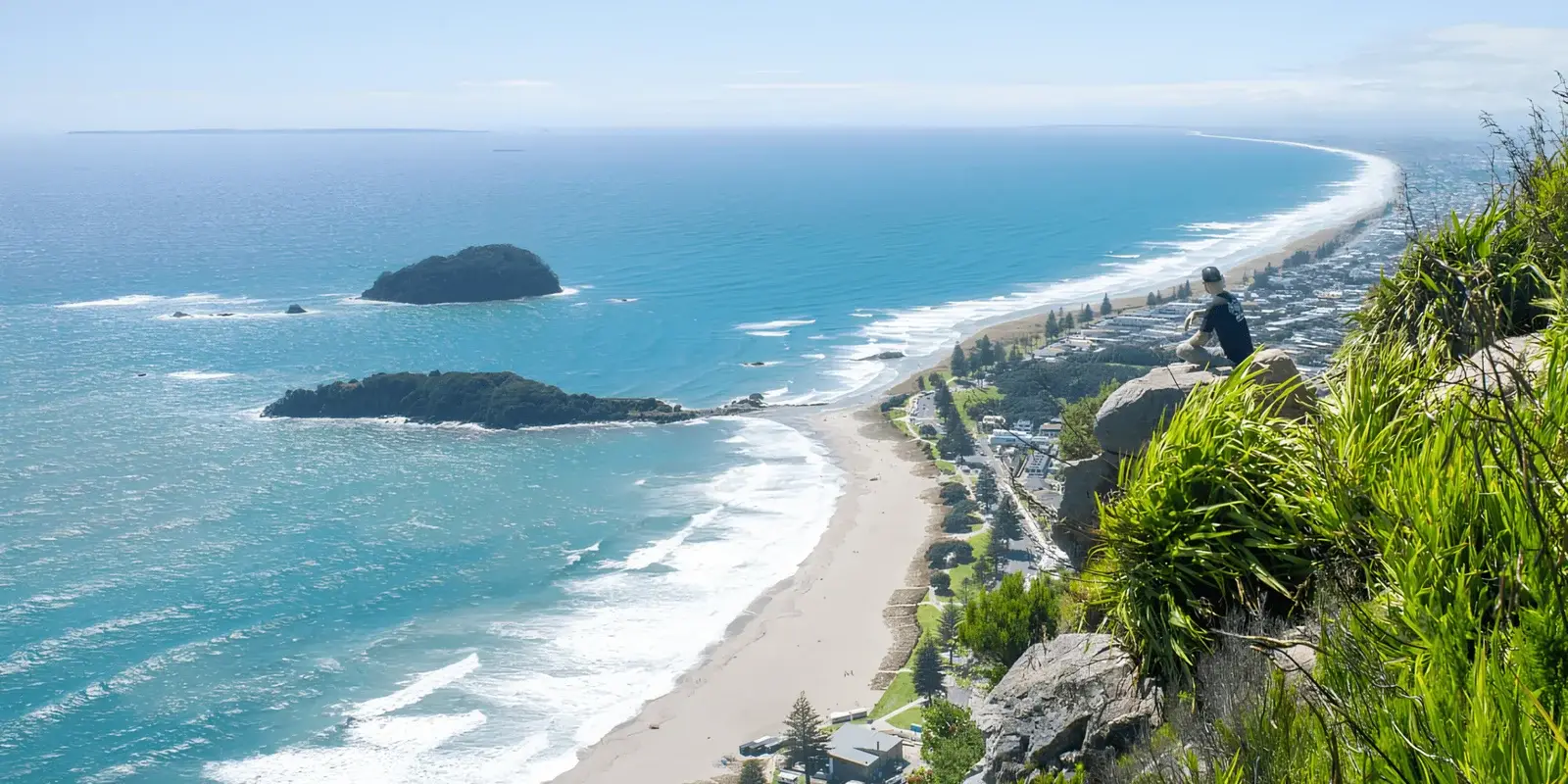
Hedges behind the dunes at Mount Maunganui and Papamoa are already leaning off the salt wind, so the cut follows that. Inland at Te Puke they grow upright and want a firmer line.
What gets asked on the phone before a hedge goes on a round.
Visits start from $85. Where a job lands depends on how high the hedge stands, how long it has been since the last cut, whether there is room to work both sides, how much comes off, and how many separate runs there are. Pace the hedge out, give us its height against you, and a photo is enough to quote from.
Two cuts in a growing season suits most hedges in this region, usually one in late spring and one towards the end of summer. One cut a year will hold a formal hedge for a while, but the line drifts wider each time and the base thins.
Often, but not always in one go. A conifer that is cut past its green growth usually will not break again from the brown, which leaves a gap that stays. Where that is the risk we bring the hedge back over two seasons, and you hear that before we start.
Up to what can be reached safely from the ground, yes: branches over a roof, a drive or a washing line. Above that, or anywhere near the lines, the job belongs to an arborist and we will tell you so rather than take it on.
They go with the crew, including the ones that drop into the bed behind the hedge. Paths, drives and lawn get swept or blown off before we leave, because a cut hedge over a green carpet still looks half done.
We trim what is on your side of the boundary and leave the rest alone. If the tree belongs to the neighbour it is worth a word with them first, including what they want done with the material that comes off.
A maintenance cut barely shows. A hard reshape will look open for a few weeks until the new growth breaks, and it comes back denser than it was because light is reaching the base again.
It depends when the plant sets its buds, which is why we ask what it is. Tell us if a hedge flowers and matters to you, and the timing of the cut gets worked around it rather than through it.
Per visit. It is agreed before the gear comes off the trailer, so a hedge that turns out tougher than it looked is on us rather than on your invoice.
Yes. There is no contract on a trimming round, so skip one and pick it up at the next. A longer gap will mean more comes off, which we will tell you when you book.
No, as long as the crew can reach the hedge and there is somewhere to put the trailer. A photo of the finished cut comes to you afterwards.
The established boundary hedges are mostly in Bethlehem, Matua, Otumoetai and Tauranga. Newer screens and street frontages come from Pyes Pa, Ohauiti, Welcome Bay, Papamoa and Mount Maunganui. The long rural runs are out at Omokoroa, Tauriko, Te Puna and Te Puke.
Hedge cutting rarely travels alone. Tree pruning over a drive, a garden maintenance round for the beds under the hedge and lawn mowing and edging for the grass it shades all tend to get booked together.
From $85 per visit. Send the address with the hedge length and one photo.
