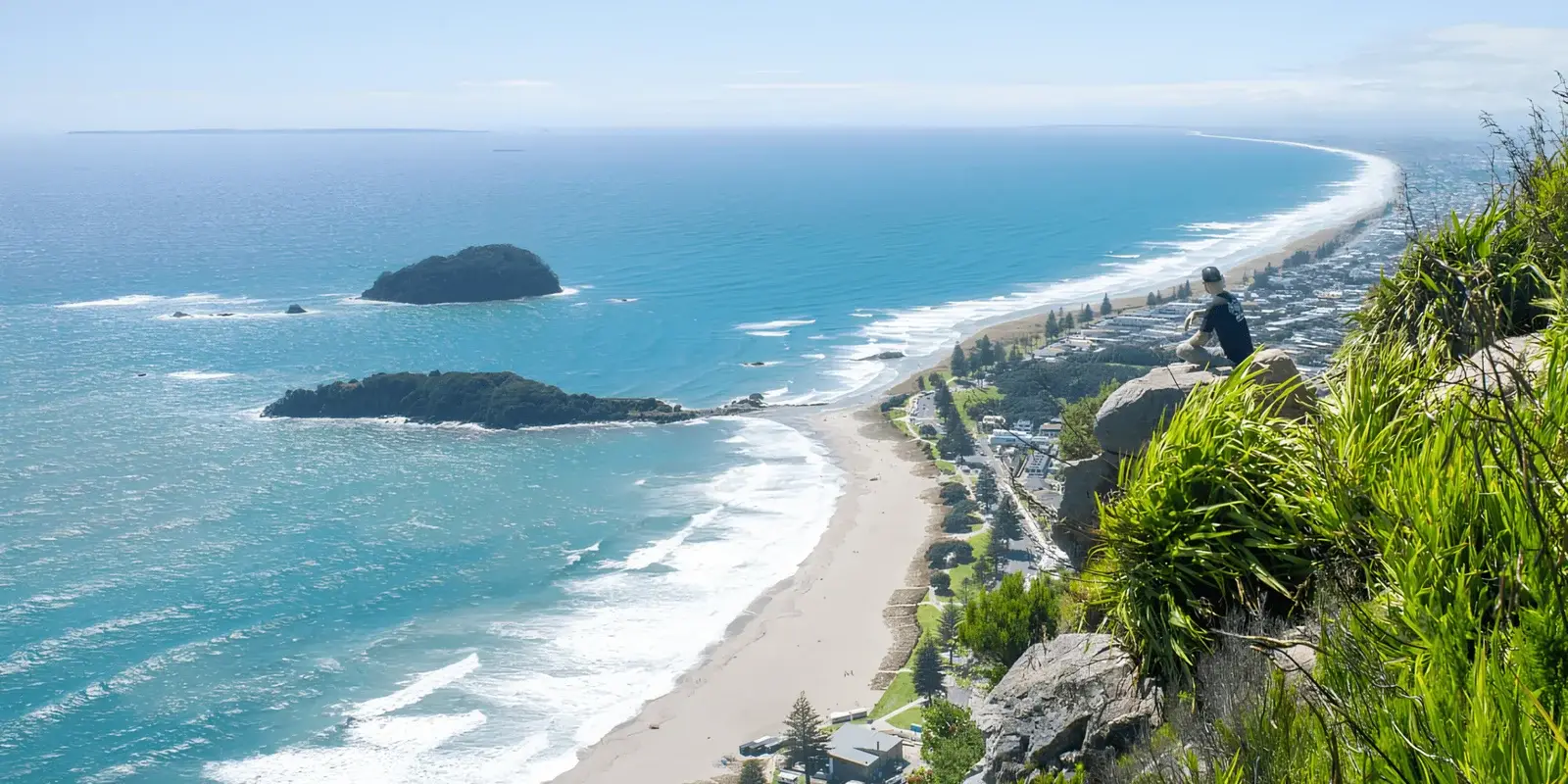
Taken below the surface
The stump is ground out under ground level rather than shaved flat, which is the difference between planting over it and mowing around it.

Stump grinding on Bay of Plenty sections, blocks and orchard rows — a shelter belt stump on a Te Puna block, a hedge line pulled out at Bethlehem, the pine the last owner cut off at knee height in a Papamoa backyard. Stump and root flare go below the surface as chip, so lawn, bark or paving sits level over the spot afterwards.
The address, how many stumps, and roughly how wide.
What the quoted job includes, from a single stump beside a Matua driveway to a row of them on an Omokoroa block.
The stump is ground out under ground level rather than shaved flat, which is the difference between planting over it and mowing around it.
Grinding turns the stump into wood chip. Keep it for the garden beds or we load it out — say which when you book.
We look for irrigation lines, cables and pipes around the stump before the teeth go in, and say so if something sits too close.
The collar where the trunk widens into the roots is ground back as well, since that is the part that lifts paving and catches a mower.
Raked back level once the grinding stops, so the spot is ready for whatever you are putting there rather than a crater.
Sent as the machine comes off, which is what an owner who lives somewhere else actually wants to see.
Almost every call is one of these six. Knowing which yours is tells us a lot about the job before we see it.
Taking a row out leaves a line of stumps behind it. Booked together they are one trip for the machine rather than several.
An easterly took the top out, someone cut up the trunk, and the tree stump has been sitting in the lawn ever since.
A pulled hedge line leaves a run of woody stumps along the fence, usually tight against a neighbour’s palings.
Cut off at knee height, grassed around, and now it is between you and the lawn, the trampoline or the new deck.
A fence line, a shed pad or a widened drive that cannot start until the stump and its root flare are out of the ground.
Cut flat and sprouting again every spring, because the collar and the roots were never taken out underneath.
Two jobs that are not this one: felling the tree in the first place is tree and hedge trimming, and the branch and trunk material left lying afterwards is shrubs and rubbish removal. If the stump sits hard against a boundary wall, a pool or a visible service, mention it with the photo and we will say honestly whether grinding is the right call there.
Two stumps the same width across can be very different jobs. Five things set the figure, which is why it is measured rather than read off a list:
The stump, a spade laid across it, and the way in from the street.
One figure, agreed before the grinder leaves the yard.
Services checked, stump and root flare taken below the surface.
Chip left as mulch or carted off, and a photo of the spot.
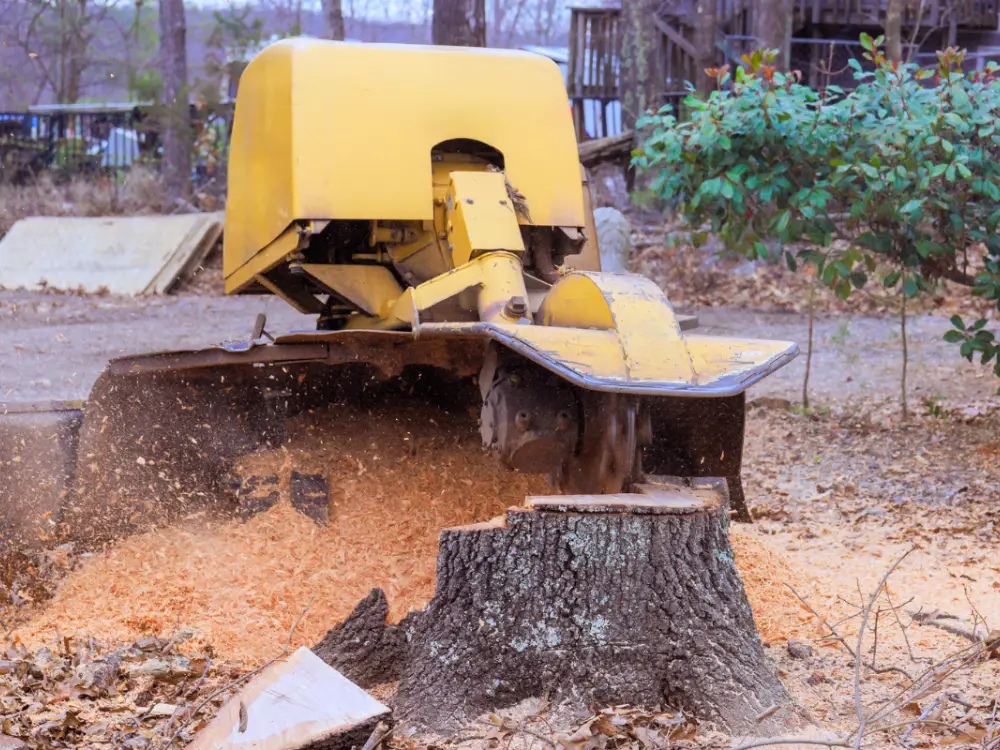
Digging a stump out sounds cheaper until you price the hole: a digger on a trailer, a pile of spoil to shift and enough topsoil to fill what is left. Grinding turns the same stump into chip and leaves the ground where it was.
The person running a grinder beside your fence line has been checked, which is not something a hire-yard machine and a free Saturday gives you.
The figure is set from the measurement, so a stump that turns out harder going than it looked is our problem rather than a variation.
Purpose-built grinders rather than a chainsaw and a shovel, matched to what will actually fit down the side of the house.
Every town below has its own page. Tell us the address and your tightest gate measurement and we will say which machine suits the job.
Four things our operators run into often enough around the region to ask about before quoting.
In the free-draining sand behind Papamoa and the Mount a tree plates out sideways instead of down, so the grinding area is wider than the trunk suggests.
On long-established streets in Tauranga and Otumoetai the irrigation and cable runs are rarely where anyone remembers, which is why we probe before grinding.
Several species planted around the region will push new growth from a stump that was only cut level, which is the usual reason someone calls us twice.
Around Te Puke and Te Puna a cleared shelter belt or block leaves a line of stumps, and a row booked together is a far cheaper trip than one at a time.
What people want settled on the phone before a grinder is booked.
It is priced on site rather than off a rate card. Width across the cut, how far the roots run, how many stumps there are, whether the machine can reach them and what sits underneath all pull the figure in different directions. One photo, with a spade laid across the cut so we can see the width, is normally enough to put a number on it without arranging a visit.
Below the surface, far enough that turf, bark or paving can sit level over the spot rather than settling into it. If you are planting something new in the same place, say so when you book, because that wants a deeper clear-out than a lawn does.
No. Once the collar and the root plate underneath are gone there is nothing left to shoot from. The ones that keep coming back are the ones that were only cut off level.
Your choice, and it is worth deciding before the day: a ground stump makes a surprising volume of chip. It can stay heaped for your garden beds, or it goes out with us.
Chip and soil end up mixed in the hole, and chip takes nitrogen out of the ground while it breaks down, so new grass over the top can sulk. For a lawn it is better to rake the chip out and finish with soil, which we can do if you ask when booking.
That is the question we ask you. Measure the narrowest point between the street and the stump, including any step or slope, and tell us when you send the photo. Which machine comes depends on that number more than on the stump.
Yes, before the teeth go in. If a service or an irrigation line runs close enough to be at risk we stop and tell you rather than finding it the hard way.
Usually, but not always to the last millimetre. Hard up against masonry or palings there can be a small shoulder the machine cannot reach, and we will say that when we quote instead of after.
No, felling is separate work: that is tree and hedge trimming. This page is for the stump that is already there.
Each one costs less, yes, because most of the cost of a small job is getting the machine to the property. A row of six on one visit is far better value than six separate trips.
Not as a rule. The operator needs a way through to the stump and somewhere to work. A photo of the finished spot goes to you once the machine comes off.
Yes. It is set when the job is measured, so one that grinds harder than it looked does not reappear as a variation on your invoice.
Te Puke, Te Puna, Omokoroa and Tauriko are where the rows and shelter belts are. Papamoa, Mount Maunganui, Welcome Bay, Pyes Pa and Ohauiti bring the backyard ones, and Tauranga, Bethlehem, Otumoetai and Matua are the tight-access jobs.
Stump removal with a stump grinder is normally the last step of a larger clear-out, so it sits next to shrub and rubbish removal for the material above ground, or a new lawn install where the spot becomes lawn again.
Send a photo of the stump and the address, and the figure comes back off those.
