
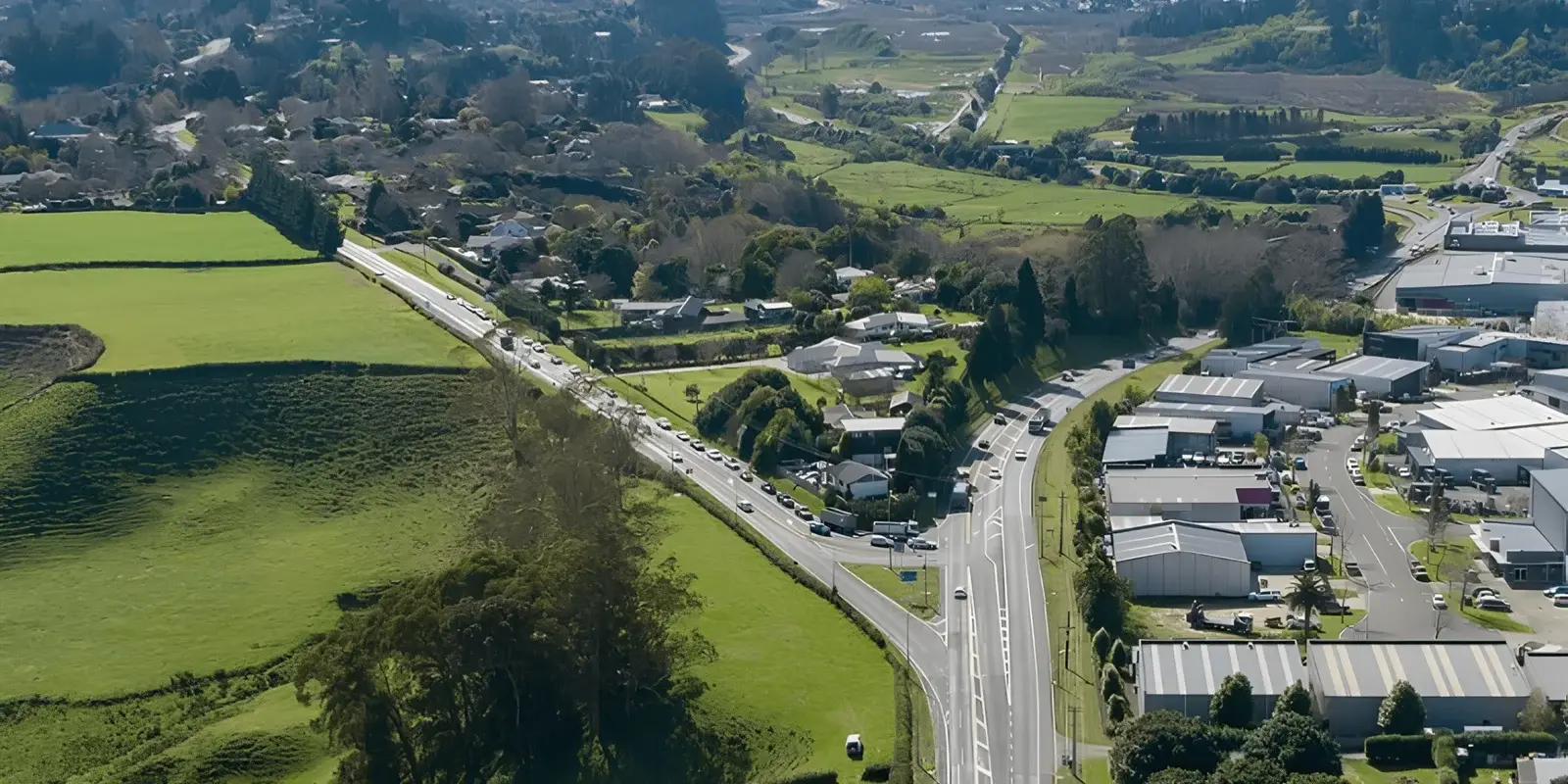
The hard-wearing turf most Bethlehem sections are laid in runs across the surface and sends shoots underneath at the same time. Both habits leave dead runner behind as the new growth takes over. That vigour is why it copes with kids, dogs and a Tauranga summer — and why it builds a mat faster than a slower turf would.
Lawn Dethatching
Bethlehem
Lawn Dethatching in Bethlehem
We scarify out the dead spongy mat that builds between soil and grass, cart every bit of it off the property, and book it for autumn so the lawn comes back thicker instead of sulking. Done on the newer ridge sections up on the Heights and the Views, and on the older settled lawns down toward the Wairoa. From $189 per visit, fixed before we start.
- Once a year, done properly
- Autumn is the right window
- Waste always removed
- No lock-in contract
Lawn dethatching quote
Street name, and when the lawn was last scarified if you know.
Police-vetted crews
Sharp tools, tidy finish every visit
Green waste included
Pause any time
Three things that build thatch in a Bethlehem lawn
None of the three is a mistake exactly. They are simply what a Bethlehem lawn does when nobody books lawn dethatching for a few years running.
Mulching clippings back in is the right call here — but it only works while mowing keeps pace with growth. Skip a few visits in peak season and what goes back in is too much to break down before the next cut.
A thatch layer under about 10mm does no harm and holds a little moisture. Past that it starts blocking water, air and feed from ever reaching the roots, and it only gets removed one way — it never breaks down on its own.
10–15mmThatch depth where problems start
AutumnThe window that lets it recover fast
100%Of the pulled thatch removed, not left on the lawn
From $189Per visit, fixed price
Why dethatching beats another year of feeding
Feed a thatched lawn and you are feeding the thatch. One round of lawn dethatching undoes what a year of fertiliser cannot.
A thatch layer sits like a mat between the soil and the green blade. Water runs across it instead of through it, feed sits on top of it instead of reaching a root, and the lawn underneath slowly thins even as the surface looks green enough from the street.
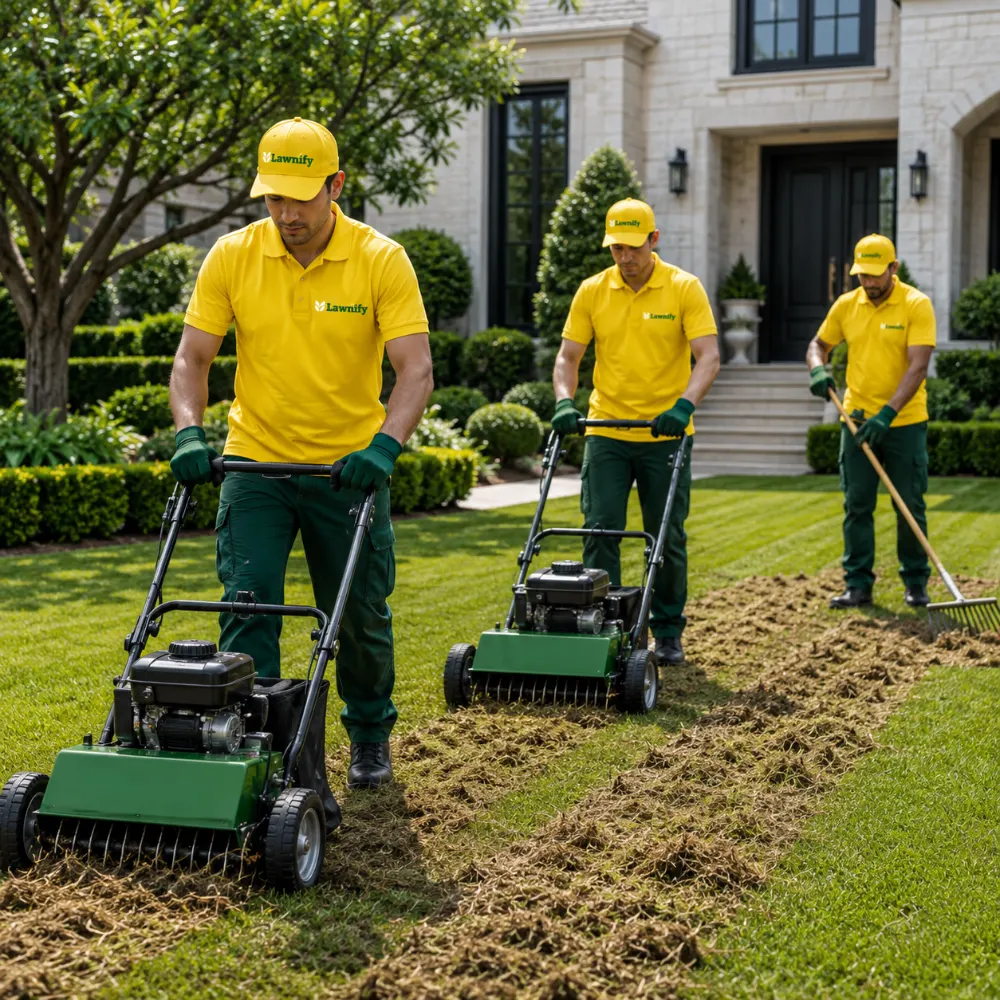
Scarifying pulls that layer out mechanically — tines drag through the turf and lift the dead material to the surface, where it gets raked or blown off and removed. It looks brutal for about three weeks. Then the lawn thickens up from underneath in a way a season of fertiliser never managed.
Timing is what makes it work rather than wreck the lawn. Scarify while the grass is still putting on growth and the bare patches knit shut over the following month. Scarify in a stress period and the same machine leaves a torn-up lawn with nothing in reserve to close it again.
That’s the whole reason this is an autumn job here, not a whenever-you-remember one.
Left alone, a thatch layer never thins on its own. It only ever gets thicker until something physically pulls it out.
What a dethatching visit includes
Lawn dethatching is a bigger, messier job than a mow, and the mess is the whole point of it.
- Check the depth firstA quick probe through the turf tells us whether this is a light rake or a full machine scarify, and whether it’s worth doing at all yet.
- ScarifyTines set off the depth we measured, not a default setting — deep enough to drag the dead mat out, shallow enough to leave healthy root alone.
- Rake and collectEvery bit of what comes up gets raked clear and loaded out. Leaving it on the lawn just puts the thatch straight back.
- Overseed or topdress, if wantedOptional, and usually only worth it on bare patches rather than the whole lawn — we’ll say if we think it’s needed.
- Water-in adviceA scarified lawn needs consistent watering for the first fortnight to recover fast. We’ll tell you exactly what that looks like for your section.
VisitOne autumn pass
PhotoSent after
On this job the waste volume is the whole product. An overdue Bethlehem lawn gives up trailer loads of dead material that nobody would guess were under it, and carting that away is already inside the $189. If the lawn needs feeding rather than tearing up, that is weed control and fertilisation, and if it is past saving it is a new lawn install. We will tell you which one you are looking at.
Why Bethlehem lawns thatch at different speeds
The same rolling terrain that shapes everything else on this ground shapes how fast a lawn thatches.
Two Bethlehem lawns the same age can be years apart on thatch. The turf that gets laid on a freshly graded ridge section is chosen because it establishes fast on disturbed ground, so a lawn on the Heights or the Views can be due a scarify in its second or third year. A settled lawn down on the flats toward the Wairoa grows at a steadier pace and often waits twice as long. Tell us which one you have and we will tell you whether this year is the year.
Builds thatch fast
- Fast establishment growth on new topsoil often brings the first scarify forward to year two or three
- Surface runners and underground shoots cover disturbed ridge ground quickly, with little competition yet from anything else
- Cut at the standard height through the establishment period, which still sheds leaf into the thatch layer
- Worth checking depth annually rather than assuming a new lawn is too young to need it
Builds thatch more slowly
- Established lawns nearer the Wairoa River settle into a steadier, more predictable thatch cycle, often stretching to every second year
- Mature tree cover and shade slow growth in places, which slows thatch build-up too
- Root systems are well developed, so a scarify pulls a cleaner, more even layer
- Shaded, damp corners are more of a moss issue here than a thatch one
Not sure which half of Bethlehem you are on? The street is usually enough for us to set out what lawn dethatching there involves and roughly where the figure lands. If the lawn is better left another season, you hear it on the phone rather than after the invoice.
What dethatching costs in Bethlehem
Fixed once we’ve looked, starting from $189 per visit. Green waste is already in it.
-
From $189
Standard Bethlehem section
One machine pass front and back, every load carted off
-
Quoted per visit
Larger or long-overdue lawn
More mat to drag out, more trailer loads to take away
-
Quoted per visit
Overseed or topdress after the pass
Only across the patches that are genuinely bare
-
Part of the quote
Depth check before you commit
We measure and say plainly if it can wait a year
What moves it
Thatch depthLight rake and a full scarify are different jobs
AccessThe machine has to fit through your narrowest gate
Waste volumeA bad lawn produces several times the load of a good one
Follow-upOverseeding and watering advice, if you want it
Past the starting figure we quote rather than tabulate, and there is a reason for it. Two lawns the same square metreage can be an hour and three trailer loads apart, so a table pitched on section size would misprice half the streets here. We take the depth reading, hand over one figure in writing, and that is the figure you pay. Lawn dethatching booked on a yearly rhythm also stays cheaper than lawn dethatching booked the year you finally notice.
The Bethlehem dethatching year
One window does almost all the work. Get the timing wrong and the job undoes itself.
JanFebMarAprMayJun
JulAugSepOctNovDec
Ideal — Mar–MayMarginal — Sep–OctAvoid — Nov–Feb & Jun–Aug
We will turn this job down in summer. A freshly scarified lawn under a dry Tauranga January is more stress than any turf shakes off, and we would rather lose the booking than hand you back a brown section.
We measure the thatch before we quote, and if it is under 10mm we tell you to keep your $189 and book us next autumn instead. A scarify sold to a lawn that did not need one is a torn-up lawn you paid for.
What Bethlehem owners ask about dethatching
Mostly about the job rather than about us, which is how it should be.
01How much does lawn dethatching cost in Bethlehem?
From $189 for the visit, and that figure covers the pass itself plus carting every load of pulled material off your property. What moves it is how deep the mat has got and how much comes off the section, so we measure first and put one number in writing. You will not get a range and then an invoice that lands above it.
02When should a Bethlehem lawn be scarified?
March to May is the window we book almost all of them into. The grass is still growing enough to close the bare patches, and the heat has come out of the day. September and October can work on a lawn that is clearly overdue. We turn the job down over summer, and over the cold middle of winter it simply sits there torn open instead of recovering.
03How do I know whether my lawn actually needs it?
Three signs, usually together: it gives underfoot like carpet underlay, rain pools on the surface instead of draining away, and the colour stays pale no matter what you feed it. Any of those is worth a depth check. We push a probe through the turf and read the mat off it, which takes a minute and settles the argument.
04Will the lawn look wrecked afterwards?
For about three weeks, yes, and anyone who tells you otherwise has not run a scarifier. The surface comes up looking shredded because the machine has just dragged years of dead material out of it. Then it thickens from the base up, and by week five it is denser than it was before we arrived.
05Our lawn on the Heights is only two years old. Is it too soon?
Often it is exactly the right time. A lawn laid on freshly graded ridge ground puts on enormous growth in its first seasons with nothing competing, and that growth leaves dead runner behind it. Plenty of two and three year old lawns up there measure deeper than settled lawns twice their age.
06And a long-established lawn down near the Wairoa?
Those tend to run on a slower clock, often every second year or longer, because shade and cooler damp ground take the pace out of the growth. The upside is that a settled root system takes a scarify cleanly and recovers evenly rather than in patches.
07What happens to everything you pull out?
It goes on the trailer and off the site with the crew. None of it gets raked into a corner or left bagged by the fence, because leaving it on the lawn puts the mat straight back where we found it. Disposal sits inside the quoted price rather than appearing afterwards.
08Do you overseed or topdress once it is done?
Only where it earns its keep. On most lawns the existing grass closes the gaps on its own within the month and seed is money you did not need to spend. Where the machine exposes genuinely bare ground we will say so and price that patch, not the whole section.
09Can you work a steep ridge section?
Usually. A scarifier is heavier and wider than a mower, so the honest answer depends on the gradient and on how we get the machine onto the lawn. Send a photo looking up the slope and we will tell you before anyone turns up whether it is a machine job, a hand job, or one to leave alone.
10How much access does the machine need?
Enough to walk it through, which on most Bethlehem properties means the side gate. Measure the narrowest point and send us the number with your enquiry. If a gate or a retaining step rules the machine out we will quote the hand alternative rather than cancel on you at the gate.
11Do I need to be home on the day?
No. We need a way onto the lawn and somewhere to park a trailer. Photos of the finished lawn go to you afterwards, which is what landlords and owners living out of town actually want from a job this disruptive.
12Should I feed the lawn afterwards?
Give it a fortnight to knit together first, then feed it properly — a lawn with the mat gone takes up nutrients instead of parking them on top of dead thatch. Weed control and fertilisation picks up neatly from there, and the two together are what turns a thin lawn around.
13What if you measure it and it does not need doing?
Then we tell you to spend the money next year instead. There is nothing to sign and nothing booked in, and turning a job away costs us less than selling a Bethlehem owner a torn-up lawn they did not need.
14Which parts of Bethlehem do you cover?
Every part of it. The newer ridge subdivisions, the streets either side of the Town Centre, and the older established sections on the flat ground running down to the river. Sitting just over the boundary and not sure? Tell us where you are and we will say straight out whether a crew already works that street.
Other Lawnify services in Bethlehem
The scarifier is already on the trailer and the crew is already on your street, so these are the jobs Bethlehem owners bolt on. Lawn mowing and edging is the one that keeps the next scarify light, and the regional dethatching page covers how the same job runs in the other towns.
05
New Lawn InstallReady lawn or seed — and we’ll say if your section just needs time.
06
Garden MaintenanceBeds kept ahead of the season, and the green waste leaves with the crew.
07
Tree & Hedge TrimmingSpecies checked first, especially on established tree-lined streets.
08
Stump GrindingCompact grinders for sections a full-size machine can’t reach.
09
Shrubs & Rubbish RemovalRoots out properly, waste sorted into the right stream.
10
Mulching, Bark & Weed MatRoughly halves the weeding on every visit after it.
00
All Bethlehem servicesEvery service we run here, and what rolling riverside ground does to each.
Lawn Dethatching in other areas
